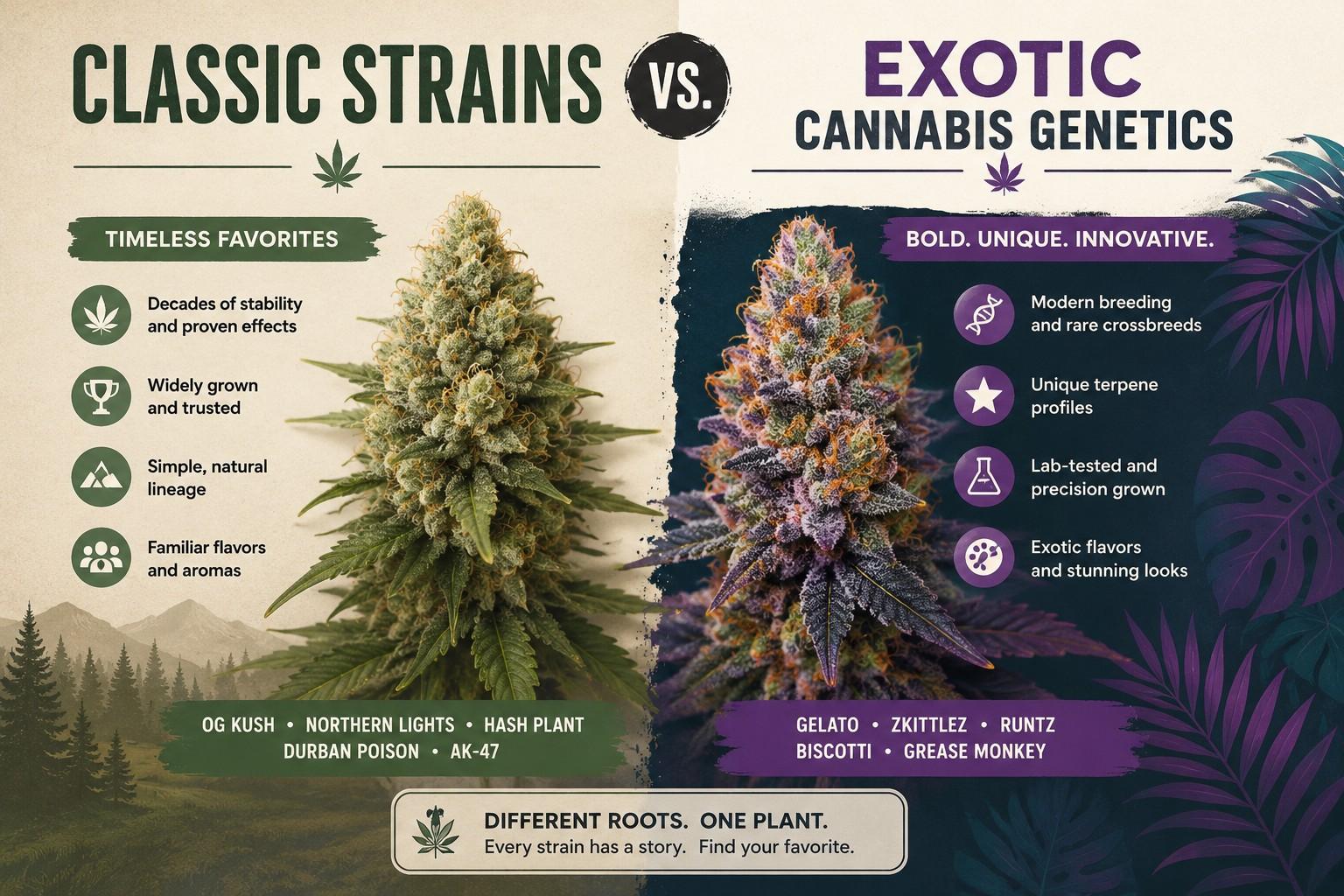
Scroll any dispensary menu long enough and you'll notice two very different worlds sitting side by side: names like Blue Dream and OG Kush that have been around for decades, and newer arrivals like Permanent Marker or Runtz that seem to blow up overnight on social media. Both get shelf space for a reason.
This comparison is one LA shoppers ask about constantly — are classic cannabis strains actually different from today's exotic weed strains, or is it mostly branding? This guide breaks down how legacy genetics compare to modern exotics in flavor, reputation, and lineage, and what's actually changed in how strains get bred and named.
Blue Dream vs Modern Exotics
Blue Dream is about as close to a household name as cannabis gets, which makes it a useful benchmark against newer genetics like Gelato, Runtz, or Super Boof.
Flavor and Effect Reputation Compared
Blue Dream built its reputation on a mild berry-sweet flavor and a reputation for being approachable — it's often cited as a gateway strain for newer consumers
Modern exotics tend to lean into bolder, more complex flavor profiles — heavy gas, fuel, or dessert-forward notes that read as more "designed" than classic strains
A lot of exotic genetics are also bred for potency and terpene concentration first, with flavor and effect reputation built around that intensity
Classic strains, by contrast, often earned their reputation over years of consistent consumer experience rather than a single viral moment
What to Look For or Ask About in Store or on the Menu
Ask your budtender how a newer exotic compares in terpene profile to a classic strain you already like — it's often the fastest way to find something familiar-but-new
Check lab results for terpene percentages, not just THC — flavor and reputation often track terpenes more closely than potency
If you liked a legacy strain's flavor, ask what modern crosses share that lineage
Why OG Kush Still Matters
Few strains have shaped modern cannabis breeding as much as OG Kush, whether or not the person smoking it today knows the name.
Lineage and Influence on Modern Genetics
OG Kush is a parent or grandparent strain behind a huge share of what's currently popular, including many strains carrying "OG," "Cookies," or "Gelato" naming
Its earthy, fuel-forward, slightly piney profile shows up — sometimes faintly, sometimes strongly — in countless modern crosses
Sour Diesel and Jack Herer occupy a similar role: both are older strains whose genetics and flavor signatures still show up in strains marketed as new
A lot of "new" exotic strains are really recombinations of a fairly small pool of legacy genetics, repackaged with a new name and a new look
What to Look For or Ask About in Store or on the Menu
Ask if a newer strain's lineage traces back to OG Kush, Sour Diesel, or another classic — it's a quick way to predict flavor and effect reputation,
Look for lineage or genetics listed on packaging or the menu; not every product lists it, but many do,
If you're not sure what a lineage term actually means, our Cannabis Academy glossary is a quick reference
How Cannabis Genetics Changed
The jump from a handful of well-known legacy strains to today's constantly rotating exotic drops didn't happen overnight — it tracks pretty closely with how breeding and marketing have evolved.
Breeding Trends Behind Today's Exotic Names
Modern breeding leans heavily on crossing a smaller number of high-performing "elite" cuts, which is part of why so many exotic names share overlapping flavor and lineage traits.
Naming has become part of the product itself — strain names today function almost like a rotating drop schedule, similar to sneaker or streetwear releases.
Consumption formats have shifted too — a lot of exotic genetics show up first in vape and concentrate form before hitting flower shelves widely, since live resin, live rosin, and distillate vape options let brands showcase a strain's terpene profile quickly
Pre-roll culture has evolved alongside genetics as well — infused pre-rolls and specialty formats like hash holes and donut joints are often where newer exotic strains get introduced to casual shoppers first
Frequently Asked Questions
What are Classic Cannabis Strains?
Classic (or legacy) cannabis strains are genetics that have been widely available and consistently recognized for years or decades — strains like Blue Dream, OG Kush, and Sour Diesel are common examples. Their reputation is built on long-term consumer familiarity rather than a recent trend.
What Makes a Strain Like Blue Dream a "Classic"?
Consistency and longevity. Blue Dream has remained widely available and recognizable for years, with a flavor and reputation that's stayed fairly stable — unlike newer exotic drops that may only be around for a season or two.
Are Classic Strains Weaker than Modern Exotic Strains?
Often, yes — legacy strains historically ran in more moderate THC ranges, while many modern exotics are bred toward higher potency. That said, potency alone doesn't determine experience; terpene profile and personal tolerance matter just as much.
Do Exotic Strains Lose the Flavor of the Classic Strains They Come From?
Not usually. Breeders often deliberately preserve flavor and terpene traits from classic lineage — like OG Kush or Sour Diesel — even while optimizing new crosses for potency or yield. That's part of why family resemblance in flavor is common across generations.
Why are Classic Strains Becoming Popular Again?
A lot of shoppers are shifting focus from THC percentage alone toward flavor, terpene profile, and consistency — areas where legacy strains have a long track record. That's driving renewed interest in strains like Blue Dream, Northern Lights, and OG Kush alongside newer exotic drops.
What Actually Makes a Strain "Exotic"?
There's no strict definition, but exotic strains typically stand out through bold, layered flavor profiles, distinctive naming, and strong visual appeal — traits that separate them from longer-established classic strains rather than a specific genetic category.
Can you Still Find True Classic Strains Today, or Are They Mostly Discontinued?
Most classic strains are still available — they're just less consistently stocked than rotating exotic drops. Availability depends on the dispensary's sourcing, so it's worth asking if a specific legacy strain is regularly carried.
Where Can I Find Classic and Exotic Strains Near Los Angeles?
REBUD carries both legacy genetics and current exotic drops across our LA menu, so you can compare classic and newer strains side by side. Browse our current flower selection or ask a REBUD team member for a recommendation based on strains you already like.