Walk into any dispensary today, and you'll see labels listing both THCa and THC percentages, sometimes on the very same product. For many shoppers, that creates instant confusion: are these the same thing? Which one actually gets you high? Which one is legal? The truth is that THCa vs THC is one of the most important distinctions in cannabis science, and understanding it will help you make smarter, more confident purchasing decisions.
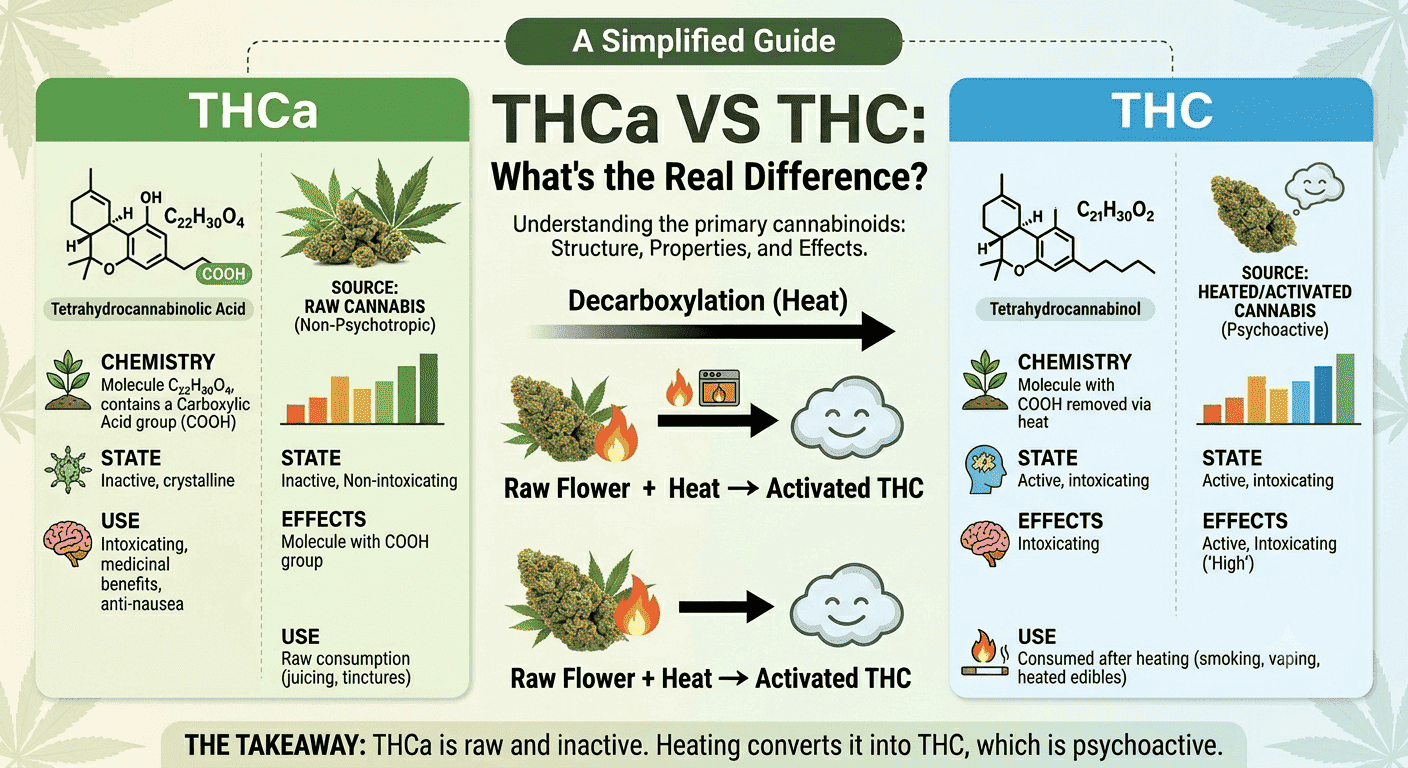
THCa and THC originate from the same plant and are deeply connected, but they behave in completely different ways in your body. The single factor that separates them is heat. Known as decarboxylation, the process of applying heat transforms non-intoxicating THCa into psychoactive THC. Everything else, including its effects, legal status, and overall experience, stems from this single chemical transformation.
In this guide, you'll learn exactly what THCa and THC are, how they differ, what happens when one becomes the other, and how to choose the right cannabinoid for your needs.
What Is THCa?
THCa, short for tetrahydrocannabinolic acid, is the naturally occurring cannabinoid found in fresh, living cannabis plants. It is the raw, acidic form of THC, and it is what the plant actually produces as it grows. In fact, nearly all of the "THC" in a freshly harvested cannabis flower exists as THCa, not yet activated THC.
In its natural state, THCa is non-intoxicating. The molecular structure of THCa includes an extra carboxyl group (the "acid" part of its name) that prevents it from binding effectively to the brain's CB1 receptors, the receptors responsible for the classic cannabis high. This means consuming raw cannabis does not produce intoxication under normal circumstances.
THCa is found in highest concentrations in fresh flower, live resin extracts, and certain specialty products designed to preserve the plant's natural cannabinoid profile. As cannabis dries, ages, or is exposed to light and heat, THCa gradually begins to convert into THC a process known as decarboxylation.
What Is THC?
THC, or delta-9-tetrahydrocannabinol, is the activated form of THCa and the cannabinoid responsible for the psychoactive effects cannabis is known for. When cannabis is smoked, vaped, dabbed, or baked into edibles, heat drives off the carboxyl group from THCa, leaving behind THC.
Once THC enters the body, it binds strongly to CB1 receptors throughout the brain and central nervous system. This binding produces the characteristic effects of cannabis: euphoria, altered perception, relaxation, increased appetite, and mood changes. The overall experience can vary depending on the product, potency, consumption method, and the individual's familiarity with cannabis.
THC is the cannabinoid measured in drug tests and is the primary regulated compound in both medical and recreational cannabis programs across the United States. Products sold in licensed dispensaries, including those at Rebud, are tested to verify their THC potency so consumers know exactly what they're getting.
THCa vs THC: The Biggest Differences
Here is a side-by-side breakdown of the most important distinctions between these two cannabinoids:
Does THCa Get You High?
No, raw THCa does not produce intoxication. In its unactivated, acidic form, THCa lacks the molecular structure needed to bind effectively with CB1 receptors, which means it cannot create the psychoactive effects associated with cannabis.
However, once THCa is exposed to sufficient heat through smoking, vaping, dabbing, or cooking, it undergoes decarboxylation and converts into THC. At that point, the newly formed THC does interact with CB1 receptors and produces intoxicating effects. So while THCa itself is not intoxicating, the experience of consuming THCa-rich cannabis via inhalation or in cooked form is functionally similar to consuming THC directly.
This is why THCa flower sold in a dispensary will produce psychoactive effects when smoked, since the act of lighting it converts the THCa into THC before it enters your body.
How THCa Turns Into THC
The chemical transformation from THCa to THC is called decarboxylation or simply "decarbing." It occurs when enough heat energy is applied to break off the carboxyl group attached to the THCa molecule, releasing carbon dioxide (CO₂) and leaving behind active THC.
This conversion happens through several common methods:
Smoking – The flame from a lighter or match reaches temperatures well above 300°F (150°C), instantly decarboxylating THCa as the flower burns.
Vaping – Vaporizers heat cannabis or concentrate to temperatures between 315°F and 450°F (157°C–232°C), which is sufficient to convert THCa to THC without combustion.
Dabbing – Dab rigs use high heat applied to a nail or banger, reaching temperatures that rapidly decarboxylate concentrates.
Baking/Cooking – Infusing cannabis into butter or oil at around 220–240°F (104 - 115°C) for 30–60 minutes converts THCa into THC, making edibles psychoactive.
Time and light – Slow, passive decarboxylation occurs when cannabis is stored over time or exposed to UV light, gradually converting THCa into THC. This is why aged cannabis often tests higher in THC than fresh flower.
The conversion is not completely efficient in any of these methods, so a small amount of THCa may remain unchanged. However, most of it is transformed into THC during the heating process.
Effects of THCa vs THC
Because of their different interactions with the endocannabinoid system, THCa and THC produce noticeably different experiences.
THCa (in its unconverted form):
Non-intoxicating – consuming raw THCa does not produce a high
Clear-headed experience – no alteration of perception or motor function
No sedating or euphoric effects from the cannabinoid itself
Of emerging interest in wellness research circles, though clinical studies are still in early stages
THC (after decarboxylation):
Euphoria and elevated mood
Deep physical relaxation
Altered sensory perception (sounds, colors, and flavors may feel more intense)
Increased appetite
Time distortion
Sociability and creativity (dose-dependent)
Individual responses to THC vary significantly based on the dose consumed, the product type and delivery method, personal tolerance, and body chemistry. Starting with a lower dose is always recommended for those new to THC or trying a new product.
Why Consumers Choose THCa
THCa has become increasingly popular among cannabis consumers because it is the naturally occurring cannabinoid found in fresh cannabis plants. As the precursor to THC, it offers insight into the plant's natural cannabinoid profile before it undergoes activation through heat.
Many consumers choose THCa-rich products because they want to explore cannabis in its raw form or better understand how cannabinoids transform during smoking, vaping, or cooking. THCa is commonly found in fresh flower, live resin, and concentrates designed to preserve the plant's original composition.
Why Consumers Choose THC
THC is the cannabinoid most closely associated with the traditional cannabis experience. Created when THCa is heated through a process called decarboxylation, THC is the active compound found in many of the most popular cannabis products available today.
Consumers can find THC in a wide variety of formats, including flower, pre-rolls, vapes, concentrates, and edibles. Its versatility and presence across multiple product categories make it one of the most recognized cannabinoids in the cannabis industry.
Is THCa Legal?
The legal status of THCa is nuanced and varies depending on the source of the cannabinoid, the state you are in, and how it is processed. Here is a general overview:
Federal level: The 2018 Farm Bill legalized hemp-derived cannabinoids as long as the final product contains no more than 0.3% delta-9 THC on a dry weight basis. Because THCa is not delta-9 THC, some hemp-derived THCa products exist in a legal gray area at the federal level, even though smoking or vaping that same THCa will convert it to federally restricted THC.
State level: Individual states have their own laws governing THCa. In California, cannabis is fully legalized for adult recreational use, and all THC and THCa products sold through licensed dispensaries like Rebud are legal, regulated, lab-tested, and compliant with state law.
Other states: In states without recreational or medical cannabis programs, THCa products derived from hemp may be sold, but the law in this area is evolving rapidly and varies widely. Consumers outside California should always verify local regulations before purchasing or using THCa products.
Dispensary compliance: Purchasing from a licensed dispensary ensures products have been tested and comply with all applicable regulations. Rebud's inventory is fully compliant with California cannabis law.
Which Is Better: THCa or THC?
There is no universal answer, as the better choice depends entirely on what you are looking for.
THCa may be the right choice if you:
Prefer a non-intoxicating cannabinoid experience
Are interested in wellness-focused cannabis use
Want to explore raw cannabis juices, tinctures, or specialty products
Are new to cannabis and not yet ready for psychoactive effects
THC may be the right choice if you:
Are seeking the classic cannabis experience including euphoria and relaxation
Are an experienced consumer comfortable navigating potency and dosing
Want psychoactive effects from smoking, vaping, dabbing, or edibles
Have specific recreational goals like socializing, creative work, or sleep
In practice, the two are more connected than they might seem. Most cannabis flower you purchase contains both THCa and trace amounts of THC, and when you smoke or vape that flower, the THCa converts to THC in real time. Understanding the ratio on the label gives you a better picture of the product's potency.
How to Choose the Right Cannabis Product
With the range of products available at a modern dispensary, a little guidance can go a long way. Here are the key factors to consider:
Product goals – Consider whether you prefer flower, edibles, vapes, concentrates, or non-intoxicating cannabinoid products, as well as your preferred potency and consumption method.
Consumption method – Flower and vapes deliver fast-acting effects (within minutes). Edibles take longer to kick in (30–90 minutes) but tend to last much longer. Topicals act locally without psychoactive effects.
Experience level – If you are new to cannabis, start with lower-THC products or consider non-intoxicating options like CBD or raw THCa products.
Potency – Higher THC percentages do not always mean a better experience. Terpenes, cannabinoid ratios, and consumption method all play a role in the overall effect.
Timing – Consider when you plan to use the product. A high-potency edible at the start of a busy day is a different decision than a low-dose gummy at bedtime.
Lab testing – Always look for products with verified third-party lab results (a Certificate of Analysis or COA). This confirms potency and checks for contaminants.
Licensed dispensary — Purchasing from a licensed dispensary like Rebud guarantees that products are tested, labeled accurately, and compliant with California regulations.
Not sure where to start? Rebud's knowledgeable staff can walk you through the product lineup at any of our five Los Angeles dispensary locations or help you find the right product for delivery anywhere across LA and Orange County. Browse our full selection online or stop in today.
Conclusion
THCa and THC are two closely related cannabinoids that play very different roles in the cannabis experience. THCa is the natural, non-intoxicating precursor found in raw cannabis. THC is the activated form of THCa, produced through the application of heat, and is responsible for the psychoactive effects most consumers associate with cannabis.
Understanding the difference between THCa and THC gives you a clearer picture of the products you are buying, how they will affect you, and why lab test results list both numbers. Whether you are seeking a clear-headed, non-intoxicating experience or the full euphoric effects of activated THC, there is a product in Rebud's curated selection designed for your goals.
Explore our full range of flower, vapes, edibles, concentrates, and wellness products in store or online, and feel free to ask our budtenders any questions. Making informed choices is always better than guessing.
Frequently Asked Questions (FAQ)
Is THCa Stronger Than THC?
No. THCa itself is not intoxicating in its raw form. Once it is heated and converted into THC through decarboxylation, its psychoactive potential becomes comparable to other THC-rich cannabis products.
Can THCa Show Up on a Drug Test?
It may. If THCa is consumed in a way that converts it to THC, such as smoking or vaping, the resulting THC metabolites can trigger a positive drug test. Even some raw THCa products may still metabolize in ways that could lead to a positive result. If drug testing is a concern, it is best to avoid all cannabis and cannabinoid products.
Why Is THCa Flower Sold if It Becomes THC When Smoked?
THCa flower is sold because it contains high levels of the cannabinoid in its natural, pre-activated state. In California's licensed dispensary market, THCa flower is simply high-quality cannabis flower sold under full regulatory compliance. When smoked or vaped, the heat converts THCa into THC, producing the expected psychoactive effects. The distinction matters more in hemp-derived markets outside of regulated cannabis states.
Is THCa Legal Everywhere?
No. Laws governing THCa vary by country, state, and local jurisdiction. In California, all cannabis and cannabis-derived products sold through licensed dispensaries are legal for adults 21 and over. In other states or countries, the legal status may differ significantly. Always review the regulations where you live before purchasing or using THCa products.
Can You Eat Raw Cannabis for THCa?
Raw cannabis naturally contains THCa. Consuming raw cannabis without applying heat, such as by adding it to a smoothie or juice, generally does not produce the psychoactive effects associated with THC. Some wellness-focused consumers explore raw cannabis consumption specifically for this reason. However, eating large amounts of raw plant material is not practical or pleasant for most people, and specialty THCa products are a more accessible option.
Is THCa Better for Beginners?
Non-intoxicating THCa products may appeal to some beginners who want to explore cannabinoids without experiencing a high, especially those who prefer not to feel high all the time. However, beginners who do want psychoactive effects should start with low-dose THC products, such as a 2.5 mg or 5 mg edible, which can be a good starting point, with dosage increased gradually based on individual preference and experience. Rebud's staff can help new consumers find the right starting point.
Does Vaping THCa Turn It Into THC?
Yes. Vaporizers heat cannabis or concentrate to temperatures high enough to trigger decarboxylation, converting THCa into THC before inhalation. This means vaping a high-THCa product will produce psychoactive effects similar to vaping an equivalent THC product.