What Is CBC Cannabinoid?
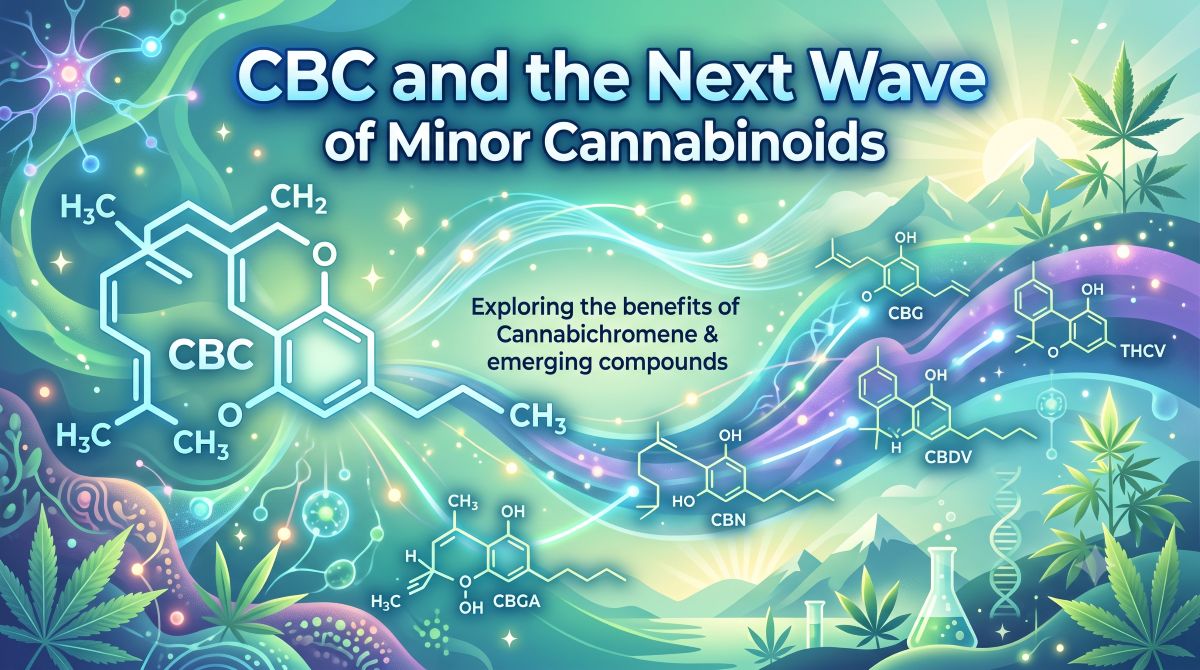
CBC, short for cannabichromene, is a naturally occurring cannabinoid found in the cannabis plant. Chemically, it is documented in public chemistry databases such as PubChem, and it is structurally related to other well-known cannabinoids like THC and CBD. Like those compounds, CBC starts out as CBGA, a precursor compound sometimes called the plant's "parent" cannabinoid, before plant enzymes and light convert it into its final, active form.CBC does not produce an intoxicating high the way THC does, which is one reason it is often grouped with other non-intoxicating cannabinoids. It is frequently described as the third most common cannabinoid in the cannabis plant, though it still typically appears in smaller amounts than THC or CBD in most flower and product formulations.Why CBC Matters in Today's Cannabis Market
CBC cannabinoid is gaining attention because shoppers are looking beyond a single THC percentage for a fuller picture of what is actually in their cannabis. As brands and formulators experiment with combining different cannabinoids, CBC has become part of a broader shift toward variety and product differentiation rather than potency alone.For a closer look at how individual cannabinoids compare to one another, including CBD, CBG, CBN, and THCV, see our companion guide, Cannabinoids Beyond THC: CBD, CBG, CBC, CBN, THCV. It is worth noting that research on CBC specifically is still developing, so it is best understood as an emerging area of the cannabis conversation rather than a settled topic.Minor Cannabinoids: The Expanding Cannabis Conversation
Minor cannabinoids are compounds the cannabis plant produces in smaller quantities than THC and CBD. The category typically includes CBG, CBN, THCV, and minor cannabinoid CBC, among others. Cannabis contains well over one hundred identified cannabinoids in total, but only a handful appear in large enough amounts to dominate a given flower's chemical profile. As testing and extraction methods have improved, brands are increasingly able to isolate and highlight these smaller-volume compounds in dedicated products rather than treating them as background noise in a THC-driven formula.
For definitions of related terms used throughout this article, visit the Cannabis Academy glossary hub.
How to Explore Minor Cannabinoid Products at a Dispensary
Walking into a dispensary can feel more approachable once you know what to look for on a label or in a lab report. A few practical starting points:
-
Check the certificate of analysis (COA) for a full cannabinoid breakdown, not just THC and CBD.
-
Ask your budtender which products include minor cannabinoids such as CBC cannabinoid, CBG, or CBN.
-
Compare product labels side by side, since minor cannabinoid content varies by brand, strain, and batch.
-
Browse REBUD's minor cannabinoid menu category to see current in-stock options across flower, vapes, and edibles.
For more on how terpene content interacts with cannabinoid percentages when you are comparing products, see Terpenes vs. THC Percentage.
What Are Functional Cannabis Formulas?
Functional cannabis formulas are products built around a specific, intentional combination of cannabinoids, terpenes, and other ingredients, rather than around a single dominant compound. Instead of leading with a high THC number, these formulas are designed around a particular combination intended to create a consistent, recognizable product experience from batch to batch.Why Cannabinoid Combinations Matter for Product Selection
Combining cannabinoids gives brands more ways to differentiate products beyond potency alone. A formula built around CBC cannabinoid alongside CBD or CBG, for example, is a different product than one built around THC by itself, even if both are technically labeled "full spectrum." Comparing CBC vs CBD content, terpene profiles, and full ingredient lists can help you understand what you are actually buying before you commit to a product.What Is CBC Cannabinoid?
CBC, or cannabichromene, is a naturally occurring, non-intoxicating cannabinoid found in the cannabis plant. It forms from the same plant precursor compound as THC and CBD, and it is often described as the third most common cannabinoid in cannabis, though usually in smaller amounts than THC or CBD.How Does CBCCannabinoid Compare to What Is CBC?
"CBC cannabinoid" and "what is CBC" both refer to the same compound, cannabichromene. Shoppers tend to search both phrases when they are trying to understand a term they encountered on packaging, in a lab report, or on a dispensary menu, and the answer to either question is the same.
What Does Cannabichromene Mean?
Cannabichromene is the full chemical name for CBC, one of more than one hundred cannabinoids identified in the cannabis plant to date. It was first isolated by researchers in the 1960s and is structurally related to other well-known cannabinoids like THC and CBD.