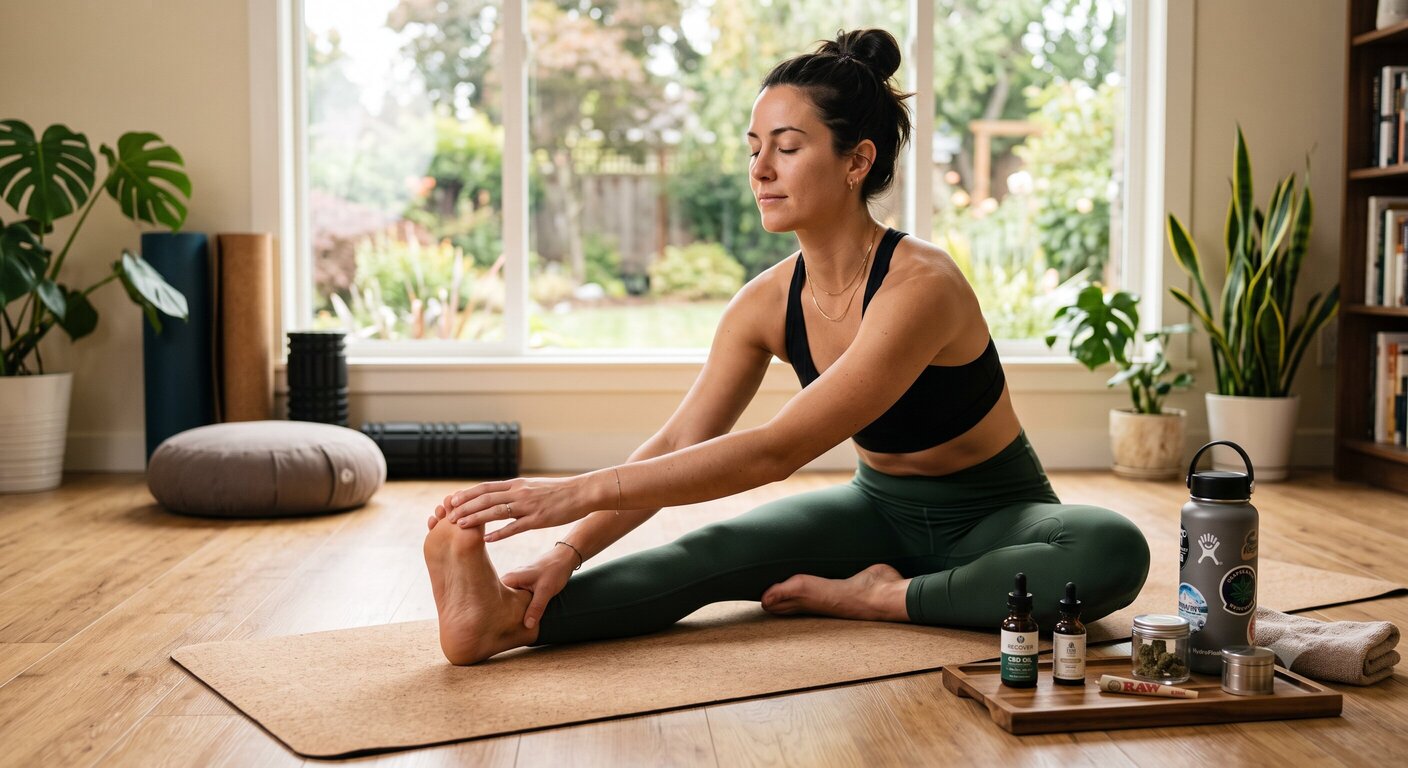
More CA residents are exploring how cannabis and exercise fit together — whether that's winding down after a gym session, easing into a post-run stretch, or rethinking the evening routine entirely. Interest has grown steadily as more people reach for cannabis products in place of alcohol or conventional sleep aids. This guide covers what the current research actually says, what to look for on the Rebud menu, and how to approach cannabis thoughtfully as part of an active lifestyle. No hype, no medical claims — just clear, practical information.
Cannabis and Recovery
Recovery is where most fitness routines fall apart. Soreness, disrupted sleep, and lingering inflammation after hard training are real obstacles — and weed and workout recovery has become one of the most-searched topics in the cannabis wellness space, particularly among health-conscious consumers across Los Angeles.
What Cannabis and Recovery Means and Why It Matters
Cannabis recovery refers to using cannabis — typically CBD-dominant or balanced THC/CBD products — in the period after physical activity to support the body's natural repair process. A 2020 review published in Pharmaceuticals (NCBI) found that cannabidiol may play a role in modulating the body's inflammatory response, though the authors note that sport-specific research is still in early stages.
Many active consumers report that post workout cannabis — especially indica-leaning flower or a low-dose edible taken before bed — helps them get deeper sleep and wake with less stiffness. It's also worth noting that more people are using cannabis instead of alcohol as part of a post-exercise wind-down ritual. Cannabis has a different physiological profile, and many consumers find it more compatible with their fitness goals than a drink.
What to Look For or Ask About in Store or on the Menu
When shopping for weed and workout recovery options at Rebud, consider the following:
Indica-leaning or hybrid strains with relaxing terpene profiles — look for myrcene, linalool, or caryophyllene on the label
Balanced THC:CBD ratios (1:1 or 2:1) for moderated effects without full sedation
Ingestibles such as gummies or capsules for longer, sustained effects through the night
Low-dose options (2.5–5mg THC) if you're new to using cannabis in a wellness context
You can shop by cannabis effect directly on the Rebud menu — filtering by "relax," "sleep," or "calm" makes it easy to find recovery-focused products without memorising strain names. Always ask staff to help you read lab tests on any product; the COA (Certificate of Analysis) shows the exact cannabinoid and terpene breakdown so you know precisely what you're purchasing.
CBD Topicals
CBD topicals occupy a distinct corner of the cannabis market — they work locally, applied directly to a target area rather than inhaled or ingested. For active consumers dealing with targeted muscle tension or cannabis soreness, topicals offer a focused option with no psychoactive component.
What CBD Topicals Mean and Why It Matters
CBD topicals include creams, balms, roll-ons, and patches that deliver cannabidiol through the skin. Unlike ingestibles or inhalation, topicals generally don't produce intoxicating effects — making them popular with consumers who want to explore CBD recovery without impairment. A study found that transdermal cannabidiol significantly reduced joint swelling and limb posture scores in an animal model, though human clinical trials in this area remain limited.
Papa & Barkley — a brand available at Rebud — specialises in this category, using full-spectrum cannabis extracts that include a range of cannabinoids and terpenes. For consumers who build cannabis stretching into a recovery day, some apply a topical to tight or inflamed areas before or after mobility work.
What to Look For or Ask About in Store or on the Menu
When exploring topicals at Rebud, here's what to ask about:
Full-spectrum vs. isolate: Full-spectrum includes THC and additional cannabinoids; isolate contains CBD only. Some consumers prefer full-spectrum for a broader combined effect, though individual responses vary.
Potency: Look at milligrams per ounce — higher concentrations are generally stronger for localised use.
Format: Balms and salves absorb slowly and last longer; roll-ons are cleaner and travel-friendly.
Transdermal patches: These enter the bloodstream and can produce systemic effects — distinct from standard surface-level topicals.
Browse the Wellness/Topicals section on rebud.com or ask a budtender for guidance. The Rebud team can walk you through all cannabis terms — from cannabinoids to terpene profiles — so you leave informed rather than overwhelmed.
Responsible Use Around Exercise
Like any addition to a wellness routine, timing and context matter. Responsible use around exercise means knowing when cannabis genuinely complements an active practice — and when it's better saved for after.
What Responsible Use Around Exercise Means and Why It Matters
Research is still catching up to consumer behaviour. Most experienced consumers who integrate cannabis into their fitness routine tend to use it after activity, not before, particularly to support rest and recovery.
Intent matters too. Some consumers find low-dose edibles or a tincture — especially when paired with food — before gentle movement like yoga or stretching can support focus and body awareness. That's a very different scenario from pre-session use ahead of HIIT or weight training. The general principle: start low, go slow, and build awareness of your own response over time.
What to Look For or Ask About in Store or on the Menu
For responsible use around physical activity:
Micro-dose edibles (2.5–5mg THC): A sensible starting point for new cannabis and exercise exploration
CBD-dominant products: Minimise impairment risk while still supporting recovery
Timing awareness: Edibles take 45–90 minutes to take effect — plan accordingly, especially if you have a session or class to get to
Inhalation vs. ingestion: Inhalation offers faster onset (minutes) but shorter duration; edibles are slower to start but effects last longer
The Rebud team is trained to help you navigate cannabis products across every category. If you're new to using cannabis around exercise, just say so — they can suggest a starting point that matches your goals.
FAQ
What Is Cannabis and Exercise?
Cannabis and exercise refers to the use of cannabis in connection with physical activity — whether before, during, or after a workout. Most of the practical conversation centres on post-exercise use: how cannabis products may support recovery, sleep, and soreness management after training. Interest in this area has grown significantly as more consumers explore cannabis as a complement to an active lifestyle rather than something at odds with it.
How Does Cannabis and Exercise Compare to Weed and Workout Recovery?
These terms broadly overlap. "Cannabis and exercise" covers the full range of use around physical activity, while weed and workout recovery specifically describes using cannabis after training to help the body repair and recharge. Recovery-focused products — including CBD topicals, balanced edibles, and ingestibles — represent the most common entry point for active consumers exploring this space.
What Does CBD Recovery Mean?
CBD recovery describes using cannabidiol (CBD) products specifically to support physical recovery after exercise. CBD is non-intoxicating and is found in topicals, tinctures, and capsules. Harvard Health Publishing notes that the endocannabinoid system plays a role in regulating inflammation and pain signalling — the mechanisms by which CBD products are commonly used for recovery, though individual results vary and research is ongoing.
Where Can I Find Cannabis and Exercise Products Near Me in California?
Rebud has five dispensary locations across California — North Hollywood, Highland Park, Sylmar, Westwood, and San Pedro — plus delivery covering the majority of LA County and parts of Orange County. Browse the edibles, and topicals categories on rebud.com, or visit any store for personalised recommendations. You can shop by cannabis effect directly on the Rebud menu, making it easy to find recovery-focused cannabis products without needing to know specific brands or strains in advance.