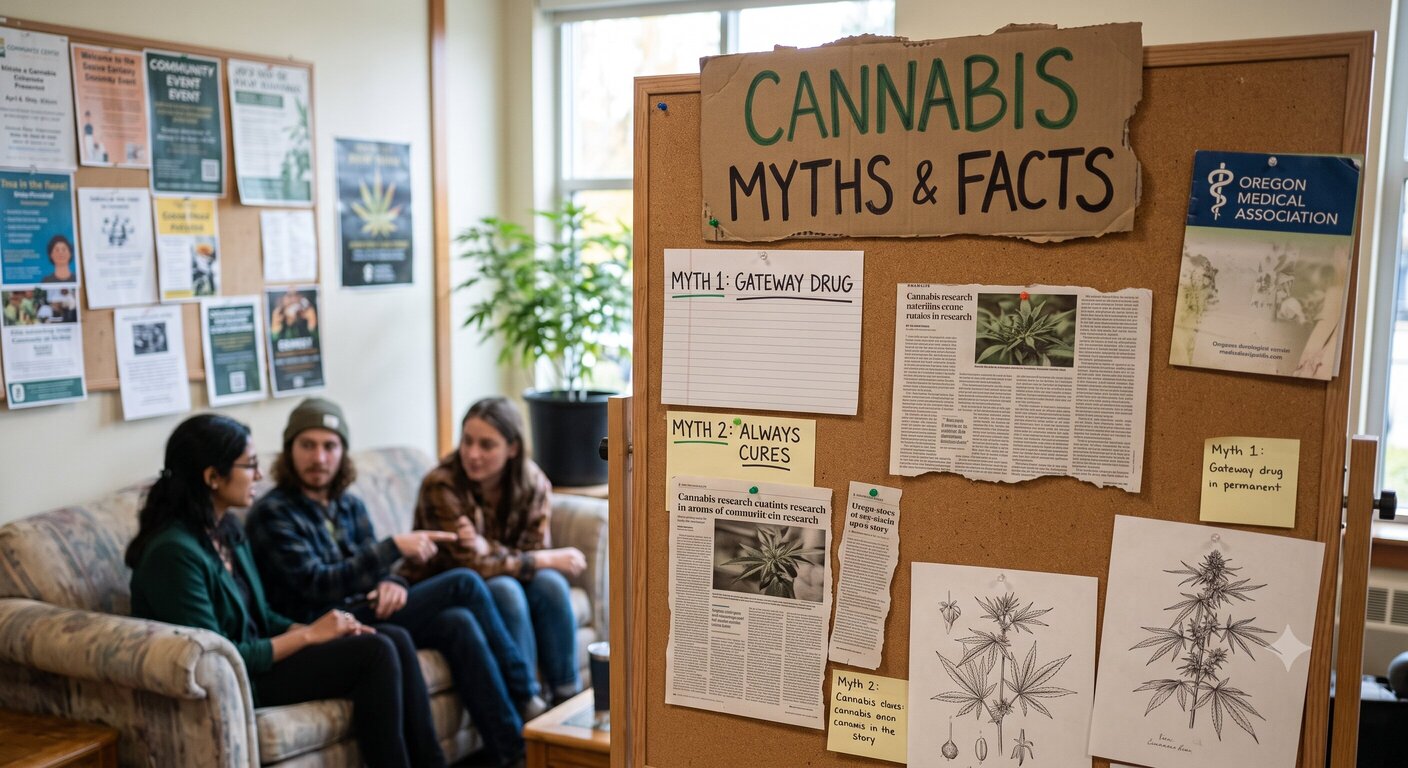
If you've ever heard a budtender say "that strain is more of a sativa" or read a label promising a specific high based on THC percentage alone, you've already encountered some of the most common cannabis myths in the industry. LA consumers are searching for clarity — and for good reason. The cannabis space moves fast, marketing claims outpace science, and outdated weed myths are still being repeated every day behind dispensary counters.
This guide breaks down the biggest misconceptions about cannabis in plain, accurate language — from the indica vs. sativa myth to edible onset myths and what THC percentage really tells you. Whether you're a first-time buyer or a seasoned consumer, knowing the facts helps you shop with confidence and get more from every experience.
Indica vs. Sativa Myth
The indica vs. sativa myth is arguably the most persistent misconception in cannabis retail. Walk into almost any dispensary and you'll be asked: "Do you want something indica — more relaxing — or sativa — more energizing?" It's a tidy sales shorthand, but it's not supported by the science.
Why the Indica vs. Sativa Label Misleads Consumers
The indica/sativa classification was originally a botanical taxonomy used to describe plant morphology — leaf width, plant height, growth patterns — not the effects a consumer would experience. Research published in Nature Plants found that the genetic makeup of cannabis strains labeled "indica" or "sativa" does not reliably predict their chemical profiles. What actually drives effects is cannabinoid and terpene composition — the full chemical fingerprint of the plant.
Understanding the Endocannabinoid System — the receptor network in your body that processes cannabinoids — is key to understanding why two people can use the same product and feel completely different effects. Your biology, your cannabis tolerance level, and your consumption method all interact with that system in unique ways.
What to Look For or Ask About in Store or on the Menu
Instead of asking for "an indica," try asking for the terpene profile. Myrcene is often associated with a more sedating feel; limonene with a more uplifting one. Ask your budtender which products have lab-tested terpene breakdowns, and look for that information on the product label or Rebud's online menu.
Terpenes vs. THC
The Terpenes vs. THC myth goes like this: higher THC equals a stronger, better experience. It's one of the most common marijuana myths — and one of the most commercially harmful, because it pushes consumers toward products selected on a single number while ignoring the full picture.
Why Terpenes Matter More Than THC Percentage
THC is the primary psychoactive cannabinoid in cannabis, but it doesn't act in isolation. Terpenes — the aromatic compounds found in cannabis and many other plants — interact with cannabinoids in what researchers call the entourage effect. A product with 18% THC and a rich terpene profile may deliver a more nuanced experience than a 30% THC product with minimal terpene content.
A study found that THC potency alone was not a reliable predictor of subjective intoxication or impairment in cannabis users, reinforcing the case for looking beyond percentage. Similarly, CBD myths often center on the idea that CBD is inert or just a wellness supplement — in reality, CBD interacts with THC and other cannabinoids in complex ways that can meaningfully shape the overall experience.
What to Look For or Ask About in Store or on the Menu
On the REBUD menu, filter for products that include full terpene breakdowns. When speaking with a budtender, ask specifically: "What are the dominant terpenes in this product?" and "Is there a certificate of analysis (COA) available?" A COA gives you the full cannabinoid and terpene profile from a licensed third-party lab — the most accurate picture of what you're actually getting.
Avoid choosing products based on THC percentage alone. Think of THC as one instrument in an orchestra — meaningful, but not the whole performance.
Edible Onset Myths
Few areas of cannabis are surrounded by more confusion — and more cautionary tales — than edibles. Edible myths range from "just eat more, it's not working" to the false belief that you can accurately predict onset time based on the dose. Getting this wrong is one of the most common reasons new consumers have uncomfortable experiences.
Why Edible Timing Is Harder to Predict Than You Think
Unlike smoking or vaping — where effects typically begin within minutes — edibles must be digested and metabolized by the liver before THC enters the bloodstream as 11-hydroxy-THC, a compound that crosses the blood-brain barrier more efficiently and can produce more intense and longer-lasting effects. Onset typically ranges from 30 minutes to 2 hours, depending on your metabolism, body composition, recent food intake, and individual biology.
The FDA's consumer guidance on cannabis-infused edibles specifically warns against consuming additional doses because effects haven't appeared yet — a pattern that leads to overconsumption more often than any other. The holding smoke myth (the idea that holding in smoke or vapor longer increases effects) is similarly unfounded — most THC absorption occurs in the first few seconds of inhalation.
Your cannabis tolerance level also affects how you experience edibles — regular consumers may find they need more time or a higher dose to feel the same effects, while newer consumers are often far more sensitive than they expect.
What to Look For or Ask About in Store or on the Menu
Start low and go slow — this is the standard recommendation for edibles, and it exists for good reason. On the Rebud menu, edibles are clearly labeled by total milligrams of THC (and CBD where applicable). For new or returning consumers, micro-dose options (2.5–5mg THC) are a sensible starting point.
Ask your budtender about nano-emulsified edibles — a newer category of cannabis products that use technology to speed onset to as little as 15–30 minutes, making dosing more predictable. These are increasingly available at Rebud and can offer a more controlled experience for those who find traditional edibles unpredictable.
FAQ
What Are Cannabis Myths?
"Cannabis myths" refers to widely held but inaccurate beliefs about how cannabis works, what its effects are, or how its products should be selected. Common examples include the idea that indica strains are always sedating, that higher THC always means stronger effects, or that holding in smoke increases potency. Separating cannabis myths from evidence-based information helps consumers make safer, more informed decisions.
How Do Cannabis Myths Differ from Weed Myths?
"Cannabis myths" and "weed myths" refer to the same category of misinformation — they're used interchangeably. "Weed myths" is the more informal search term, while "cannabis myths" tends to appear in more educational or clinical contexts. Either way, the misconceptions are the same, and the same science applies.
Is the Indica vs. Sativa Difference a Myth?
The indica sativa myth is the widespread but scientifically unsupported idea that indica strains reliably cause sedation ("in da couch") and sativa strains reliably cause energizing, uplifting effects. In reality, these labels describe plant morphology, not effect profiles. The actual effects of any cannabis product are shaped by its full cannabinoid and terpene composition — information you can find in third-party lab testing and through the Cannabis Academy glossary on the Rebud platform.
Where Can I Learn More About Cannabis Science in Los Angeles?
If you're in Los Angeles and looking for honest, science-grounded answers to cannabis questions, Rebud is a licensed cannabis dispensary and delivery brand that prioritizes consumer education alongside curated product selection. Browse the Rebud menu online, check out our articles for more explainers, or visit our LA location where budtenders are trained to go beyond strain labels and talk terpenes, potency, and product fit.
Research into cannabis is still developing — and that's exactly why staying curious and asking the right questions matters. The goal at Rebud isn't just to sell cannabis products, it's to help you understand them. Ditch the myths, check the labs, and shop smarter.