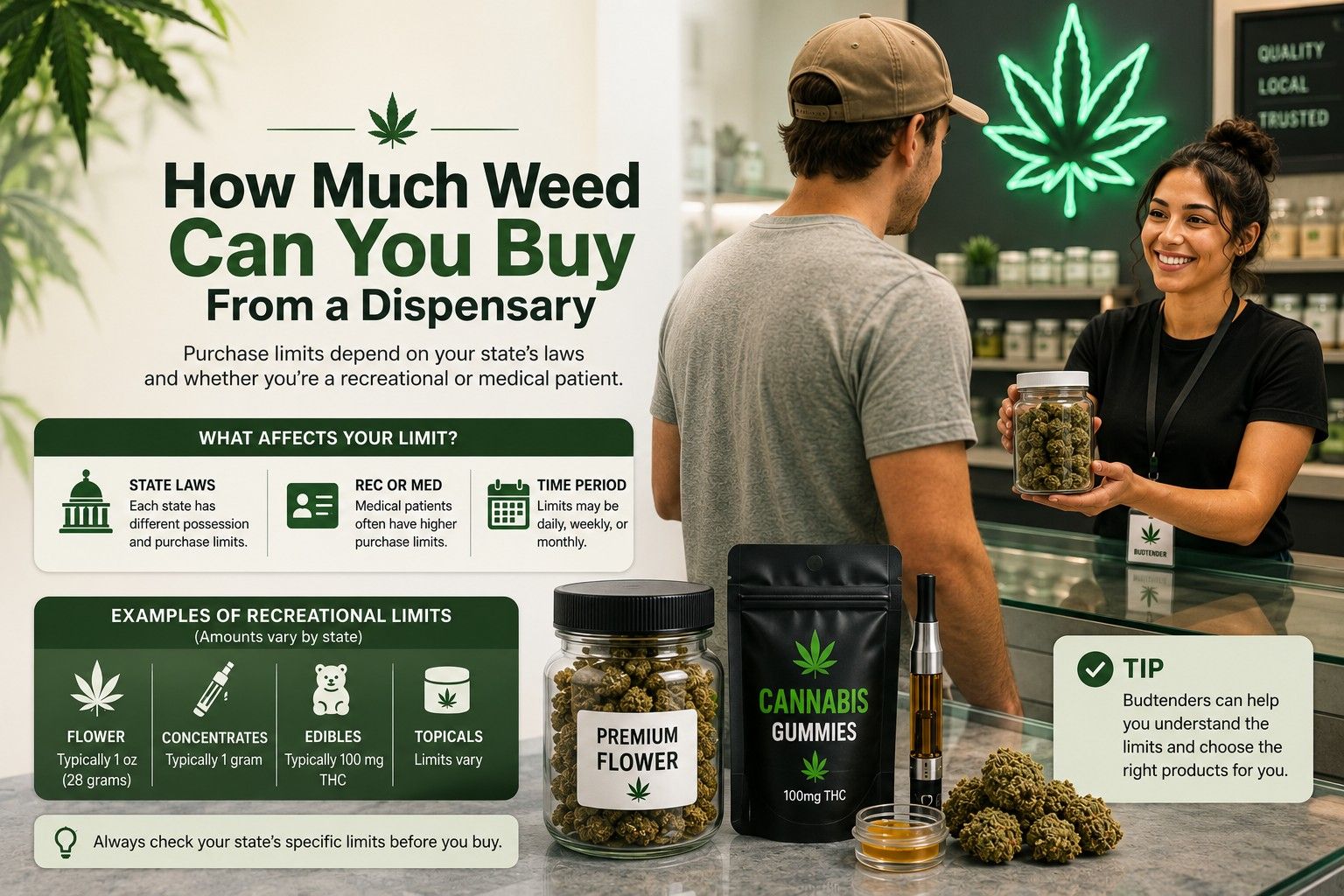
How much weed can you buy from a dispensary depends on three things: which state you're in, whether you're shopping recreational or medical, and what product category you're buying. Some states cap purchases by flower weight. Others track total THC milligrams across categories. A few use rolling time-period systems instead of a simple per-visit cap. There's no single national answer — but there is a consistent logic once you understand how the systems work.
This guide breaks down how cannabis purchasing limits function, what's typical across recreational and medical markets, product-specific limits (including vape cartridges), what happens if you hit your limit, and a state-by-state reference so you know what to expect before you shop.
Why Do Dispensaries Have Purchasing Limits?
Purchase limits aren't arbitrary — they exist because of specific regulatory and practical concerns:
-
State compliance requirements — every licensed dispensary operates under state-mandated purchase tracking, often enforced through seed-to-sale software at the point of sale
-
Preventing illegal resale — caps make it harder for someone to buy in bulk and resell cannabis outside the regulated market
-
Public safety considerations — regulators generally aim to limit how much THC-containing product circulates outside licensed, tested channels
-
Inventory management — limits help prevent single large purchases from disrupting supply for other customers, especially during high-demand periods
-
Medical vs. recreational distinctions — medical programs typically treat cannabis as part of a patient's ongoing care, which is part of why medical limits tend to run higher than recreational ones
How Cannabis Purchasing Limits Work
States use several different mechanisms to define and enforce limits, and it's common for a single state to combine more than one.
Per Transaction Limits
A per-transaction limit caps how much you can buy in a single visit, regardless of what you bought earlier that day or week.
Daily Purchase Limits
A daily cannabis purchasing limit tracks everything purchased across a 24-hour period, even across multiple stores. California uses this model — recreational purchases are capped at 28.5 grams of flower and 8 grams of concentrate per day, tracked statewide through the seed-to-sale system.
Rolling Time-Period Limits
Some states use rolling periods — 7, 14, 30, 60, or 90 days — rather than resetting at midnight. Massachusetts uses a 60-day rolling window for medical patients, Mississippi uses a rolling 7-day period, and Iowa uses a 90-day period. As older purchases age out of the window, that allowance becomes available again.
THC Equivalency Systems
Because flower, concentrates, and edibles all deliver THC differently, several states convert them into a shared equivalency unit so purchases can be tracked across categories. Missouri and Montana both use a formula where roughly 3.5 grams of flower equals 1 gram of concentrate equals 100mg of infused product. Mississippi uses its own "MMCEU" unit system built the same way.
What's the Difference Between a Purchase Limit and a Possession Limit?
These two terms get used interchangeably, but they're not the same thing:
-
A purchase limit caps how much you can buy in a single transaction or defined period
-
A possession limit caps how much you can legally have on you or at home at any given moment
-
In some states these numbers match exactly; in others, medical patients can accumulate cannabis over time up to a possession limit that's higher than what they're allowed to buy in any single visit
-
Missouri's recreational program is a clean example where the two align: 3 ounces per transaction and 3 ounces of lawful possession at any time
How Much Weed Can You Buy at Once?
Most recreational markets fall in a fairly consistent range, though exact numbers vary by state.
|
Purchase Type |
Typical Range |
|
Recreational Flower |
1–3 ounces per transaction or day |
|
Medical Flower |
Often higher; several states allow 4–10+ ounces over a defined period |
|
Concentrates |
Commonly 4–16 grams, depending on state |
|
Edibles |
Usually THC-milligram based (500mg–1,000mg range in many recreational states) |
California recreational shoppers, for reference, can buy up to 28.5 grams (about 1 ounce) of flower and 8 grams of concentrate per day.
Recreational vs Medical Marijuana Limits
|
Feature |
Recreational |
Medical |
|---|---|---|
|
Age Requirement |
21+ |
Qualified patients (varies by state, sometimes under 21 with guardian involvement) |
|
Purchase Limits |
Generally lower |
Often higher |
|
Product Access |
Standard menu |
Sometimes expanded (higher potency concentrates, additional formats) |
|
Tracking Requirements |
State-specific, often daily |
Often more detailed, frequently rolling-period based |
Medical limits tend to run higher because medical programs are built around ongoing patient need rather than a single recreational purchase — Michigan medical patients, for instance, can buy up to 10 ounces per month, compared to 2.5 ounces per day recreationally.
Worth noting: not every state has a medical program at all. States like Idaho and Wisconsin have no broader medical cannabis program — Idaho has no cannabis access whatsoever, and Wisconsin permits only physician-recommended CBD oil, with no dispensary purchase limits to speak of because there's no dispensary system.
How Many Vape Carts Can You Buy at Once?
There's no single "cartridge count" limit in most states — how many carts can you buy at once actually comes down to total concentrate weight, not the number of individual cartridges.
-
States regulate concentrates by weight or THC content, not unit count, since cartridges vary widely in size (0.3g, 0.5g, 1g, etc.)
-
A state with an 8-gram concentrate limit could mean roughly 8 one-gram cartridges, or many more smaller ones — the math depends entirely on cartridge size
-
THC potency also factors in for states using milligram-based tracking rather than weight alone
-
This is why the honest answer to "how many carts can I buy" is always "it depends on size and state" rather than a fixed number
Cannabis Purchasing Limits by Product Type
Flower: Typically measured by weight (grams or ounces), and the most common way purchase limits are expressed across nearly every state.
Pre-Rolls: Counted against the flower limit by total weight — a pack of ten 0.5g pre-rolls counts as 5 grams toward your flower allowance, not as "10 units."
Vape Cartridges: Counted by concentrate weight, as covered above, not by cartridge count.
Concentrates: Includes wax, shatter, rosin, and vape oil — usually capped separately from flower, often in the 4–16 gram range depending on state.
Edibles: Almost universally tracked by total THC milligrams rather than product weight, commonly in the 500mg–1,000mg range for a single recreational purchase.
Tinctures and Oils: Generally folded into the same THC-milligram tracking as edibles, though some states treat oils closer to concentrates depending on formulation.
Limits are calculated differently across these categories specifically because THC concentration varies so much between them — a gram of flower and a gram of concentrate are not equivalent in potency.
Can You Visit Multiple Dispensaries in One Day?
You generally can — but it usually won't let you exceed your legal limit. States with daily tracking (like California) log purchases statewide through a shared compliance system, so a second dispensary can see what you already bought that day and adjust what they're able to sell you accordingly. Visiting multiple stores mainly helps with product variety or availability — not with getting around a purchase cap.
How Many Times Can You Go to the Dispensary?
Most states don't limit how many times you can go to the dispensary — they limit the total amount purchased within a transaction, day, or rolling period. You can technically visit daily as long as each visit stays within your remaining allowance for that period. Purchase tracking systems typically show either a hard daily/period cap or a running balance that resets as time passes.
Out-of-State Weed Limits Explained
Out-of-state weed limits vary significantly, and non-residents are sometimes treated differently than in-state residents:
-
Some states, like Illinois, set separate (often lower) limits for non-residents compared to residents
-
ID requirements typically apply the same way to residents and visitors, though a state-issued medical card from one state usually isn't recognized in another
-
Possession laws still apply fully to visitors — buying legally in one state doesn't change what's legal to possess elsewhere
-
Crossing state lines with cannabis remains illegal under federal law, regardless of whether both states have legal markets — this applies even between two adjacent legal states
This isn't legal advice — if you're traveling with cannabis-related questions, check current state resources or consult an attorney.
How Much Marijuana Can You Buy in Missouri?
Missouri runs one of the more straightforward systems among legal states:
-
Recreational: up to 3 ounces per transaction, with lawful possession of up to 3 ounces at any time
-
Medical: up to 6 ounces of dried flower (or its equivalent) per 30-day period
-
Equivalency conversion: roughly 3.5 grams of flower equals 1 gram of concentrate equals 100mg of infused product
As with all state limits, always confirm current figures with an official state resource before assuming these numbers are unchanged.
State-by-State Cannabis Purchasing Limits
|
State |
Recreational Limit |
Medical Limit |
|---|---|---|
|
California |
28.5g flower / 8g concentrate per day |
8 oz flower per day |
|
Colorado |
1 oz flower / 8g concentrate / 800mg edibles per day |
8g concentrate (21+) |
|
Illinois |
30g flower / 5g concentrate / 500mg THC per transaction (residents) |
2.5 oz per 14 days |
|
Michigan |
2.5 oz flower / 15g concentrate per day |
10 oz per month |
|
Missouri |
3 oz per transaction |
6 oz per 30 days |
State laws change frequently — always verify current limits through your state's official cannabis regulatory agency before assuming a figure is still accurate. Recent examples: Ohio overhauled its medical framework in 2026 under Senate Bill 56, shifting to weight- and milligram-based tracking with lower potency caps than before, and Virginia passed new retail legislation with recreational sales expected to begin in 2027.
What Happens If You Reach Your Purchase Limit?
-
Transaction denial — the point-of-sale system will typically block a sale that would exceed your remaining limit
-
Waiting periods — for daily limits, you'll generally need to wait until the next calendar day; for rolling limits, you'll need to wait until older purchases age out of the window
-
Rolling limit resets — in states like Massachusetts or Iowa, your available balance gradually increases as time passes rather than resetting all at once
-
Medical patient tracking — medical programs often use the same statewide tracking systems as recreational sales, so hitting a cap applies across every licensed retailer, not just one location
Tips for Staying Within Legal Cannabis Limits
Understand Your State's Rules
Purchase limits, product categories, and tracking periods vary enough between states that assumptions from one state often don't carry over to another.
Track Your Purchases
If your state uses a rolling period rather than a daily reset, keep a rough mental (or written) log of recent purchases so you're not caught off guard at checkout.
Know Product Equivalencies
Understanding how your state converts flower, concentrate, and edibles into a shared unit helps you plan a mixed purchase without hitting a wall partway through checkout.
Ask Your Budtender Questions
If you're unsure about your purchase limit, don't hesitate to ask your budtender. They can typically tell you how much of your daily or rolling purchase allowance you have remaining and help ensure your order stays within state regulations. It's a routine question that dispensary staff handle every day.
Keep Medical Documentation Updated
Medical patients should keep recommendations and registrations current, since expired documentation can drop a purchase back down to recreational limits.
FAQs
How Much Weed Can You Buy From a Dispensary?
It depends on your state, whether you're shopping recreational or medical, and the product type. Most recreational markets allow roughly 1–3 ounces of flower per transaction or day, with medical patients often permitted higher amounts.
How Much Can You Buy From a Dispensary at a Time?
"At a time" usually refers to a per-transaction or daily limit, depending on the state. California, for example, tracks purchases daily and caps recreational flower at 28.5 grams per day across all dispensaries combined.
What Are Cannabis Purchasing Limits?
Cannabis purchasing limits are state-regulated caps on how much cannabis a consumer can buy in a single transaction, day, or defined rolling period, varying by product type and by medical versus recreational status.
How Many Carts Can You Buy at Once?
There's no fixed cart count — vape cartridges are limited by total concentrate weight, so the number of cartridges you can buy depends on their individual size and your state's concentrate limit.
How Many Times Can You Go to the Dispensary?
Most states don't limit visit frequency directly — they limit total purchase amounts within a transaction, day, or rolling period, so you can visit as often as you'd like as long as you stay within your remaining allowance.
Do Medical Marijuana Patients Have Higher Limits?
Generally, yes. Medical programs are built around ongoing patient need rather than a single purchase, so most states set medical limits noticeably higher than recreational ones for the same product category.
Can You Get Around Limits by Visiting Multiple Dispensaries?
Not usually. States with daily or rolling-period tracking share purchase data across licensed retailers, so a second dispensary can typically see what you've already bought and adjust accordingly.
What Are Out-of-State Weed Limits?
Some states set separate, often lower, limits for non-residents. Regardless of local purchase rules, transporting cannabis across state lines remains illegal under federal law, even between two states with legal markets.
Have Cannabis Purchasing Limits Changed Recently?
Yes, in several states. Ohio overhauled its medical framework in 2026 under Senate Bill 56, moving to weight- and milligram-based tracking. Virginia passed new retail legislation with sales expected to begin in 2027. Rules shift frequently, so always confirm current limits with your state's regulatory agency.
Do All States Have a Medical Cannabis Program?
No. States like Idaho and Wisconsin have no broader medical cannabis program at all — only limited, low-THC CBD oil options in some cases, with no cannabis dispensary purchase limits to speak of.
Why Doesn't Washington, DC Have Normal Dispensary Purchases?
DC's unique federal jurisdiction prevents a fully legal commercial recreational market. Instead, adults can legally transfer up to 1 ounce to another adult without payment — commonly called "gifting" — rather than through a standard retail purchase.