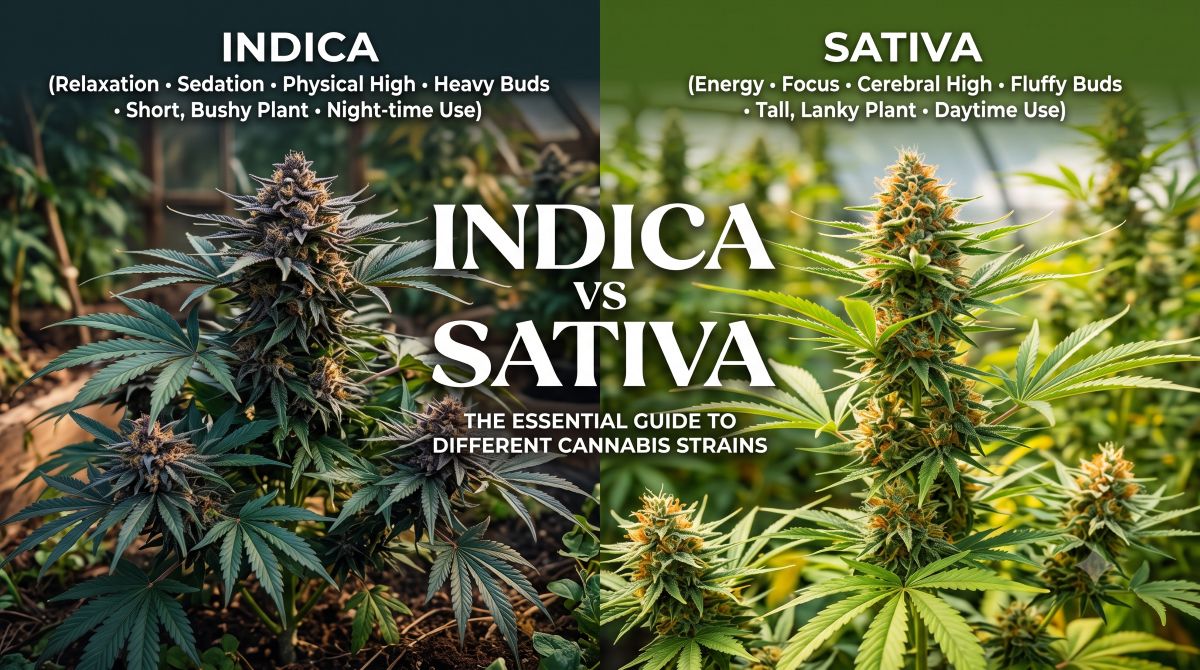
Indica and sativa are the two main plant types used to classify cannabis, and the labels are meant to describe general differences in appearance, growth, and the type of experience each
is commonly associated with. Shoppers browsing a dispensary menu will see nearly every product tagged as indica, sativa, or hybrid, which makes understanding the distinction useful before making a purchase. This guide breaks down what indica and sativa actually are, how they differ in appearance, how their effects are typically described, and how product format factors into the choice between them.
What Is Indica?
Indica plants originated in the mountainous regions of Central and South Asia, including areas of what is now Afghanistan and Pakistan, where a shorter growing season shaped the plant's compact structure. Indica varieties are generally characterized as short and bushy, with wide leaves and a dense bud structure.
In dispensary culture, indica is commonly associated with a relaxing, calming product experience, which is why it's often framed around evening or wind-down use. Many consumers reach for indica-labeled flower, pre-rolls, or vapes when they want a product suited to unwinding at the end of the day rather than an active or social setting.
What Is Sativa?
Sativa plants are traditionally linked to equatorial regions such as parts of Southeast Asia, Central America, and Africa, where longer growing seasons allowed the plant to develop a taller, more slender profile. Sativa varieties typically feature narrow leaves, a longer flowering time, and a lighter, airier bud structure compared to indica.
Sativa products are generally associated with an energizing, uplifting experience, which is why they're often positioned for daytime or social use. Consumers looking for a product to pair with activity or conversation tend to gravitate toward sativa-labeled options.
What Is a Hybrid Strain?
Hybrid strains are the product of crossbreeding indica and sativa genetics, and they make up the majority of what's available on modern dispensary shelves. Breeders combine plants to create hybrids that lean more toward one parent type (indica-dominant or sativa-dominant) or that offer a more balanced mix of both.
Because most commercial cannabis today is genetically hybridized to some degree, a strain's shelf label is often less about a pure lineage and more about which characteristics the breeder emphasized. This is one reason experienced consumers pay attention to more than just the indica/sativa tag when choosing a product.
Indica vs Sativa: Key Differences in Appearance
Beyond the product experience, indica and sativa plants differ noticeably in how they grow. These differences matter mostly to cultivators, but they also explain why certain visual and structural traits get referenced in strain descriptions.
| trait | test |
| test | |
| test | |
Sativa vs Indica Effects: How They're Typically Described
Within dispensary and product marketing, indica and sativa labels are generally used as shorthand for the kind of experience a product is designed around, rather than a guarantee of a specific outcome. These associations are best understood as product characteristics and general framing, not fixed rules.
Common ways these products are described include:
-
Indica-labeled products: often associated with a relaxing, mellow, body-focused experience
-
Sativa-labeled products: often associated with an energizing, uplifting, cerebral experience
-
Hybrid products: often described as offering a blend of both, depending on which genetics dominate
Because cannabinoid content, terpene profile, and individual product formulation all play a role, two products with the same label can still feel different from one another.
Consumption Methods and Product Formats
Indica, sativa, and hybrid genetics show up across nearly every product category, which means the choice isn't limited to flower alone. Each format offers a different way to access these genetics, along with its own dosing convenience.
-
Flower: Available in indica, sativa, and hybrid varieties; allows for flexible, self-paced consumption
-
Pre-rolls: Ready-to-use flower products, often labeled by strain type for quick selection
-
Vape cartridges: Concentrated oil formats that carry strain-specific labeling and offer discreet, measured draws
-
Edibles: Typically formulated around a target effect rather than strain type, with pre-measured doses per piece for consistency
-
Concentrates: Highly potent extracts (live resin, rosin, wax) that often reference strain genetics in their naming
Pre-measured formats like edibles and vape cartridges offer more consistency from use to use, while flower and concentrates allow more control over quantity per session.
How to Choose: Indica or Sativa?
Choosing between indica, sativa, or a hybrid ultimately comes down to personal preference and the setting a consumer has in mind. A few practical points to consider:
-
Time of day: Evening or wind-down plans often align with indica-labeled products; daytime or active plans often align with sativa-labeled products
-
Setting: Solo, low-key settings are commonly paired with indica; social or active settings are commonly paired with sativa
-
Product format: Consumers who want flexibility may prefer flower, while those who want consistency may prefer pre-measured formats like edibles or vape cartridges
-
Experimentation: Since individual experiences vary, trying different strain types and formats is the most reliable way to find a personal preference
There's no universally "correct" choice. The right option depends on what a consumer is looking to get out of the experience and which format fits their routine.
Frequently Asked Questions
What's the Difference Between Indica and Sativa?
Indica and sativa are two cannabis plant types with different growth structures and geographic origins. Indica plants are shorter and bushier, while sativa plants are taller and more slender. In product terms, indica is typically framed around relaxing, evening use, while sativa is typically framed around energizing, daytime use.
Is Sativa or Indica Stronger?
Strength isn't determined by the indica or sativa label itself. Potency depends on factors like THC content, cannabinoid profile, and product formulation, which can vary widely within both indica and sativa products.
Can a Strain Be Both Indica and Sativa?
Yes. These are called hybrid strains, and they make up most of what's sold at dispensaries today. Hybrids are bred by crossing indica and sativa genetics and can lean indica-dominant, sativa-dominant, or balanced.
Does the Indica/Sativa Label Guarantee the Effect?
No. The label reflects general product framing and plant characteristics, but individual products vary based on cannabinoid content, terpene profile, and personal response. Two products with the same label won't necessarily produce identical experiences.