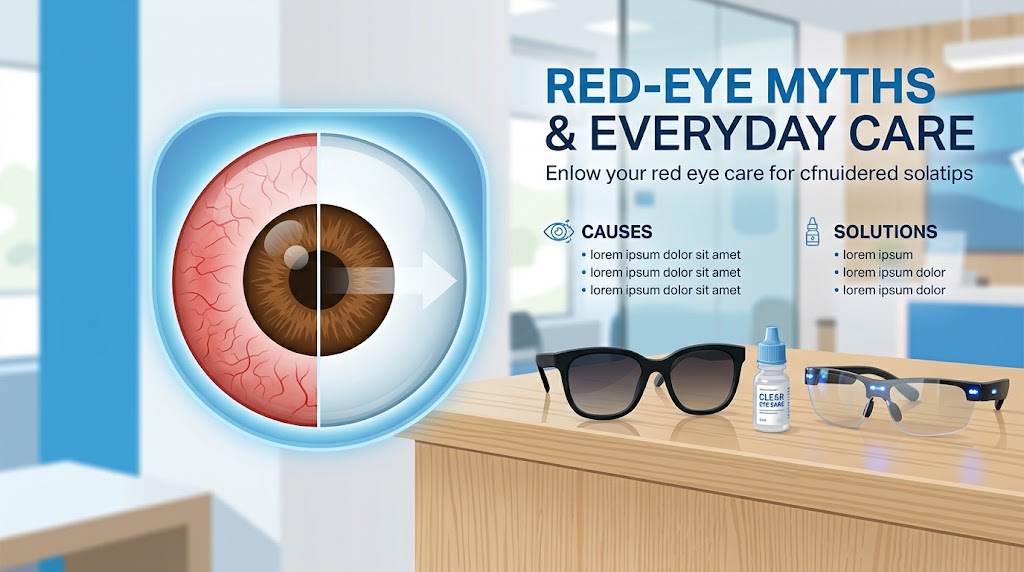
Your eyes work harder today than at any point in human history. Between phone screens, laptop monitors, fluorescent office lighting, and hours of driving, the average adult now spends 7+ hours a day staring at digital displays. Add in aging, pollution, seasonal allergies, and poor sleep, and it's no surprise eye strain, dryness, and vision complaints are climbing across every age group.
The good news: most eye problems are preventable with the right habits and the right gear. You don't need to overhaul your life, you need a handful of consistent, evidence backed practices that protect your eyes from the environment and screens they're constantly exposed to. This guide breaks down the 10 most effective ways to take care of your eyes, from simple daily habits to newer tech like AI powered smart glasses, plus a cost breakdown and answers to the questions people search most.
1. Use Eye Drops For Dryness And Irritation
Dry, irritated eyes are one of the most common complaints, especially for screen heavy jobs and dry climates. Blinking rate drops by up to 60% when we focus on a screen, which reduces the tear film that keeps eyes lubricated.
Certain substances, including cannabis, can also cause temporary redness and dryness by relaxing blood vessels in the eyes, effects that can vary depending on the type of strain and its properties
- Preservative free artificial tears are gentlest for daily use
- Gel drops work better overnight or for severe dryness
- Avoid "redness relief" drops long term. They constrict blood vessels and can cause rebound redness
- See an eye doctor if dryness persists beyond a few weeks
Eye drops are the cheapest, fastest fix for day to day irritation and a good first step before assuming something more serious is wrong.
2. Wear Sunglasses With Real UV Protection
Sunglasses aren't just a style accessory. UV exposure is linked to cataracts, macular degeneration, and photokeratitis (sunburn of the eye). The catch: not all sunglasses actually block UV.
- Look for labels stating "100% UV protection" or "UV400"
- Polarized lenses reduce glare but don't automatically mean UV protection
- Dark tint without UV coating can actually cause more damage. Pupils dilate in low light, letting more UV in
- Wraparound styles block more peripheral UV exposure
A quality pair with verified UV protection is one of the highest impact, lowest effort things you can do for long term eye health.
3. Try Blue-Light Filtering Glasses For Screen Time
Blue light glasses have become a go to for people working long hours on screens. The science on blue light causing permanent eye damage is still debated, but many users report real relief from eye strain, headaches, and disrupted sleep after switching.
- Best used during evening screen time to support natural melatonin production
- Look for lenses with a documented blue light filtering percentage, not just a marketing label
- Pair with reduced screen brightness and dark mode for added effect
- Not a substitute for taking breaks. They reduce strain, not screen time
For remote workers and heavy screen users, this is a low cost habit upgrade worth testing.
4. Consider AI-Powered Smart Glasses For Eye Health Tracking
A newer category of eyewear now blends vision correction with AI driven health tracking. Some smart glasses can monitor blink rate, screen exposure time, posture, and even flag signs of digital eye strain in real time.
- Useful for people who want data backed habit changes, not just guesses
- Some models sync with apps to remind you to blink, break, or adjust lighting
- Still an emerging category. Battery life and comfort vary widely by brand
- Not a medical device. Pair with regular checkups, not instead of them
If you're already glued to a screen, AI smart glasses turn passive habits into something you can actually measure and improve.
5. Follow The 20-20-20 Rule For Screen Breaks
Recommended by ophthalmologists, this rule is one of the simplest ways to reduce digital eye strain: every 20 minutes, look at something 20 feet away for 20 seconds.
- Set a recurring phone or desktop timer as a reminder
- Use the break to also blink deliberately and roll your shoulders
- Combine with the 6-6-6 rule for high strain jobs: 6 minutes on, 6 feet away, 6 seconds
- Especially important for kids and teens with heavy screen exposure
It costs nothing and takes seconds, arguably the highest ROI habit on this list.
6. Get Regular Eye Exams
Many eye conditions, including glaucoma, macular degeneration, and early cataracts, have no symptoms in early stages. Annual or biennial exams catch problems long before you'd notice them yourself.
- Adults 18 to 60: every 2 years if no vision issues
- Adults 60+: annually
- Anyone with diabetes, family history of eye disease, or existing prescriptions: annually
- Exams also catch non eye issues. Diabetes and high blood pressure often show up first in eye scans
Prevention is dramatically cheaper and less invasive than treatment after symptoms appear.
7. Eat An Eye-Healthy Diet
Nutrition plays a measurable role in long term eye health, particularly for preventing age related decline.
- Leafy greens (lutein, zeaxanthin) support the macula
- Fatty fish (omega-3s) help with dry eye symptoms
- Citrus and berries (vitamin C) support blood vessels in the eyes
- Nuts and seeds (vitamin E, zinc) slow age related damage
This is a long game strategy. The payoff shows up over years, not days.
8. Stay Hydrated And Manage Seasonal Allergies
Dehydration reduces tear production, and allergy season brings itching, redness, and swelling that compound existing eye strain.
- Aim for consistent water intake throughout the day, not just when thirsty
- Use antihistamine eye drops (not just oral allergy meds) during high pollen seasons
- Avoid rubbing itchy eyes. It worsens irritation and can damage the cornea
- Cold compresses reduce allergy related swelling fast
Small, consistent habits here prevent a lot of avoidable irritation.
9. Practice Proper Contact Lens Hygiene
Contact lens misuse is one of the leading causes of preventable eye infections, some of which can threaten vision permanently.
- Always wash hands before insertion or removal
- Never sleep in daily wear lenses
- Replace lens cases every 1 to 3 months
- Never "top off" old solution. Always use fresh
- Discard lenses on schedule, even if they still feel fine
This is a case where cutting corners has real consequences, not just discomfort.
10. Prioritize Sleep For Eye Recovery
Eyes repair and rehydrate during sleep. Chronic sleep deprivation shows up as twitching, dryness, dark circles, and slower visual recovery after screen use.
- Aim for 7 to 9 hours consistently
- Avoid screens 30 to 60 minutes before bed, or use blue light filtering during that window
- Sleep in a dark room. Even small amounts of light disrupt REM cycles tied to eye recovery
- Twitching eyelids (myokymia) are often a direct signal of poor sleep or high caffeine intake
Sleep is the most overlooked eye care habit, and one of the most effective.
How To Wear Glasses And Sunglasses The Right Way (Common Mistakes)
Buying the right eyewear doesn't help much if it's used incorrectly. Common mistakes to avoid:
- Wrong Fit: Glasses that slide down or pinch cause unconscious squinting and strain
- Skipping The Cleaning Routine: Use lens spray and microfiber cloths. Paper towels and shirts scratch coatings
- Choosing Tint Over UV Rating: Cheap tinted lenses without UV coating can do more harm than no sunglasses at all
- Leaving Glasses In Hot Cars: Heat warps frames and can damage lens coatings permanently
- Ignoring Scratched Lenses: Scratches scatter light and increase eye strain over time. Replace, don't tolerate
- Wearing The Wrong Prescription: An outdated prescription forces eyes to overcompensate daily
What Does Each Eye Care Option Cost? (Price Comparison)
|
Eye Care Option |
Typical Cost Range |
Notes |
|
Artificial tears / eye drops |
$5 to $20 |
Preservative free versions cost more |
|
Drugstore sunglasses (UV rated) |
$10 to $40 |
Verify UV400 labeling |
|
Designer sunglasses |
$150 to $400+ |
Style driven; UV protection varies |
|
Blue light filtering glasses |
$20 to $100 |
Non prescription; prescription adds cost |
|
AI powered smart glasses |
$200 to $500+ |
Data needed for exact current market pricing |
|
Comprehensive eye exam |
$50 to $250 |
Often covered or discounted by vision insurance |
|
Contact lens supplies (monthly) |
$20 to $60 |
Varies by lens type and replacement schedule |
Note: pricing fluctuates by brand, region, and insurance coverage. Treat these as general ranges, not quotes.
FAQ
Do I Really Need Sunglasses On Cloudy Days?
Yes. Up to 80% of UV rays pass through cloud cover, so eyes are still exposed even when the sun isn't visible.
How Often Should I Replace My Glasses Or Contacts?
Glasses: every 1 to 2 years or when your prescription changes. Daily contacts: never reuse. Monthly contacts: replace on schedule regardless of how they feel.
Are AI Smart Glasses Actually Good For Eye Health?
They can help by tracking screen time, blink rate, and strain patterns, but they're a monitoring tool, not a treatment. They work best alongside, not instead of, regular checkups and basic habits like the 20-20-20 rule.
What's The Difference Between Blue Light Glasses And Regular Glasses?
Blue light glasses have a coating or tint designed to filter a portion of blue wavelength light from screens, aimed at reducing digital eye strain and sleep disruption. Regular glasses without this coating only correct vision, with no filtering effect.