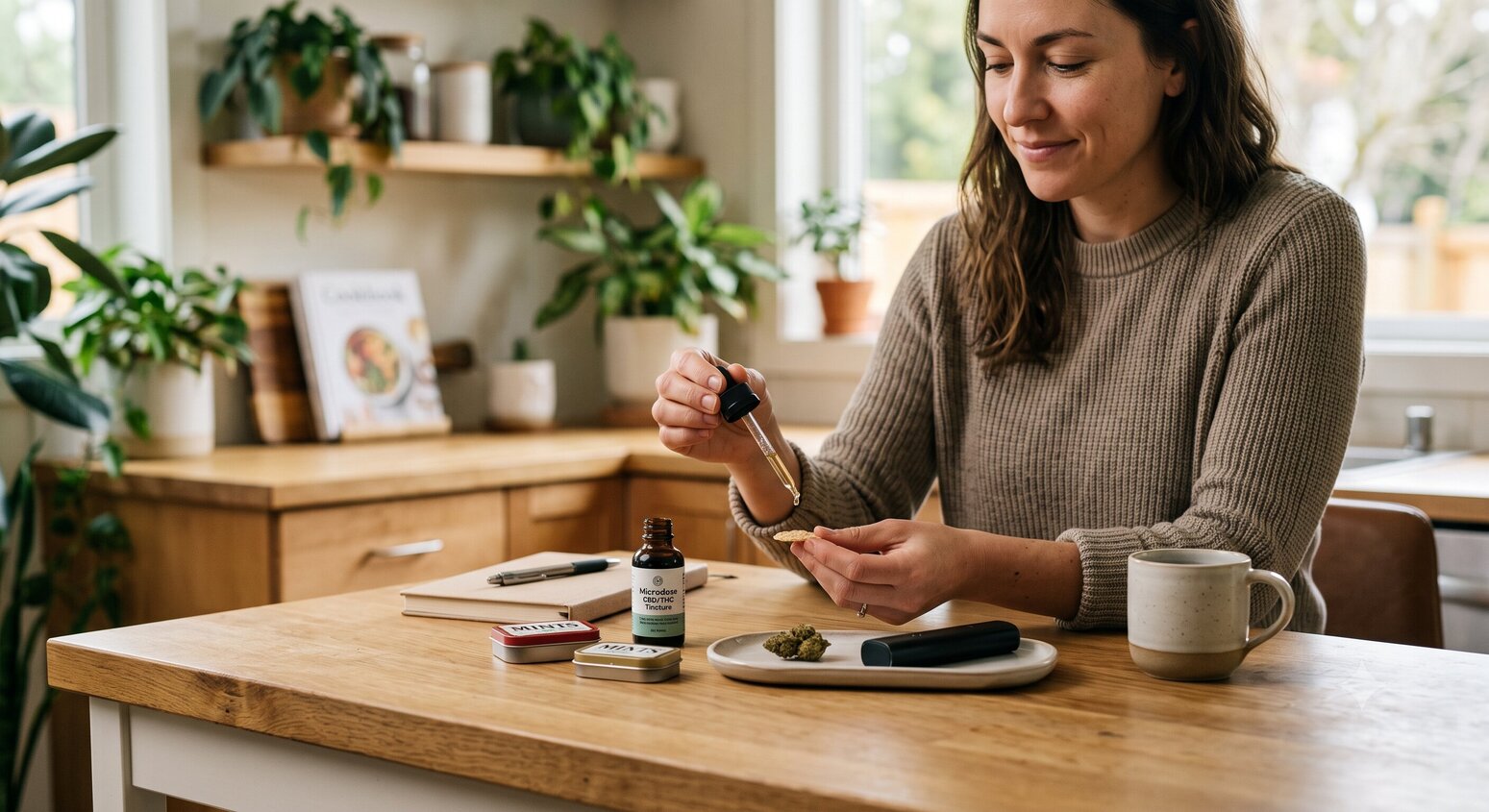
More LA cannabis shoppers are gravitating toward lower-dose products — not because they're new to cannabis, but because they want more control over their experience. Cannabis microdosing — the practice of consuming small, sub-intoxicating amounts of THC — has moved from niche wellness circles into mainstream dispensary conversations. Products in the 2.5mg and 5mg THC range are now among the most requested at licensed dispensaries across Los Angeles.
This guide explains what microdosing means in practice, how common starting doses compare, which product formats work best for first-timers, and what to look for when shopping the REBUD menu.
How to Start Low and Go Slow
The most common mistake new cannabis consumers make isn't choosing the wrong product — it's choosing the right one and using too much of it, too fast. Low-dose cannabis is designed to be approachable, but it still works best with a patient, measured approach.
Why Pacing Matters for New and Infrequent Consumers
When you consume cannabis — especially as an edible or drink — the effects don't arrive immediately. Onset can take anywhere from 30 minutes to 2 hours depending on your metabolism, whether you've eaten recently, and the product format. Starting at a low THC microdose and waiting the full recommended time before consuming more is what separates a pleasant first experience from an overwhelming one.
A 2026 peer-reviewed study in the American Journal of Preventive Medicine — surveying 1,523 U.S. adults — found that most people who microdose cannabis do so specifically to avoid the intensity of a full recreational dose, prioritizing predictability and control over peak effects. That's exactly what low-dose products are built for.
Individual responses to THC also vary significantly. Body weight, tolerance, and even genetics influence how a given dose feels. Two people can consume the same 5mg edible and describe very different experiences. "Start low, go slow" isn't just cautionary language — it's practical.
What to Look For or Ask About in Store or on the Menu
When browsing the REBUD menu or visiting one of our LA locations, look for products labeled clearly with milligrams per serving. The serving size matters as much as the total package — a 100mg chocolate bar split into 10 pieces contains 10mg per piece, not 1mg per bar. Ask a budtender about the per-serving dose, not just the package total. If you're new to edibles, 2.5mg is a sensible starting point; if you have some tolerance but want a controlled experience, 5mg is the common next step.
2.5mg vs 5mg THC
When it comes to low dose THC, the two most common starting points are 2.5mg and 5mg per serving. Understanding how they differ helps you make a more confident purchase.
How the Two Common Starting Doses Differ
2.5mg THC is widely regarded as the microdose standard. At this level, most people notice a mild shift in mood or perception — relaxed, slightly elevated — without notable impairment. For complete cannabis newcomers, those sensitive to THC, or anyone who's had an unpleasant experience at higher doses in the past, 2.5mg is the safest and most comfortable entry point.
A 5mg dose produces a more noticeable effect for most people. California's standard "one serving" is defined as 10mg THC, so 5mg is exactly half that. For casual, experienced consumers it provides clearly felt effects while remaining functional; for new users it's still relatively low, but waiting out the full onset window before taking more is essential. Microdose gummies and beginner edible doses are most commonly sold in these two ranges for exactly this reason.
A 2025 analysis of why microdosing is gaining popularity from RISE Dispensaries confirms that low-dose formats are one of the fastest-growing segments in legal cannabis, driven by consumers who want a predictable, controllable experience over a heavy one.
What to Look For or Ask About in Store or on the Menu
Look for products that make the per-serving dose easy to read at a glance. Single-serve formats — one gummy, a 2oz drink, a small chocolate square — remove the guesswork around portions. Cannabis lab tests, also called COAs (certificates of analysis), confirm the exact THC per serving in any product; reputable cannabis products will have these results available either on the packaging or from the dispensary.
Microdosing Drinks vs Gummies
Two of the most popular low-dose formats are infused drinks and gummies. Both deliver a consistent, measured dose — but they work differently in the body, and that difference matters when you're learning to pace yourself.
Format Differences in Onset and Control
Microdose gummies are traditional edibles: THC is absorbed through the digestive system, which means a slower onset (typically 45–90 minutes) but a longer, more sustained effect window (often 3–6 hours). The tradeoff for waiting is a smoother, longer-lasting experience that many consumers prefer for evenings or low-key social situations.
Cannabis-infused drinks often use nano-emulsified THC — a technology that creates water-soluble THC particles that absorb faster through the mucous membranes and upper GI tract. Many cannabis beverages are marketed as "fast-acting," with onset windows of 15–30 minutes. This makes drinks easier to pace in real time, which is a real advantage for anyone who finds the unpredictable wait of traditional edibles difficult to manage.
Understanding edibles dosing before you buy is one of the most practical things a new cannabis consumer can do. Even small differences in body chemistry, food intake, or product format can shift how the same dose feels — which is why starting at 2.5mg and tracking your response over a few sessions is more useful than chasing a number someone else recommends.
What to Look For or Ask About in Store or on the Menu
On the Rebud menu, look for cannabis beverages labeled "fast-acting" or "nano" to find products with accelerated onset. For gummies, single-serve packs in the 2.5mg–5mg range let you try a dose without committing to a larger quantity. Shopping by desired experience — rather than just by product type — is a useful approach when you're still learning what works for you: think about the window of time you want, the setting, and how subtle or noticeable you want the effect to feel, then filter cannabis products from there.
FAQ
What Is Cannabis Microdosing?
Cannabis microdosing refers to consuming a small, intentionally low amount of THC — typically 1mg to 5mg per session — rather than a full recreational dose. The goal is to achieve mild, manageable effects while avoiding strong intoxication. It's popular among new consumers, those with lower THC tolerance, and people who prefer to stay functional throughout the day.
How Does Cannabis Microdosing Compare to a THC Microdose?
"Cannabis microdosing" describes the practice — the habit of consuming low, controlled amounts over time. A "THC microdose" refers to the specific quantity consumed in a single session, usually 2.5mg to 5mg. Both terms describe the same approach: one is the behavior, one is the measurement.
What Does 2.5mg THC Mean?
2.5mg THC means a product contains two-and-a-half milligrams of delta-9 THC per serving. California's regulatory standard serving size for cannabis edibles is 10mg, so 2.5mg equals one-quarter of that. At this dose, most new consumers report a subtle effect — mild relaxation, a slight shift in mood — without impairment. It's the most widely recommended starting point for cannabis newcomers.
Where Can I Find Low-Dose Cannabis Products Near Me in Los Angeles?
REBUD carries low-dose edibles, microdose gummies, and cannabis drinks at all five Los Angeles dispensary locations — North Hollywood, Highland Park, Sylmar, Westwood, and San Pedro. Delivery is available across LA County and into Orange County. Browse the REBUD edibles and drinks menu to filter by dose, or ask a budtender at any location for current low-dose selections.