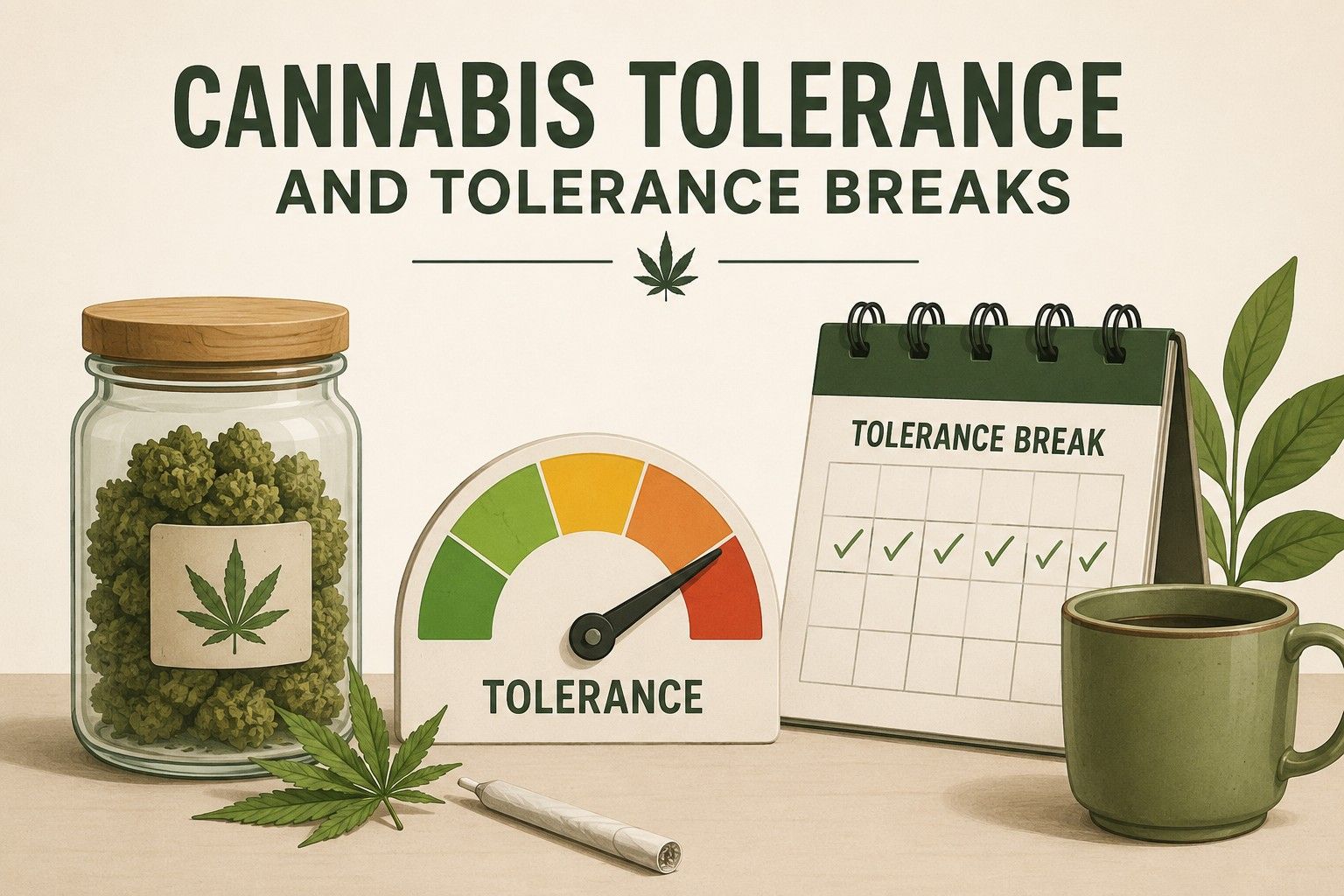
If your usual gummy, pre-roll, or vape hits softer than it used to, you're not imagining it. Cannabis tolerance is one of the most common topics we hear about from LA consumers — the same product that once felt strong now barely registers, and the natural next question is whether a weed tolerance break actually fixes it.
This guide breaks down what's happening in your body when tolerance builds, how long a typical tolerance break (or "T-break") takes to make a difference, and lower-effort ways to reset your relationship with cannabis without stopping entirely.
How Cannabis Tolerance Works
Cannabis tolerance develops when your body adjusts to regular cannabinoid exposure, and the effects you're used to feeling become less pronounced over time. This is a normal physiological response, not a sign anything is wrong — it happens with consistent use of almost any compound that interacts with receptor systems in the body.
The Role of CB1 Receptors in Diminishing Effects
CB1 receptors are part of the endocannabinoid system, a network that helps regulate mood, appetite, sleep, and more. THC produces its effects largely by binding to CB1 receptors in the brain and nervous system.
With frequent use, the body responds by reducing CB1 receptor availability — a process researchers call downregulation. Fewer active receptors means the same amount of THC has less to bind to, which is why a dose that once felt strong may now feel mild. This is the core mechanism behind THC tolerance, and it's why simply increasing your dose over time tends to create a cycle rather than a fix.
THC itself originates in the plant's trichomes, the tiny resin glands where cannabinoids and terpenes are produced — understanding that source can help make sense of why potency varies so much from product to product.
What to Look For or Ask About in Store or on the Menu
If you suspect tolerance is creeping up, it helps to look at how you're consuming, not just what. Ask your budtender about:
Different consumption methods (flower vs. vape vs. edible) — your body may respond differently to each
Cannabinoid ratios, including products with THC paired with CBD or minor cannabinoids
Batch potency testing on the label, so you know exactly what you're working with
Browse REBUD's flower and vape menu to compare formats side by side.
T-Break Guide
A tolerance break is a period of abstaining from cannabis to allow receptor sensitivity to recover. It's the most direct way to reset cannabis tolerance, though it requires patience and isn't the only option.
How Long Does a Tolerance Break Typically Take
There's no single universal timeline, since it depends on frequency and duration of prior use, individual metabolism, and the products typically used. That said, general patterns reported across cannabis communities and available research include:
48–72 hours: Some early receptor sensitivity may begin to shift for lighter or less frequent users
1–2 weeks: A commonly cited window for noticeable changes in perceived potency for regular consumers
3–4 weeks: Often referenced as a fuller reset point for long-term, heavy use
Data needed for exact receptor-recovery timelines — individual results vary, and this isn't a guarantee of any specific outcome. If you're asking how long a T break should be, a good rule of thumb is to plan for at least a week and reassess from there.
What to Look For or Ask About in Store or on the Menu
Planning a cannabis break doesn't mean you have to plan alone. When you're ready to ease back in, ask about:
Low-dose or micro-dose products to avoid immediately rebuilding tolerance
CBD-forward or 1:1 THC: CBD options for a gentler reintroduction
Non-inhaled formats, like tinctures, for more measured dosing
Low-Dose Reset Strategies
A full T-break isn't realistic for everyone, and it's not the only path to a tolerance reset. Adjusting how much and how often you consume can produce similar benefits with less disruption.
Alternatives to a Full Break
Consider these lower-effort approaches:
Micro-dosing: Using smaller amounts more intentionally rather than cutting cannabis out completely
Cutting frequency, not quantity: Building in cannabis-free days each week instead of an extended break
Rotating strains or formats: Some consumers report that switching between different cultivars or consumption methods feels different even at similar THC levels
Tracking use: Simple journaling of dose, method, and effect can highlight patterns worth adjusting
None of these are guaranteed to produce a specific result, and what works varies from person to person — but they're worth exploring before committing to a longer break.
What to Look For or Ask About in Store or on the Menu
For a low-dose reset strategy, look for:
2.5–5mg THC edibles or beverages for controlled dosing
Single-serve or scored products that make it easy to split doses
Terpene-forward, lower-THC flower if you prefer smoking or vaping — growing method (like indoor, greenhouse, mixed-light, and sungrown cultivation) can also influence potency and terpene profile
Explore REBUD's low-dose and CBD product selection to find options suited to a lighter routine.
Frequently Asked Questions
What is Cannabis Tolerance?
Cannabis tolerance is when the body becomes less responsive to THC's effects after regular use, typically due to changes in CB1 receptor availability. It often means a previously effective dose feels less noticeable over time.
How does a Weed Tolerance Break Compare to Just Cutting Back?
A full tolerance break involves abstaining from cannabis entirely for a set period, while cutting back means reducing frequency or dose without stopping completely. A full break may allow for a more complete reset, while cutting back is a gentler, more gradual approach — both are valid depending on your goals and lifestyle.
What are CB1 Receptors?
CB1 receptors are part of the endocannabinoid system and are primarily responsible for how THC produces its effects in the brain and nervous system. Browse the Cannabis glossary for more cannabis science terms.
Where Can I Find Low-dose Products Near Los Angeles to Help Reset Tolerance?
REBUD carries a range of low-dose and CBD-forward products across our LA menu, available in-store and through delivery.