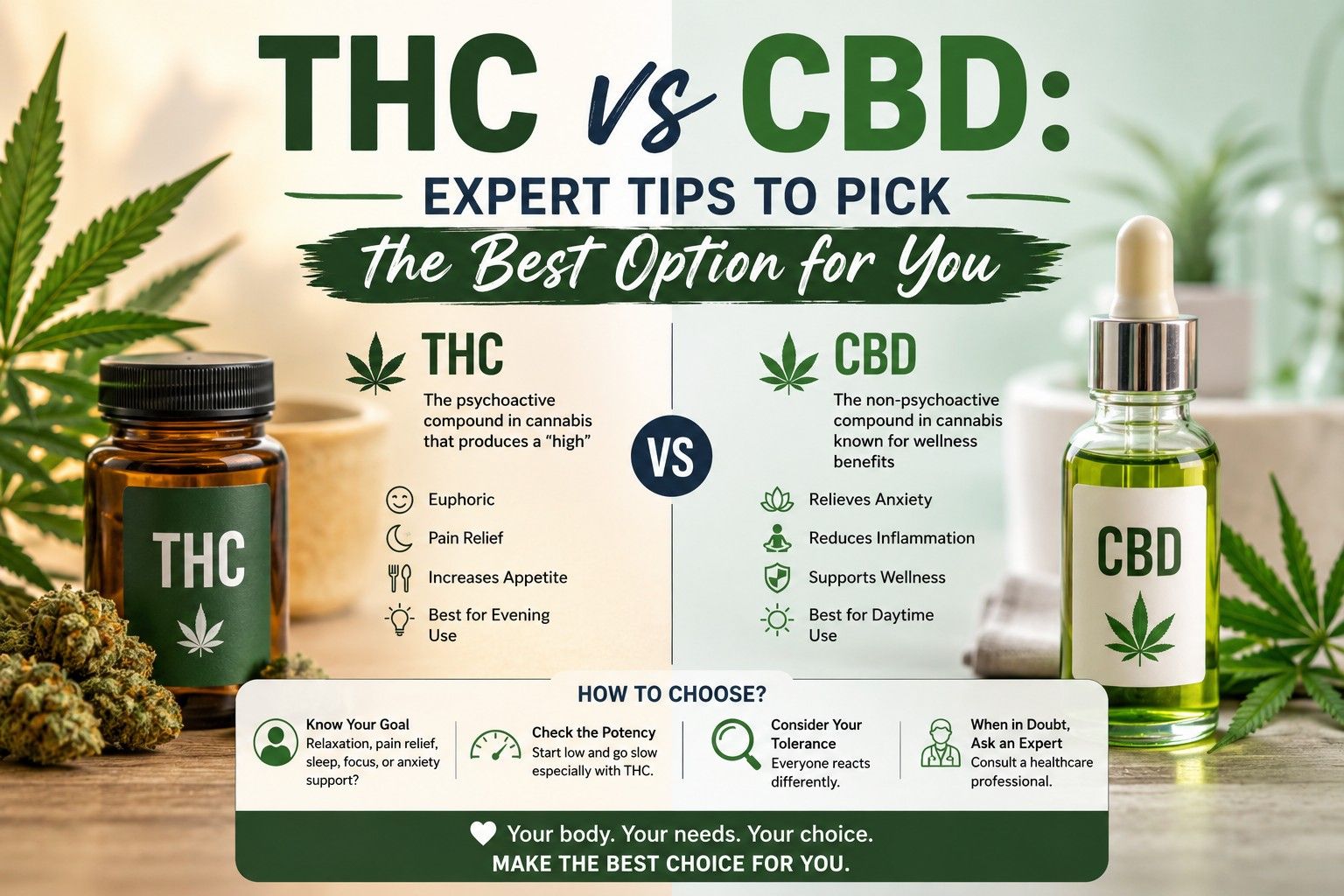
CBD (cannabidiol) and THC (tetrahydrocannabinol) are two of the most well-known cannabinoids in the cannabis plant, but they don't affect the body the same way. THC produces the intoxicating "high" people associate with cannabis, while CBD generally does not. Beyond that core difference, the two compounds also vary in their effects, potential benefits, side effects, legal status, and the types of products they're sold in, including cannabis-infused drinks and gummies, all of which shape which one might fit your goals.
What Are CBD and THC?
Cannabinoids are naturally occurring compounds found in the cannabis plant. Researchers have identified more than 100 of them, but CBD and THC are the two most studied and most widely available in consumer products. Both interact with the body's endocannabinoid system, though in different ways, which is why their effects can feel so different even though they come from the same plant.
What Does CBD Stand For?
CBD stands for cannabidiol. It's a non-intoxicating cannabinoid, meaning it won't produce a euphoric high on its own. CBD is commonly extracted from hemp and used in oils, gummies, capsules, and topicals aimed at relaxation and general wellness support.
What Does THC Stand For?
THC stands for tetrahydrocannabinol. It's the cannabinoid primarily responsible for the psychoactive effects of cannabis — the "high" that recreational and some medical users seek. THC is found in higher concentrations in marijuana than in hemp.
How Do CBD and THC Work in the Body?
Both cannabinoids interact with the endocannabinoid system (ECS), a network of receptors that helps regulate functions like mood, appetite, sleep, and pain perception. THC binds directly to CB1 receptors, which are concentrated in the brain and central nervous system — this is what triggers its intoxicating effects. CBD doesn't bind strongly to CB1 or CB2 receptors; instead, it's thought to influence other receptor systems in the body, which may explain why it doesn't produce a high.
CBD vs THC at a Glance
|
Feature |
CBD |
THC |
|
Full Name |
Cannabidiol |
Tetrahydrocannabinol |
|
Psychoactive? |
No |
Yes |
|
Common Effects |
Relaxation, wellness support |
Euphoria, altered perception |
|
Intoxication |
No |
Yes |
|
Product Types |
Oils, gummies, capsules, topicals |
Flower, vapes, edibles, concentrates |
|
Federal Status |
Hemp-derived CBD may be legal |
Cannabis regulations vary by state |
What Is the Difference Between CBD and THC?
Psychoactive Effects
THC's strong binding affinity for CB1 receptors in the brain is what causes intoxication. CBD interacts with the ECS more indirectly and doesn't produce the same mind-altering effect, which is why it's often chosen by people who want potential wellness support without feeling high.
Mental and Physical Effects
Users commonly report that THC brings on euphoria, changes in sensory perception, and increased appetite, while CBD is more often associated with a sense of calm or relaxation without a mental "shift." Both compounds can also cause physical effects like changes in heart rate or drowsiness, depending on dose.
Interaction With Cannabinoid Receptors
The ECS has two main receptor types: CB1, found mostly in the brain and central nervous system, and CB2, found mostly in the immune system and peripheral tissues. THC binds strongly to both, especially CB1. CBD has a much weaker direct affinity for either receptor and appears to work through other pathways in the body.
Product Availability
CBD products derived from hemp are widely available at retail and online in most U.S. states. THC products are generally restricted to state-licensed dispensaries in states where cannabis is legal for medical or recreational use, and availability depends heavily on local regulations.
CBD vs THC Effects
Effects vary by person, dose, product type, and individual tolerance — what feels relaxing to one person may feel different to another.
Common CBD Effects
-
Relaxation
-
Calmness
-
General wellness support
-
No intoxicating high
Common THC Effects
-
Euphoria
-
Mood changes
-
Altered sensory perception
-
Increased appetite
Potential Benefits of CBD vs THC
Claims about cannabinoid benefits should be approached with balance — research is ongoing, and not every claimed benefit is backed by strong clinical evidence.
Potential Uses Associated With CBD
CBD is being studied for its possible role in supporting relaxation, recovery, and general wellness. Many consumers use it as part of a broader self-care routine rather than for a specific medical condition.
Potential Uses Associated With THC
THC is associated with appetite stimulation and mood effects, and it's being researched for potential applications in symptom management. As with CBD, individual experiences vary widely.
Can CBD and THC Work Better Together?
Some researchers and consumers point to the "entourage effect" — the idea that cannabinoids and terpenes may work together to produce effects different from what either compound would produce alone. This concept is still being studied, and it shouldn't be understood as a guarantee of any specific outcome.
Medical Benefits of THC vs CBD: What Does Research Say?
The science on cannabinoids is still developing, and consumers should be cautious about assuming that wellness marketing claims are clinically proven.
-
FDA-approved CBD medication: Epidiolex, a purified CBD product, is FDA-approved for treating certain rare forms of epilepsy.
-
FDA-approved THC-based medications: Synthetic THC medications such as dronabinol and nabilone are approved for specific uses like chemotherapy-related nausea and appetite stimulation.
-
Ongoing research: Scientists continue to study cannabinoids for potential roles in sleep, pain, and mood-related concerns, but most consumer CBD and THC products have not gone through the same rigorous testing as FDA-approved medications.
-
Limitations of current evidence: Many popular claims about cannabinoids — from anxiety relief to inflammation reduction — are based on early or preliminary research, not confirmed medical consensus.
Because of this gap between marketing claims and clinical evidence, it's worth talking to a healthcare provider before using CBD or THC for a specific health concern.
CBD Oil vs Weed: What's the Difference?
CBD oil is typically extracted from hemp plants, which are bred to contain very low THC levels, and processed into a concentrated oil used for wellness purposes. "Weed" generally refers to cannabis flower harvested from marijuana plants, which contain much higher THC concentrations. The two differ significantly in cannabinoid content, how they're consumed (oil drops versus smoking or vaping flower), and the effects they produce — CBD oil doesn't cause a high, while weed does.
CBD Oil vs THC Oil
|
Feature |
CBD Oil |
THC Oil |
|
Intoxicating |
No |
Yes |
|
Typical Use |
Wellness-focused |
Psychoactive cannabis experience |
|
Availability |
Broader availability |
State-regulated markets |
|
Common Formats |
Tinctures, capsules |
Tinctures, concentrates |
Side Effects of CBD vs THC
Reactions to both cannabinoids vary from person to person, and side effects tend to be dose-dependent.
Possible CBD Side Effects
-
Drowsiness
-
Digestive discomfort
-
Drug interactions (CBD can affect how the body metabolizes certain medications)
Possible THC Side Effects
-
Dry mouth
-
Increased heart rate
-
Temporary anxiety
-
Impaired coordination
Is CBD Legal? Is THC Legal?
Hemp-derived CBD products containing less than 0.3% THC are legal under federal law in the U.S., though individual states can impose additional restrictions. THC's legal status is more complex — it remains a federally controlled substance, but many states have legalized it for medical and/or recreational use through their own regulatory frameworks. Because the rules differ so much by location, it's important to check your state and local regulations before purchasing or using either type of product. This article is for informational purposes and isn't legal advice.
Which Is Better: CBD or THC?
Neither cannabinoid is universally "better" — the right choice depends on what you're looking for.
|
Goal |
CBD |
THC |
|
Avoid intoxication |
✓ |
|
|
Experience psychoactive effects |
✓ |
|
|
Wellness-focused use |
✓ |
|
|
Recreational cannabis experience |
✓ |
Consider your desired effects, THC tolerance, prior experience with cannabis, what's legally available where you live, and personal preference when deciding between the two — or whether a combination product makes more sense for you.
How to Choose the Right CBD or THC Product
Product format affects onset time, duration, and intensity of effects:
-
Flower – fast-acting, often used for a THC experience
-
Gummies – easy to dose, slower onset, longer-lasting effects
-
Oils/tinctures – flexible dosing, moderate onset time
-
Capsules – precise, consistent dosing
-
Topicals – localized application, generally non-intoxicating even with THC
-
Vape products – fast-acting, shorter duration
Whatever format you choose, start with a low dose, read the product label and lab-testing information carefully, and increase gradually only as needed.
Frequently Asked Questions
Does CBD Get You High?
No. CBD is non-intoxicating and doesn't produce the euphoric effects associated with THC, even at higher doses. Some full-spectrum CBD products contain trace THC, so checking lab results matters if you want to avoid any THC exposure.
Is THC Stronger Than CBD?
"Stronger" depends on what you're measuring. THC has more pronounced psychoactive effects, while CBD's effects are subtler and non-intoxicating. Neither is simply a stronger version of the other — they work differently in the body.
Can You Take CBD and THC Together?
Yes, many products combine both. Some research suggests CBD may soften certain THC effects, like anxiety, when used together, though individual responses vary. Start with a low THC dose if you're combining the two for the first time.
What's the Difference Between CBD Oil and THC Oil?
CBD oil is non-intoxicating and typically used for wellness purposes, while THC oil produces psychoactive effects and is sold through state-regulated cannabis markets. Both come in tinctures, but their legal availability and typical use cases differ significantly.
Is CBD Legal Everywhere?
Not entirely. Hemp-derived CBD with less than 0.3% THC is federally legal in the U.S., but some states impose their own restrictions. Always check local laws before purchasing or using CBD products.
Which Is Better for Beginners: CBD or THC?
CBD is often recommended for beginners since it doesn't cause intoxication, making it easier to gauge how your body responds. If trying THC for the first time, starting with a low dose in a comfortable setting is recommended.
Will CBD or THC Show Up on a Drug Test?
Standard drug tests are designed to detect THC, not CBD. However, some CBD products — especially full-spectrum options — contain trace THC that could potentially trigger a positive result. If you need to avoid any THC exposure, look for broad-spectrum or THC-free isolate products with third-party lab testing.
What Is the Entourage Effect?
The entourage effect is the theory that cannabinoids, terpenes, and other compounds in cannabis may work together to produce different or enhanced effects compared to any single compound alone. It's an active area of research rather than a confirmed clinical outcome.