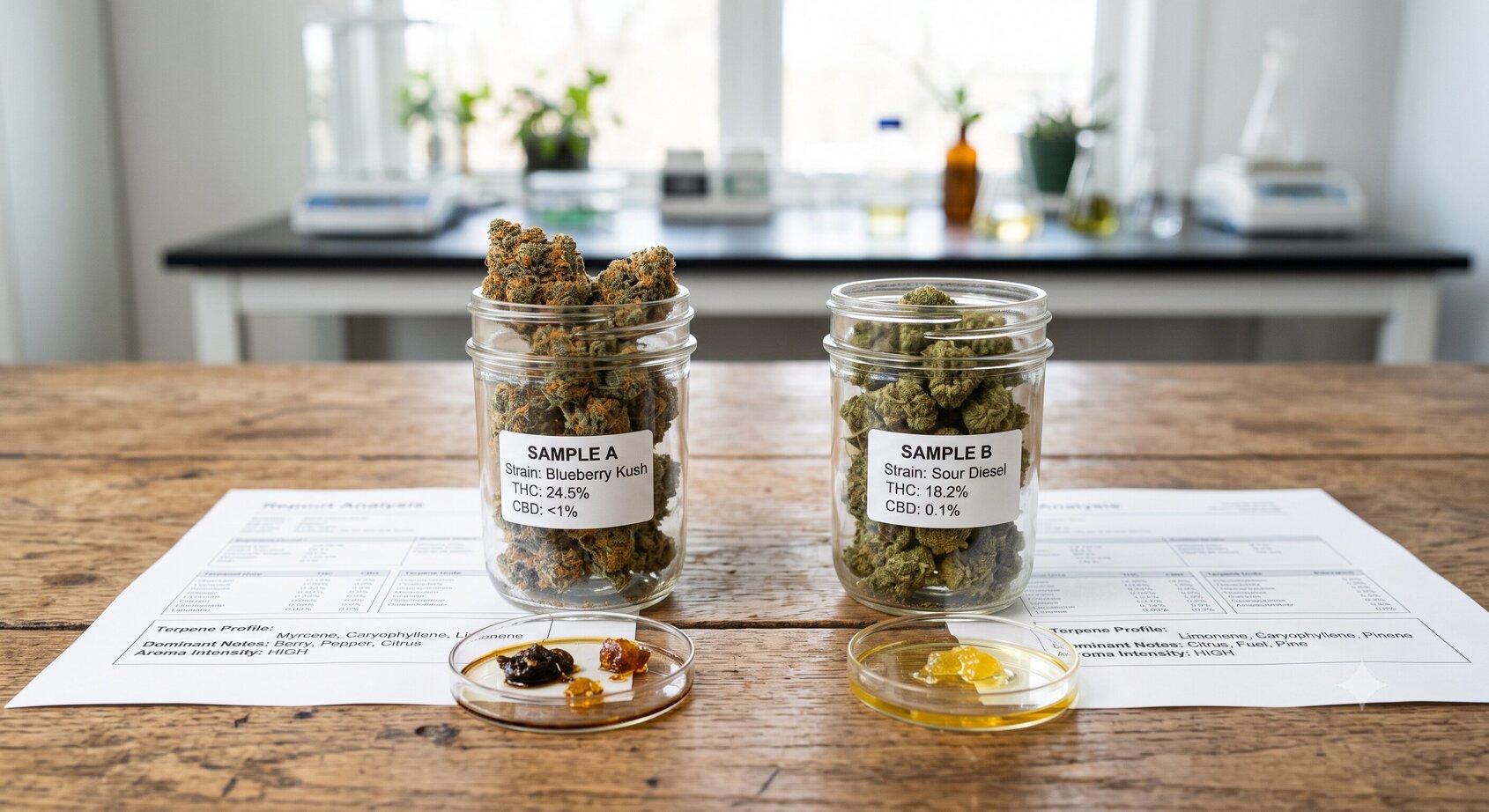
If you've spent time reading cannabis packaging lately, you've probably noticed two things competing for your attention: a bold THC percentage and a list of terpenes you might not fully recognize. For a long time, that THC number was the whole conversation. Today, more Los Angeles consumers are asking a sharper question — what does this actually feel like?
That shift has driven a significant surge in searches around terpenes and terpene profiles, and for good reason. The aromatic compounds cannabis plants produce have real implications for the experience you can expect. THC percentage is only one part of the cannabinoid picture — the compound starts out as THCA in the plant and only becomes psychoactive after heat.
This guide explains what terpenes are, how they compare to THC percentage as a quality signal, and what to look for when you're shopping — in store at any REBUD location or browsing the menu for delivery across Los Angeles.
Top Cannabis Terpenes Explained
The chemistry of cannabis goes well beyond cannabinoid percentages. Terpenes are the compounds responsible for each strain's distinct aroma, and emerging research suggests they may also shape the overall character of the experience — working alongside THC and CBD rather than independently of them.
What Top Cannabis Terpenes Mean and Why It Matters
Terpenes are naturally occurring aromatic compounds produced by cannabis plants — and by thousands of other plants, from lavender to black pepper. They're what make one strain smell like citrus and another like fresh pine or damp earth. More than 150 terpenes have been identified in cannabis, though a handful appear consistently across popular cultivars.
Here are the terpenes you'll see most often on labels, and what they typically signal:
Myrcene — Earthy and musky, with a hint of fruit. Myrcene is the most common cannabis terpene and also shows up in hops and mangoes. It's commonly associated with relaxing, body-focused effects, though research is still developing on the mechanism.
Limonene — Bright, citrusy, and sharp. Found in citrus rinds, limonene is often associated with elevated mood and a more energizing character.
Caryophyllene — Spicy, peppery, and woody. Caryophyllene is unique among terpenes because it can interact directly with the body's endocannabinoid system, making it one of the more studied cannabis terpenes in current research.
Linalool — Soft and floral, similar to lavender. Commonly associated with calming effects and often found in strains used for relaxation.
Pinene — Clean and piney, like a walk through a forest. Found in pine needles and rosemary, and commonly associated with mental clarity and alertness.
These aren't minor details. When terpenes and cannabinoids work together — a phenomenon sometimes called the entourage effect — the outcome may differ meaningfully from what either compound produces alone. Pharmacologist Ethan Russo's foundational 2011 review in the British Journal of Pharmacology documented this synergy in detail and remains one of the most widely cited papers in cannabis science. The terpene profile, in this framework, is a more nuanced quality signal than THC percentage alone.
What to Look For or Ask About in Store or on the Menu
When browsing flower or pre-rolls, look for lab-tested products that list total terpene percentage alongside the individual terpenes. A total terpene content of 1–2% or above is generally considered expressive — meaning you'll smell and potentially notice those compounds in the experience. Ask your REBUD budtender which products carry strong, intact terpene profiles. Freshness and proper storage make a significant difference in whether those terpenes survive to the point of purchase.
How to Read a Terpene Label
California's licensed cannabis market requires lab testing on all flower and concentrate products. That testing often includes a full terpene breakdown — but knowing what those numbers actually mean is what separates an informed purchase from a guess.
What Terpene Labels Tell You (and What They Don't)
State-licensed dispensaries in California carry lab-tested cannabis, and many labels now display a full terpene profile — the specific terpenes present and their concentrations, usually expressed as a percentage of total weight.
Here's how to read what's in front of you:
Total terpenes % — The sum of all identified terpenes. Useful as a general freshness indicator. Higher isn't always better, but very low numbers often indicate older or poorly stored product.
Individual terpene breakdown — This is where the real information lives. A label showing 0.6% myrcene and 0.4% limonene tells you something very different from one showing 0.7% caryophyllene and 0.5% linalool — even if the THC percentage on both is identical.
THC percentage — A measure of tetrahydrocannabinol concentration. Important context, but an incomplete picture of the full experience.
Two products at 28% THC can feel quite different if their terpene profiles diverge. Conversely, a well-grown product at 22% THC with a rich, preserved terpene profile may deliver a more layered experience than a 30% product where terpenes degraded during curing or long storage.
What to Look For or Ask About in Store or on the Menu
Read labels for named terpenes, not just a total number. If a product only lists "total terpenes: 1.2%" without identifying which ones, that's limited information. Ask your budtender whether the menu includes individual terpene data — or check the REBUD menu, where many product pages include full lab panel details. , which often include lab panel details. When possible, open the jar. Cannabis aroma is one of the best real-world proxies for terpene quality: if a product smells vivid and complex, it generally still has its terpenes intact.
Terpenes and Effects: What Science Actually Says
Consumer-facing marketing sometimes overstates what terpenes can do. The reality is more nuanced: some terpenes have well-documented biological activity, others are associated with effects primarily through anecdotal evidence, and the full picture of how they interact with cannabinoids in the human body is still being mapped.
What the Research Supports (and Where It's Still Developing)
Here's what the current evidence actually supports:
Caryophyllene has demonstrated the ability to interact with CB2 receptors in the endocannabinoid system. A study published in PNAS by Gertsch et al. identified beta-caryophyllene as a dietary cannabinoid — a finding that places it in a unique category among terpenes and has driven significant ongoing research.
Linalool and myrcene appear in multiple studies examining cannabis and sedation or relaxation. The data isn't definitive, but the association is consistent enough to be a reasonable guide when choosing a product.
Limonene has been studied in contexts involving mood and stress. Cannabis-specific human trials are limited, but the terpene's presence in citrus fruits — long associated with uplifting scent profiles — is well-established.
The National Academies of Sciences 2017 report on the health effects of cannabis noted that the evidence base for cannabis research is still developing across many dimensions — a reminder that claims about specific terpene effects should be held with appropriate uncertainty. Terpene profiles are a useful guide, not a guaranteed outcome.
That said, combining terpene profile data with THC percentage gives you a more complete framework than percentage alone. Experienced cannabis consumers increasingly shop by terpene — especially when choosing products for a specific goal like sleep, creativity, focus, or social ease — rather than defaulting to the highest THC number on the shelf.
What to Look For or Ask About in Store or on the Menu
If you have a specific intention going into your session, ask your REBUD budtender to point you toward products with terpene profiles commonly associated with that experience. The menu often includes terpene data. Filtering by dominant terpene is one of the most effective ways to navigate a large product selection and find something that fits what you're looking for.
FAQ
Quick answers to the most common questions about terpenes, terpene profiles, and what to look for when shopping cannabis in Los Angeles.
What Are Terpenes?
Terpenes are naturally occurring aromatic compounds found in cannabis and many other plants. In cannabis, they contribute to aroma, flavor, and may influence the overall experience of a product. They are produced in the same glands as cannabinoids like THC and CBD, and are present in both flower and many concentrated products.
How Do Terpenes Compare to Terpene Profiles?
Both are cannabis terms you'll encounter on almost every dispensary label. "Terpenes" is the general term for the class of aromatic compounds. A "terpene profile" refers to the specific combination and concentration of terpenes in a given product. Think of individual terpenes as instruments and the terpene profile as the piece of music — the combination and proportion matter as much as any single compound.
What Does Myrcene Mean?
Myrcene is a specific terpene found in high concentrations in many cannabis strains. It has an earthy, musky aroma and is the most commonly occurring terpene in cannabis. It's also found in hops, bay laurel, and mangoes. Myrcene is commonly associated with relaxing, body-focused effects, though individual results vary. When you see it listed prominently on a label, it typically signals a more grounding character for that product.
Where Can I Find Products With Strong Terpene Profiles Near Me in Los Angeles?
All five REBUD dispensary locations — North Hollywood, Highland Park, Sylmar, Westwood, and San Pedro — carry lab-tested cannabis with terpene data available. You can also order delivery across greater Los Angeles and Orange County through rebud.com. Browse the menu, check lab panels for terpene details, or ask a budtender to help you find the right terpene profile for your specific goals.