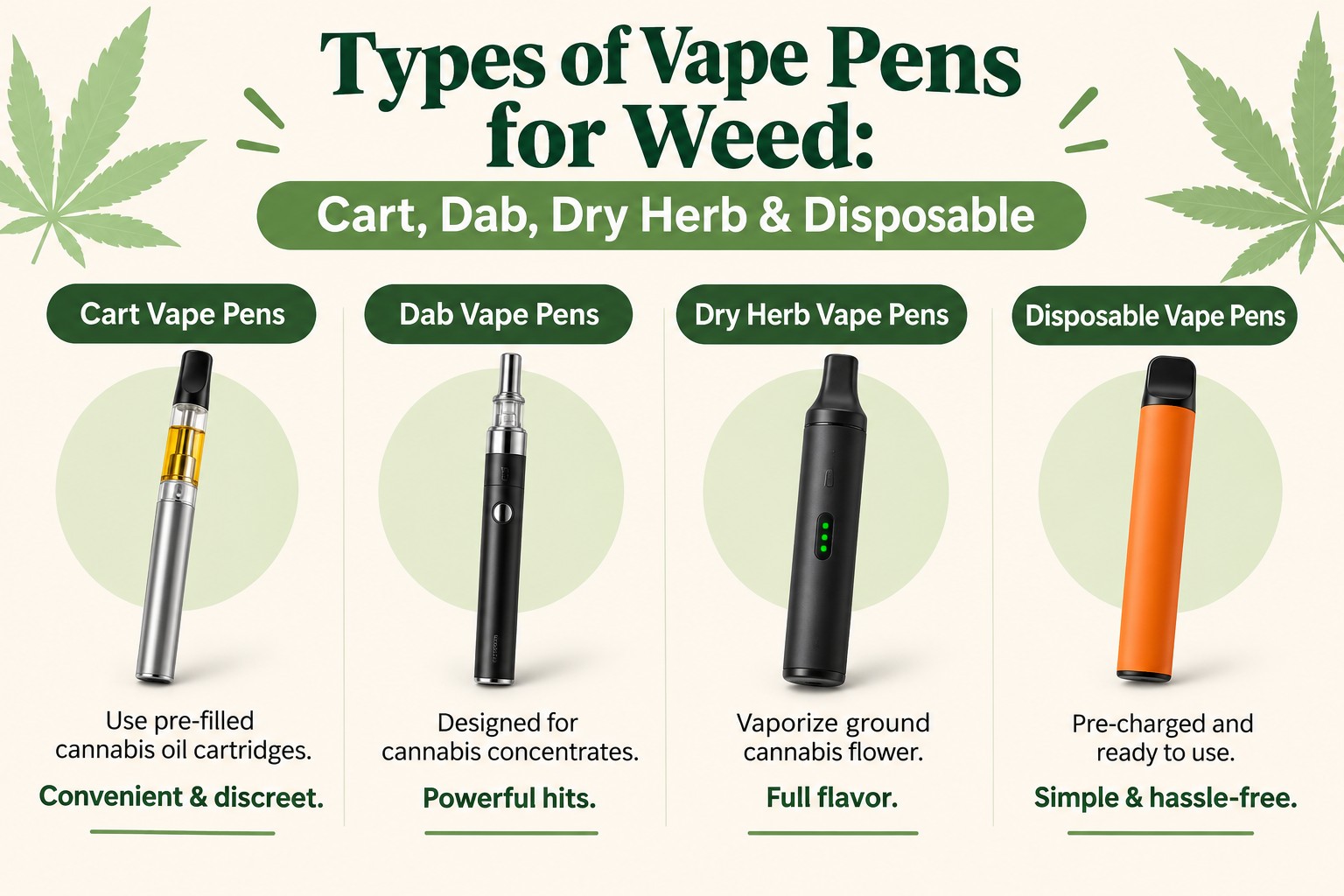
The main types of vape pens for weed are 510-thread cartridge pens, disposable pens, pod systems, dab pens and dry herb pens. Each is built for a different form of cannabis: oil, concentrate or flower. That one detail decides how the pen feels, how strong it hits, how much upkeep it needs and what it costs.
This guide explains how each type works, who it suits and how to choose. If this is your first purchase, our walkthrough on how to choose your first cannabis product is a good companion read before you shop.
What Is a Weed Pen?
A weed pen is a portable vaporizer that heats cannabis oil, concentrate or flower until it vaporizes, without burning it. The name comes from the slim, cylindrical body that looks like a marker. Dry herb models tend to be chunkier.
Every weed pen shares the same core parts:
-
Battery: powers the heating element. Some are button-activated, others are draw-activated.
-
Heating element: a coil or ceramic chamber that warms the material.
-
Chamber or cartridge: holds the oil, concentrate or flower.
-
Mouthpiece: where you inhale.
What changes between pen types is what the chamber holds and how it heats. Match the pen to the material and every other decision gets easier.
Weed Pen Types at a Glance
|
Type |
Material |
Best for |
Main trade-off |
|---|---|---|---|
|
510 cartridge pen |
Oil carts |
Beginners and flexibility |
Two parts to buy |
|
Disposable pen |
Pre-filled oil |
Convenience, sampling strains |
Can't refill; most can't recharge |
|
Pod system |
Brand-specific pods |
Simple, consistent use |
Locked to one brand |
|
Dab pen |
Wax, shatter, rosin |
Potency and flavor |
More upkeep |
|
Dry herb pen |
Ground flower |
Flower purists |
Grinding, packing, cleaning |
1. 510-Thread Cartridge Pens
A 510 pen is a rechargeable battery with a standard threaded connection. A 510-thread cartridge screws on top, and you vape until the cart runs out. Then you swap in a new cartridge and keep the battery.
The "510" refers to the thread standard, which is why most cartridges fit most batteries across brands. That universal fit makes this the most flexible setup for anyone who likes to rotate strains.
Pros
-
Reusable battery lowers long-term cost
-
Wide choice of strains, extract types and brands
-
Easy to swap carts
Cons
-
You buy two parts, battery and cart
-
Cheap batteries can heat inconsistently or fail early
Adjustable voltage is the feature worth paying for. It lets you lower the heat for flavor or raise it for stronger hits. Draw activation is simpler for beginners, while a button gives you more control.
Carts are commonly sold in half-gram and one-gram sizes. Unused carts last longer when you follow proper cannabis storage and shelf life practices.
2. Disposable Weed Pens
A disposable pen combines the oil, battery and mouthpiece in one sealed unit. There is nothing to assemble, and most models need no charging. You use it until the oil is gone, then throw it away. Some newer models include a charging port so you can finish the oil.
Pros
-
Zero setup, so they suit first-timers
-
Discreet and pocket-sized
-
A low-commitment way to sample a strain
Cons
-
Higher cost over time than reusable setups
-
More waste
-
Can't be refilled
Disposables are popular for travel days and quick tries. Because they're easy to overdo, new users should pair them with a low-dose approach and microdosing mindset.
3. Pod Systems
Pod systems use proprietary cartridges, called pods, that only fit their own device. Think of them as a closed ecosystem. The heating is tuned to the pod, so performance is usually consistent, and the design is often sleek.
Pros
-
Consistent heating
-
Simple, clean interface
-
Often leak-resistant
Cons
-
Locked to one brand's pods
-
If a brand discontinues its pods, the device is stranded
-
Fewer strain options than 510
Pod systems suit people who want predictability over variety.
4. Dab Pens (Wax Pens)
Dab pens vaporize concentrates such as wax, shatter, budder and rosin. Concentrates are thicker and more potent than oil, so these pens heat a chamber hotter than oil pens do. They are a portable, lower-fuss alternative to a traditional dab rig, which needs a separate heat source.
Pros
-
Strong flavor and potency
-
Works with several concentrate textures
-
Far more portable than a rig
Cons
-
Loading concentrate can be sticky
-
Coils wear out and need replacing
-
Steeper learning curve than a cart pen
If concentrates are new to you, start with concentrates for beginners to learn the textures and potency range. Texture and process matter too: solventless cannabis skips chemical solvents entirely, and the difference between live rosin and live resin shows up in both flavor and price.
Because concentrates are strong, beginners should use very small amounts.
5. Dry Herb Vape Pens
Dry herb pens heat ground cannabis flower. They use conduction (direct contact with a hot surface), convection (hot air passing through the flower) or a hybrid of the two. Either way, the goal is to release cannabinoids and terpenes without combustion.
Pros
-
True flower flavor and aroma
-
No extract required
-
Vapor dissipates faster than smoke and tends to leave less odor
Cons
-
Larger than other pens
-
Needs grinding, packing and regular cleaning
-
Slower heat-up on some models
Convection models generally preserve flavor better, while conduction models heat faster and cost less. If you're weighing the experience against a joint or bowl, the trade-offs are covered in dry herb vaping versus smoking flower.
Does the Oil Inside Your Pen Matter?
Yes, for any oil-based pen. Two extract types show up most often on cart labels:
-
Distillate: refined to high potency with very little natural flavor. Terpenes are often added back for taste.
-
Live resin: made from fresh-frozen flower to keep more of the plant's original terpene profile. Usually richer in flavor and priced higher.
If flavor is your priority, live resin is typically the stronger pick. If you want a straightforward, budget-friendly option, distillate does the job. The full comparison of live resin versus distillate breaks down taste, effect and price.
The label's THC number only tells part of the story. Terpenes matter as much as THC percentage when it comes to flavor and effect. To understand how these oils are made in the first place, see cannabis extraction methods explained.
Both extract types work in 510 pens and disposables. Dab pens use solid concentrates instead.
Disposable vs Refillable: Which Is Better?
Neither wins outright. It depends on how you use cannabis.
|
Factor |
Disposable |
510 / refillable |
|---|---|---|
|
Setup |
None |
Attach cart to battery |
|
Upfront cost |
Lower |
Higher (battery) |
|
Cost over time |
Higher |
Lower |
|
Strain variety |
Limited |
Wide |
|
Waste |
More |
Less |
Choose a disposable for convenience and trial runs. Choose a 510 setup if you'll vape regularly and want choice.
Features That Change How a Pen Performs
Beyond type, a few specs shape the experience:
-
Battery capacity (mAh): higher capacity means longer sessions between charges. It matters most for dry herb pens, which draw more power.
-
Voltage or temperature control: lets you tune flavor versus vapor volume.
-
Airflow: looser airflow gives smoother, cooler draws.
-
Coil material: ceramic and quartz coils are common in flavor-focused pens.
-
Activation: draw-activated is simplest. Button-activated gives more control and helps prevent accidental firing.
How to Choose the Right Weed Pen
-
Start with what you consume. Oil points to a 510 or disposable pen. Concentrates point to a dab pen. Flower points to a dry herb pen.
-
Decide how much convenience you want. A disposable is one-and-done, while a 510 setup gives more control.
-
Check compatibility. Make sure your cart thread matches your battery.
-
Think about upkeep. Dab and dry herb pens need regular cleaning.
-
Set a budget. [Data needed: insert price ranges from the Rebud catalog.]
Still undecided? Budtenders match pens to your preferred effects and experience level. See how budtenders recommend cannabis products to know what to ask.
Weed Pen Safety and Quality Checks
-
Buy from licensed retailers only. Know the basics of California cannabis laws, including 21+ purchasing rules.
-
Check the package for a lab test result. Learning how to read cannabis lab tests and COAs helps you spot what to look for, such as potency and contaminant screening.
-
Use the packaging itself as a filter. The guide to reading cannabis labels in California explains which details a legal product must show.
-
Avoid unlabeled or suspiciously cheap carts. Counterfeits are widespread.
-
Public health agencies linked the 2019 vaping lung-injury outbreak to vitamin E acetate in some THC products, so avoid products with unknown additives.
-
Charge batteries with the cable they came with and never leave them unattended.
-
Start low with potency, especially with concentrates. General habits for responsible cannabis use apply to vaping too.
Cleaning and Caring for Your Pen
A clean pen heats more evenly and lasts longer.
-
Cartridge pens: wipe the 510 connection with a dry cotton swab if it gets sticky or stops firing.
-
Dab pens: clean the chamber between sessions and replace coils when flavor drops.
-
Dry herb pens: empty spent material and clean the chamber regularly to prevent clogs.
-
All pens: store them upright and away from heat and direct sunlight.