Walk into any dispensary menu, and you'll run into a wall of unfamiliar terms: rosin, live resin, distillate, hash, and CO2 extract. They all describe cannabis concentrates, but the differences between them come down to one thing: how the concentrate was made.
This guide breaks down the most common cannabis extraction methods in plain English, so you know what you're looking at on the menu and what questions to ask before you buy. No jargon overload, no guesswork, just a clear look at how cannabis goes from flower to concentrate.
What Is Cannabis Extraction?
Cannabis extraction is the process used to concentrate the most desirable compounds found in cannabis, including cannabinoids and terpenes. Understanding how extracts are made makes it easier to compare products, interpret dispensary menus, and choose a concentrate that matches your preferences.
Cannabis Extraction Explained in Simple Terms
Cannabis extraction is the process of pulling the compounds people actually want — cannabinoids like THC and CBD, along with aromatic terpenes — out of the plant material and concentrating them into a purer form.
Flower is the whole cannabis plant material: the dried, cured bud you'd grind up and consume as-is. Concentrates are what's left after extraction strips away the plant fiber, chlorophyll, and other unwanted material, leaving behind a product that's far more potent and concentrated by volume.
Every method of extraction is trying to do the same basic thing: separate the good stuff (cannabinoids and terpenes) from the plant matter that surrounds it. The method used determines the concentrate's texture, flavor, and how it's typically consumed.
Want a deeper breakdown of cannabinoids and terpenes? Check out our Cannabis Academy glossary for definitions of every term used in this guide.
How Cannabis Concentrates Are Made
At a high level, every extraction method follows the same basic logic:
Start with cannabis plant material (fresh frozen or dried and cured).
Use a solvent, mechanical force, or a combination of heat and pressure to separate cannabinoids and terpenes from the plant.
Purify and refine the extract into a final product.
The tool used in step two — water, pressure, butane, CO2, ethanol — is what separates one method from another, and it's why a rosin and a distillate can look, feel, and taste completely different even though they start from the same plant.
Broadly, extraction methods fall into two camps: solventless and solvent-based.
Solventless vs. Solvent-Based Cannabis Extraction
Most cannabis concentrates fall into one of two categories: solventless or solvent-based. The distinction refers to the extraction process itself, not necessarily the quality of the final product, and each approach offers its own advantages depending on the desired result.
Solventless Extraction Methods
Solventless extraction relies on physical force, including heat, pressure, water, or mechanical agitation, instead of chemical solvents to separate cannabinoids from plant material.
Rosin extraction presses flower or hash between heated plates. The combination of heat and pressure squeezes out a sticky, oil-like concentrate with no added chemicals involved.
Ice water hash uses ice, water, and agitation to knock trichomes (the tiny resin glands on cannabis flower) loose from the plant. Those trichomes are then filtered through screens to create hash, sometimes called bubble hash.
Dry sift is a related method that separates trichomes from plant material using fine screens and mechanical agitation, without water.
Because these methods skip chemical solvents entirely, they're often marketed around simplicity and purity.
Solvent-Based Extraction Methods
Solvent-based extraction uses a chemical solvent to dissolve cannabinoids and terpenes out of the plant material. The solvent is then purged from the final product during processing.
Hydrocarbon extraction uses solvents like butane or propane and is common for producing textures like sauce, badder, diamonds, and shatter.
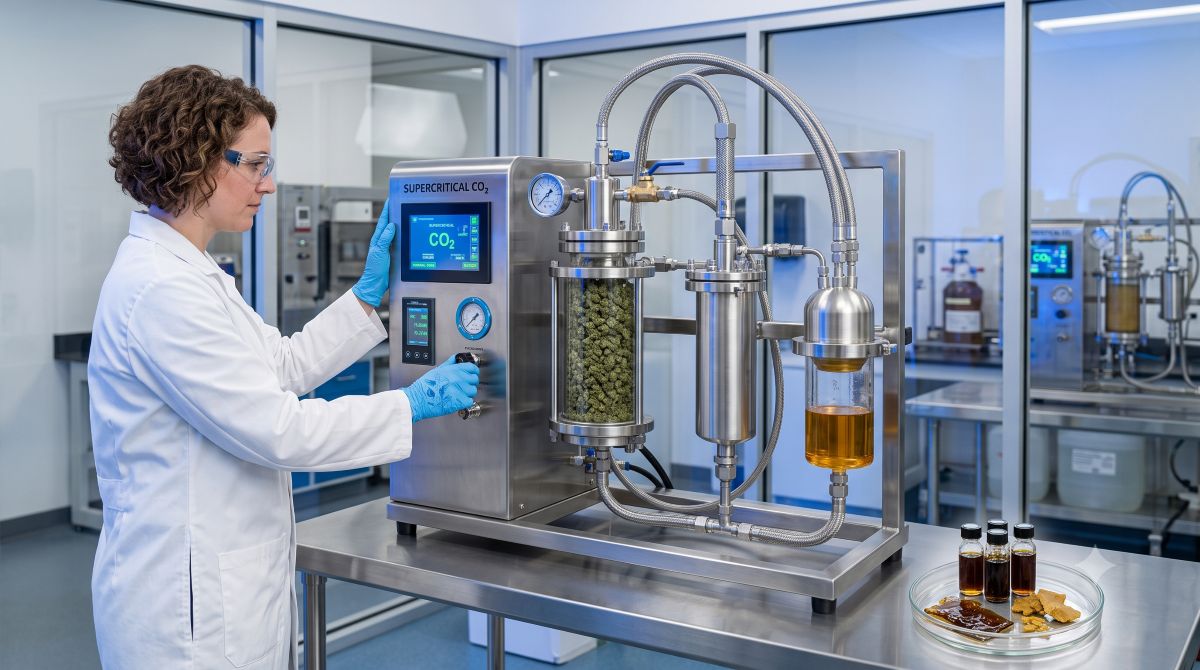
CO2 extraction uses pressurized carbon dioxide and is widely used for vape oils, where consistency and precision matter.
Ethanol extraction uses alcohol as the solvent and is common in large-scale production of oils, tinctures, and other cannabis-derived ingredients.
Each of these methods produces a different concentrate style, and each preserves cannabinoids and terpenes a little differently, which is part of why the same strain can taste or feel different depending on which method was used.
Rosin vs. Resin
These two terms sound alike but describe very different production processes.
Rosin is solventless. It's made using heat and pressure to press flower or hash, and it's often valued by consumers who want a simpler, chemical-free production process.
Resin, specifically live resin, is solvent-based. It starts with fresh frozen cannabis material (flash-frozen right after harvest, rather than dried and cured) and uses hydrocarbon extraction. This fresh-frozen approach is designed to preserve more of the plant's original terpene profile.
What to Look For or Ask About in Store or on the Menu
Before buying, it's worth asking:
Is this live rosin or live resin?
What extraction method was used?
Is it made from fresh frozen flower?
What consistency should I expect — sauce, badder, shatter, diamonds?
Browse our Concentrates category and Vape category to see these formats in stock.
Distillate Explained
Distillate is a highly refined cannabis extract that's gone through multiple purification steps to reach a very high cannabinoid concentration, with most other plant compounds removed in the process.
Because it's so refined, distillate shows up across a wide range of product types:
Vape cartridges
Gummies
Beverages
Capsules
Since the refinement process strips out natural terpenes, manufacturers often add terpenes back in afterward, either cannabis-derived or botanical, to shape flavor and aroma.
Ice Water Hash Explained
Ice water hash is a solventless extraction method that uses ice, water, and agitation to separate trichomes from cannabis flower. The loosened trichomes are filtered through a series of screens to collect what's known as bubble hash.
This differs from pressed rosin in one key way: ice water hash is the raw material, while rosin is often the pressed end product — meaning ice water hash can be a starting point that later gets pressed into rosin.
What to Look For or Ask About in Store or on the Menu
Is it full melt?
Was it made from fresh frozen material?
What micron grade was used during filtering?
Has it been pressed into rosin, or sold as-is?
Other Cannabis Extraction Methods You May See
CO2 Extraction
CO2 extraction uses pressurized carbon dioxide as the solvent. It's a precise, controllable manufacturing process and is especially common in producing vape oils.
Ethanol Extraction
Ethanol extraction uses alcohol to pull cannabinoids and terpenes from plant material. It's frequently used for large-scale production, particularly for oils, tinctures, and other cannabis-derived ingredients.
Hydrocarbon Extraction
Hydrocarbon extraction uses solvents like butane or propane. It's the method behind live resin and is responsible for a range of textures, including sauce, badder, diamonds, and shatter.
FAQ
What is Cannabis Extraction?
Cannabis extraction is the process of separating cannabinoids and terpenes from cannabis plant material to create a concentrated product.
How Does Cannabis Extraction Compare to How Cannabis Concentrates Are Made?
Extraction is the process; concentrates are the result. Different extraction methods produce different types of concentrates, from rosin to distillate to hash.
What Does Rosin Extraction Mean?
Rosin extraction uses heat and pressure to press flower or hash into a solventless concentrate.
What is Live Resin Extraction?
Live resin is made from fresh frozen cannabis using hydrocarbon extraction, designed to preserve more of the plant's original terpene profile.
What Is CO2 Extraction?
CO2 extraction uses pressurized carbon dioxide as a solvent, commonly used to produce vape oils.
What Is Ethanol Extraction?
Ethanol extraction uses alcohol to extract cannabinoids and terpenes, often for large-scale production of oils and tinctures.
What Is Hydrocarbon Extraction?
Hydrocarbon extraction uses solvents like butane or propane and is used to produce live resin, sauce, badder, diamonds, and shatter.
Is Ice Water Hash Solventless?
Yes. Ice water hash uses only ice, water, and agitation — no chemical solvents.