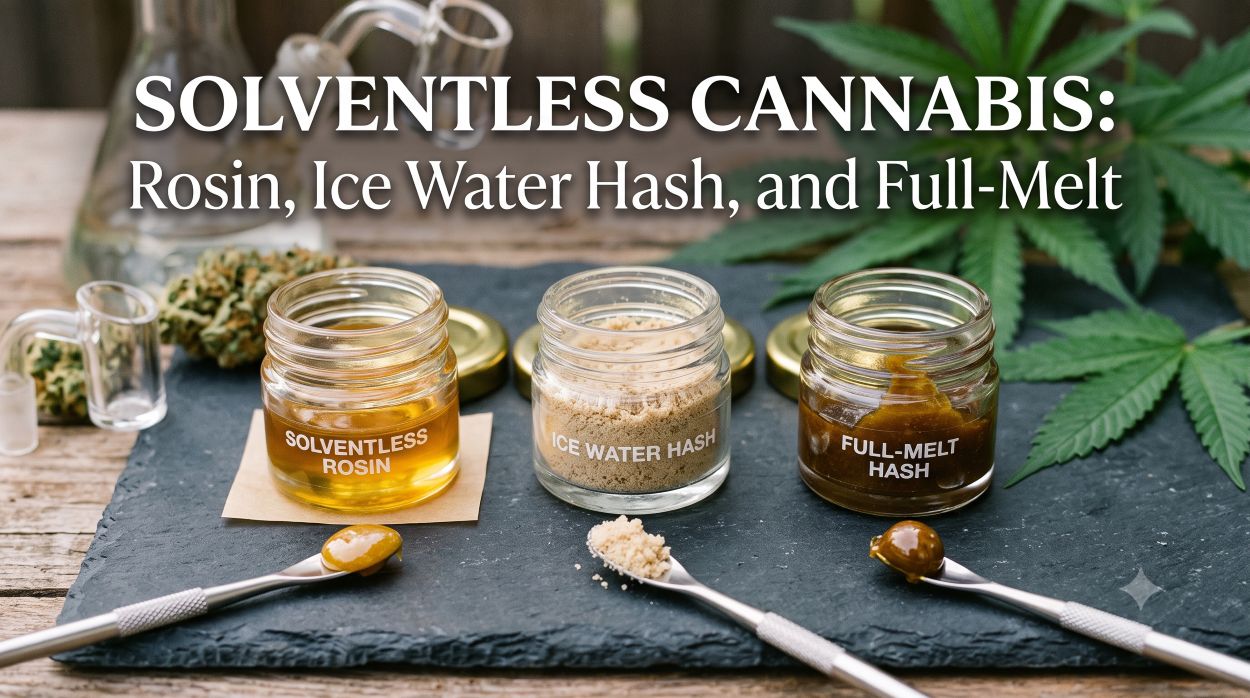
If you've browsed a dispensary menu lately, you've probably noticed a growing "solventless" section sitting apart from the usual concentrates. Solventless cannabis has become one of the most talked-about categories among LA consumers who want a purer, more traditional take on extraction. But between rosin, ice water hash, and full-melt, the terminology can get confusing fast.
This guide breaks down what solventless cannabis actually means, how each type is made, and what separates them in texture, potency, and price. By the end, you'll know exactly what to look for the next time you're shopping at REBUD.
Solventless products have been part of cannabis culture for decades, long before modern extraction labs existed. Ice water hash and pressed rosin trace back to traditional hash-making methods used around the world, and today's LA consumers are rediscovering those techniques through a modern, dispensary-tested lens. Understanding a few key terms makes it much easier to navigate the menu with confidence.
What Is Solventless Cannabis?
Solventless cannabis refers to concentrates made using only mechanical and physical processes, such as heat, pressure, water, and ice, instead of chemical solvents like butane or CO2. The goal is to separate the trichomes (the resin glands that hold cannabinoids and terpenes) from the plant material without introducing any outside chemicals.
Because nothing is added during production, solventless products are often marketed around purity and craftsmanship rather than yield. That's part of why this category has built such a loyal following among experienced consumers.
How Solventless Cannabis Is Made
Most solventless extraction starts with one of two approaches:
Water and ice separation – Cannabis flower is agitated in ice water to knock trichomes loose, which are then filtered through a series of mesh screens by size.
Heat and pressure – Dried flower or hash is pressed between heated plates, squeezing out the resin as solventless rosin.
Some products combine both methods, starting with ice water hash and then pressing it into rosin for an even more refined result. This layered approach, sometimes called hash rosin, is one reason solventless menus can look more complex than a standard concentrates section.
Temperature control matters throughout the process. Extractors typically keep everything cold, from the flower itself to the wash water, since heat can degrade delicate terpenes before the material is even dried. This is part of why solventless production is often described as more of a craft process than a purely industrial one.
What to Look For or Ask About in Store or on the Menu
When shopping REBUD's solventless selection, ask staff about:
Micron rating (screen size used during washing, which affects purity)
Whether the product is single-source or a blend of strains
Fresh-frozen versus dried starting material
Batch date, since solventless products are often more terpene-sensitive over time
Ice Water Hash vs. Solventless Rosin
These two terms get used interchangeably, but they describe different stages of the same process.
What Is Ice Water Hash?
Ice water hash, sometimes called bubble hash, is the raw trichome material collected after the ice water wash and screening process. It looks like a fine, sandy or clumped powder and can range from a light blond color to a darker, more resinous texture depending on quality.
What Is Solventless Rosin?
Solventless rosin takes that process one step further. Ice water hash (or sometimes whole flower) is pressed with a rosin press using heat and pressure, melting the trichomes into a sappy, oil-like concentrate. This is the product most people picture when they hear "rosin" on a menu.
Key Differences in Production, Texture, Potency, and Flavor
Neither is objectively "better." It comes down to personal preference for texture and how the product will be consumed. Some shoppers prefer the drier, more crumbly texture of ice water hash for use in a dry herb setup, while others prefer the sticky, oil-like consistency of rosin for dabbing. Trying both side by side is often the easiest way to figure out which fits your routine.
What Is Full-Melt Hash?
Full-melt hash is considered the top tier of ice water hash, prized for its exceptional purity.
How It's Made
Full-melt starts the same way as standard ice water hash: agitation, ice water, and screen filtration. What sets it apart is the quality of the starting material (usually fresh-frozen flower) and an especially meticulous washing and drying process that removes plant contaminants almost entirely.
What "Full Melt" Means
The name comes from a simple visual test: when a small piece is heated, true full-melt hash should liquefy almost completely, leaving little to no residue behind. This "full melt" is the industry's informal benchmark for top-shelf bubble hash.
How It Compares to Rosin and Bubble Hash
Full-melt hash sits between standard bubble hash and rosin in terms of processing. It's more refined than everyday ice water hash but hasn't gone through the pressing step that turns it into rosin. Some producers also press full-melt hash into what's known as hash rosin, considered by many enthusiasts to be the most refined solventless product available.
Because full-melt requires such a narrow window of quality starting material, batches can be limited, and menu availability may vary week to week. If you see a full-melt batch listed at REBUD, it's worth asking staff how recently it arrived, since freshness plays a big role in how the terpenes present.
Why Solventless Costs More
If you've compared prices, you've likely noticed solventless products carry a premium over solvent-based concentrates. This comes down to labor, yield, and time.
Labor and Production
Solventless extraction is far more labor- and time-intensive than solvent-based methods:
Washing and screening can take hours per batch
Yields are significantly lower per pound of flower
Full-melt quality material requires careful, often fresh-frozen, harvest handling
Pressing rosin requires manual attention rather than automated processing
Because the process trades efficiency for purity, the final product reflects that investment in cost. A single pound of quality full-melt hash, for example, might require significantly more starting flower than a comparable amount of solvent-based extract, since so much material is filtered out during washing. Add in the cost of fresh-frozen flower, cold storage, and skilled labor for pressing, and it's easier to see why solventless products carry a higher price point across the category.
What to Look For or Ask About in Store or on the Menu
To make sure you're getting fair value, ask about:
Starting material quality (fresh-frozen versus cured flower)
Whether the batch is single-strain or a blend
Micron range and number of washes
Press temperature and time, for rosin specifically
FAQ
What Is Solventless Cannabis?
Solventless cannabis is any concentrate made using only physical methods, such as water, ice, heat, and pressure, without chemical solvents like butane or CO2.
Is All Rosin Solventless?
Traditional solventless rosin is made without chemical solvents, using only heat and pressure. Some products labeled simply "rosin" may start from solvent-based extracts, so it's worth confirming the source material if solventless matters to you.
Is Bubble Hash the Same as Ice Water Hash?
Yes. Bubble hash and ice water hash refer to the same product: trichomes separated from flower using ice water and mesh screens.
What Does Full-Melt Hash Mean?
Full-melt refers to the highest grade of ice water hash, one that melts almost completely when heated, leaving minimal residue. It reflects both the quality of the starting flower and the precision of the wash.
Why Is Solventless Cannabis More Expensive?
Solventless products require more labor, lower yields, and often premium starting material compared to solvent-based extraction, which is reflected in the price.
Where Can I Find Solventless Cannabis Near Me in Los Angeles?
REBUD carries a rotating selection of solventless rosin, ice water hash, and full-melt products across its Los Angeles dispensary and delivery menu. Check the current menu for available batches and strains.