Look closely at a fresh nug of flower, and you'll notice it looks almost frosted — like it's dusted in tiny crystals. Those aren't sugar or mold. They're cannabis trichomes, and they're where almost everything you care about in a strain actually comes from.
If you've ever wondered what trichomes are, or heard a budtender mention how "frosty" a jar looks, this guide covers it. We'll break down what trichomes are, how they relate to potency, how to tell them apart from another plant structure called pistils, and what cloudy versus amber trichomes can tell you about freshness and harvest timing.
Trichomes and Potency
Trichomes aren't just a visual feature — they're the plant's production sites for the compounds that give a strain its character.
Why Trichome Density Correlates with Cannabinoid Content
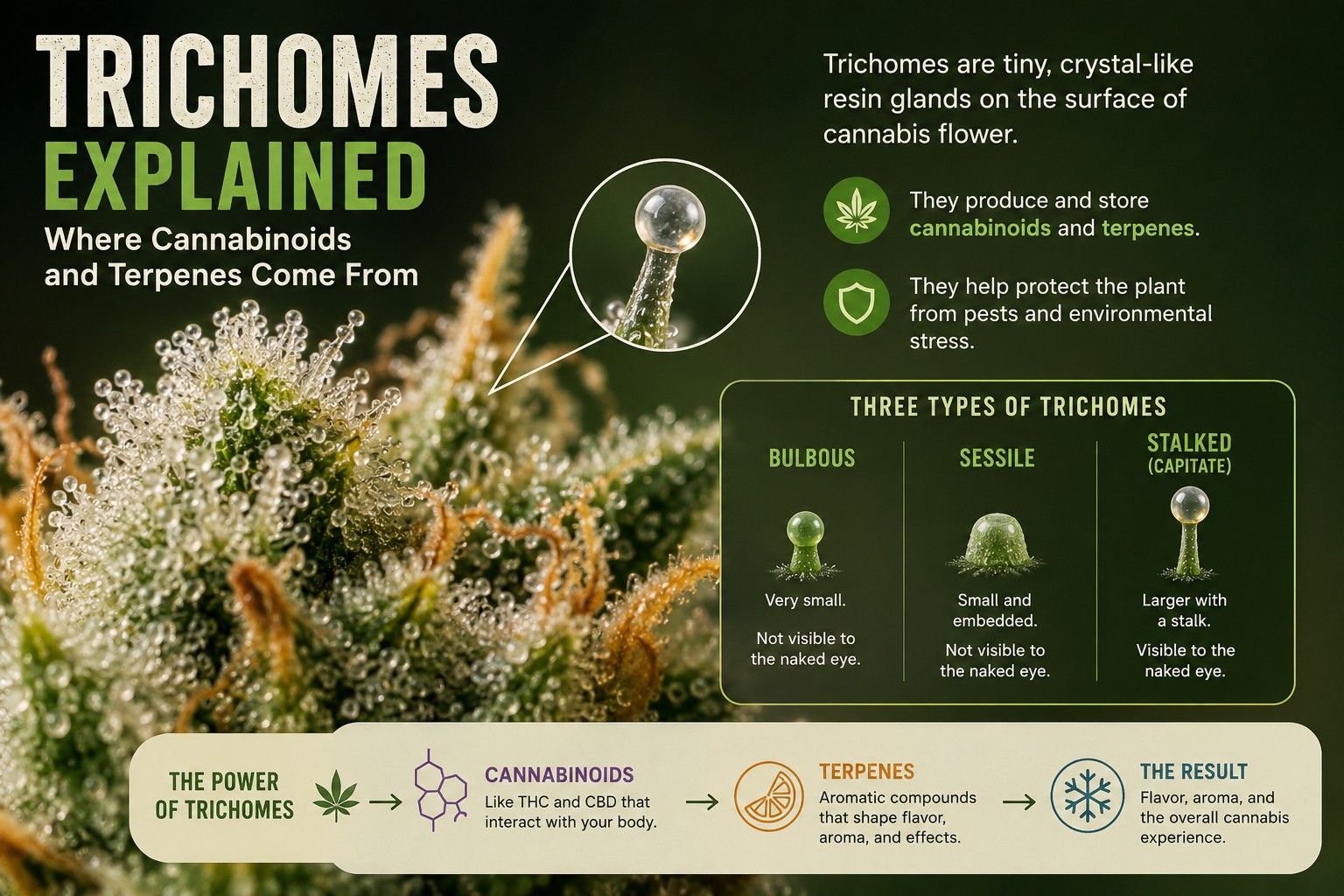
Trichomes are tiny, crystal-like resin glands that grow on the surface of cannabis flower, and they're where cannabinoids and terpenes are actually produced and stored
Denser trichome coverage generally means more resin production, which is part of why heavily frosted flower is often associated with higher potency
Trichomes are also the source of kief — the fine, powdery resin that collects at the bottom of a grinder — and the starting material for concentrates like hash and rosin
That said, trichome density is a visual indicator, not a guaranteed measurement — the only way to know exact potency is through lab testing, not appearance alone
What to Look For or Ask About in Store or on the Menu
Look for flower described as "frosty" or with visible cannabis crystals on the menu or packaging
Ask your budtender whether a strain is known for particularly dense trichome coverage if visual appeal matters to you
Remember that trichome density is one signal among several — cross-check it against lab results when potency specifics matter
Trichomes vs Pistils
Trichomes often get confused with another visible structure on cannabis flower, pistils, even though they serve completely different roles.
Telling the Two Plant Structures Apart
Trichomes are the small, translucent, crystal-like structures covering the surface of the bud — they're where resin, cannabinoids, and terpenes are produced
Pistils are the thin, hair-like strands (often orange, red, or pink) that were originally part of the plant's reproductive structure during flowering
Pistils don't produce cannabinoids the way trichomes do — they're more of a visual and maturity indicator than a potency one
A bud can have vibrant pistils and relatively sparse trichomes, or the reverse, so the two aren't interchangeable signs of quality
What to Look For or Ask About in Store or on the Menu
If you're trying to judge potency visually, focus on trichome coverage rather than pistil color
Ask your budtender to point out the difference in person if you're not sure what you're looking at on a specific jar
Photos on menus don't always show this detail clearly — in-store viewing (or asking for a closer look) can help
Why Fresh Flower Looks Frosty
That frosted, sparkly look on fresh flower is trichomes at their peak — and how they change over time can tell you something about harvest timing.
What Cloudy vs Amber Trichomes Indicate
Cloudy trichomes are typically associated with flower harvested at peak resin production, which is why freshly cured flower often has that bright, frosted look
Amber trichomes develop later, as trichomes age past their peak — flower with a lot of amber coloration may have been harvested later or stored longer
Neither is inherently "better" — it reflects harvest timing and freshness rather than a straightforward quality ranking, and some consumers prefer the different characteristics associated with each stage
This visual shift is closely tied to cure quality overall, and connects to broader storage and freshness factors covered in our cannabis curing and freshness guide.
What to Look For or Ask About in Store or on the Menu
Look closely at trichome color if you can view flower in person before buying — mostly cloudy generally signals a fresher harvest
Ask about harvest or batch date if trichome color seems mostly amber
If you're comparing flower grown indoors, in a greenhouse, mixed-light, or fully sungrown, trichome appearance can vary somewhat by cultivation method too, not just harvest timing
Frequently Asked Questions
What Are Cannabis Trichomes?
Cannabis trichomes are tiny, crystal-like resin glands on the surface of cannabis flower. They're responsible for producing and storing cannabinoids and terpenes, and they're what give fresh flower its frosted, sparkly appearance.
What Is the Difference Between Cloudy and Amber Trichomes?
Cloudy trichomes are generally associated with flower harvested at peak resin production, while amber trichomes develop as they age past that peak. The difference mainly reflects harvest timing and freshness rather than one being objectively better than the other.
What Is Kief?
Kief is the fine, powdery resin made up of detached trichomes that collects at the bottom of a grinder after breaking down flower. Because trichomes are where cannabinoids and terpenes concentrate, kief is often considered a more potent byproduct of ground flower.
Where Can I Find Frosty, Trichome-Rich Flower Near Me in Los Angeles?
REBUD carries flower selected with trichome coverage and freshness in mind across our LA menu. Browse our current flower selection or ask a REBUD team member which batches are frostiest right now.
Are All Trichomes Visible to the Naked Eye?
No. Cannabis has three types of trichomes — bulbous, sessile, and stalked (capitate) — and only the larger stalked trichomes are actually visible without magnification. The other two types are real but too small to see directly.
Why Do Cannabis Plants Grow Trichomes in the First Place?
Trichomes likely evolved as a protective feature — the sticky, resin-covered surface can help deter pests and shield the plant from environmental stress like UV exposure. Cannabinoid and terpene production is a byproduct of that same structure.
Can Trichomes Get Damaged or Rubbed Off?
Yes. Trichomes are fragile, and rough handling during harvest, trimming, or even excessive touching of flower can knock them loose or break them, which is part of why careful handling matters for preserving a jar's frostiness and quality over time.