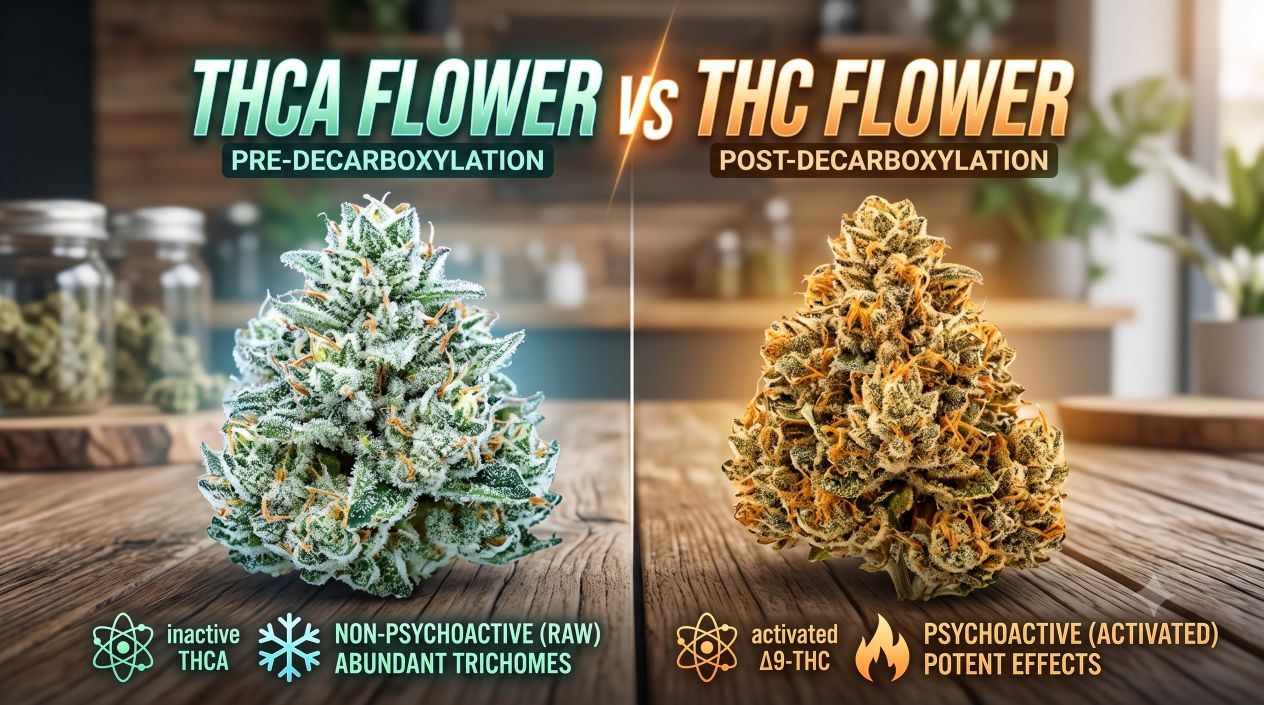
THCA flower vs THC flower comes down to one core distinction: chemical form at the point of sale. THCA flower contains cannabinoids in their raw, non-activated state, while THC flower typically refers to flower whose potency is measured or discussed in terms of already-active THC. This guide breaks down the chemistry, the potency labeling, the legal status in California, and what to look for when comparing products at a dispensary.
Whether you're new to cannabis or you've been shopping for flower for years, understanding this distinction helps you read lab reports with more confidence and make sense of the numbers on a product label. It also makes it easier to compare flower against other product formats, like pre-rolls or concentrates, when you're deciding what fits your routine.
What Is THCA Flower?
THCA (tetrahydrocannabinolic acid) is the raw cannabinoid naturally produced by the cannabis plant as it grows. Freshly harvested and cured cannabis flower is almost entirely THCA, not THC, until it's exposed to heat.
When a dispensary lists a flower product's “THCA percentage,” that number reflects the raw cannabinoid content measured directly from the plant material. This is the standard way most flower is tested and labeled, since THCA is the form the cannabinoid takes before any heat is applied.
A few characteristics define THCA flower:
Lab reports list THCA separately from active THC, alongside a calculated “Total THC” figure
No heat has been applied at the point of testing or sale
It's the natural state of nearly all raw cannabis flower on the market, including flower some sellers market specifically as “THCA flower”
This labeling approach isn't unique to any single brand or product line. Any cannabis flower, regardless of strain or category, is tested and reported this way before it reaches a shopper. What varies is how much emphasis a dispensary or brand places on the THCA figure versus the calculated Total THC figure when marketing the product.
Some shoppers specifically look for high-THCA flower because the percentage gives a straightforward reference point for comparing strains or batches. Others prefer to look past the raw THCA number and focus on the Total THC calculation instead, since that figure accounts for the conversion that happens once heat is introduced.
What Is THC Flower?
“THC flower” is a term used more loosely in the market to describe flower where the conversation centers on active THC rather than raw THCA. In practice, most flower labeled this way is chemically the same as THCA flower until heat is introduced. The difference is usually in how the product is described or how the lab data is presented to the shopper.
Some retailers use “THC flower” when referring to the calculated total THC potential rather than the raw THCA figure, since that number more closely reflects what the cannabinoid content will convert to once heat is applied. Understanding which figure a label is showing helps you compare products accurately across different flower options.
This naming difference matters most at the point of comparison shopping. Two flower products with identical Total THC figures might be labeled very differently depending on whether the retailer chose to highlight the raw THCA percentage or the calculated THC potential. Neither approach is more accurate than the other. They're simply presenting the same underlying lab data from a different angle.
THC vs THCA in Flower: The Chemical Difference
The core difference between THC vs THCA in flower is a single chemical step: decarboxylation. THCA converts to THC when it's exposed to heat, which removes a carboxyl group from the molecule and changes its chemical structure.
This conversion happens through several common processes:
Harvest and curing: The plant produces and stores cannabinoids primarily as THCA
Heat exposure: Smoking, vaporizing, or cooking cannabis flower applies heat
Decarboxylation occurs: The carboxyl group is released, typically as carbon dioxide, converting THCA into THC
Active THC is present: The flower's cannabinoid content shifts from mostly THCA to mostly THC
Cannabis testing labs account for this conversion using a standard formula: Total THC = (THCA × 0.877) + Delta-9 THC. The 0.877 multiplier reflects the molecular weight lost when THCA converts to THC, giving a more accurate estimate of the flower's potential THC content once heat is applied.
This same conversion process applies across nearly every cannabis product format, not just flower. Concentrates, pre-rolls, and other heat-based consumption methods all rely on the same underlying chemistry. The main difference between formats is how quickly and completely the conversion happens, which depends on factors like temperature and the surface area of the material being heated.
Understanding decarboxylation also explains why raw cannabis flower and heated cannabis flower are reported with two different sets of numbers on the same lab report. The THCA percentage describes the plant material as it exists in the package, while the Total THC figure estimates what that same material becomes once heat is introduced through smoking or vaporizing.
THCA Flower vs THC Flower: Comparison Table
Here's a side-by-side look at how these terms typically differ on a dispensary shelf and lab report, including how each connects to California's cannabis regulations.
Is THCA Flower Legal in California?
THCA flower sold through a California's licensed cannabis dispensary falls under the state's regulated cannabis framework, which sets testing, labeling, and potency disclosure requirements for all flower products. The California Department of Cannabis Control oversees licensing, testing standards, and compliance for cannabis sold within the state's legal market.
This is different from unregulated hemp-derived THCA products sometimes sold outside licensed dispensaries, which may not follow the same testing and labeling standards. Flower purchased at a state-licensed dispensary comes with a Certificate of Analysis verifying its cannabinoid content, giving shoppers a clear, tested reference point.
THCA Flower vs Weed: How Are They Different?
THCA flower vs weed isn't really a comparison between two different products. “Weed” is a general, colloquial term for cannabis flower, while THCA flower refers to how that same flower is measured and labeled on a lab report.
Nearly all cannabis flower, regardless of what it's called on the shelf, contains THCA rather than active THC before it's heated. The distinction shoppers are usually looking for isn't a different plant or growing process. It's whether the product's label and testing emphasize raw THCA content or calculated total THC potential.
Consumption Methods and Dosing Formats
Since THCA flower and THC flower are chemically similar until heat is applied, the consumption method plays a bigger role in the experience than the label terminology itself. Flower is typically consumed through smoking or vaporizing, both of which apply heat directly and trigger decarboxylation in real time.
Other product formats handle this conversion differently:
Pre-rolls: Ground flower rolled for immediate smoking, following the same decarboxylation process as loose flower
Vape cartridges: Concentrated oil that's already been processed and heated during extraction, so the cannabinoid content is typically reported as active THC rather than THCA
Edibles and beverages: Require decarboxylation during manufacturing before infusion, since raw THCA needs heat to convert before it can be incorporated into a formula
Concentrates: Extracted using heat or pressure, often resulting in a product where much of the THCA has already converted to THC by the time it's packaged
For shoppers comparing dosing formats, this means flower offers more direct control over the decarboxylation step, since the conversion happens at the moment of use rather than during manufacturing. This can make it easier to gauge how a specific batch's lab-reported Total THC lines up with the flower you're actually consuming.
How Potency Labeling Works: Reading a Certificate of Analysis
A Certificate of Analysis (COA) is the lab report that accompanies licensed cannabis products, and it's the most reliable way to understand what THCA flower vs THC flower is for any specific product you're considering.
A typical COA includes:
THCA percentage — the raw cannabinoid content measured directly
Delta-9 THC percentage — any already-active THC present in the flower
Total THC — the calculated figure combining both, using the standard conversion formula
When comparing two flower products, checking the Total THC figure on each COA gives you the most consistent basis for comparison, since it accounts for the THCA-to-THC conversion rather than relying on the raw THCA number alone.
Most licensed dispensaries make COAs available either in-store or through a QR code on the packaging, so shoppers can review the exact batch data before purchasing. Comparing COAs across brands and batches is one of the most reliable ways to understand potency differences, since flower from the same strain can still vary slightly from harvest to harvest.
It's also worth checking the testing date on a COA. Cannabinoid content can shift gradually over the shelf life of a product, so a recent test date gives a more accurate picture of what's currently in the package.
Choosing Between THCA Flower and THC Flower
Since most flower on a dispensary shelf is chemically similar until heat is applied, choosing between products often comes down to a few practical factors rather than the “THCA” or “THC” label itself:
Lab report clarity: Look for a COA that clearly breaks down THCA, Delta-9 THC, and Total THC
Product freshness: Cannabinoid content can shift slightly over time, so check testing and packaging dates
Format preference: Flower, pre-rolls, and concentrates all involve the same THCA-to-THC conversion, just through different consumption methods
Brand transparency: Brands that publish detailed, accessible lab data make it easier to compare products across a full flower selection
Frequently Asked Questions
What Is THCA Flower vs. THC Flower?
THCA flower refers to cannabis flower labeled by its raw, non-activated cannabinoid content. In contrast, THC flower typically describes the same type of product discussed in terms of its active or calculated THC potential. Both are raw flower until heat is applied.
Does THCA Flower Have a Different Potency Than THC Flower Before It's Heated?
No. Since most flower is chemically similar before heat is applied, the difference is usually in how the potency is labeled and reported rather than in the product itself. Checking the Certificate of Analysis for both figures gives the clearest picture.
Is THCA Flower Legal in California?
Flower sold through California's licensed dispensaries is regulated under the state's cannabis framework, which sets testing and labeling standards. The California Department of Cannabis Control oversees this regulated market.
How Do I Know the True THC Potential of THCA Flower?
Check the Certificate of Analysis for the Total THC figure, which is calculated from both the THCA and Delta-9 THC percentages using a standard conversion formula.
What's the Difference Between THCA Flower and Regular Weed?
“Weed” is a general term for cannabis flower, while THCA flower describes how that flower is measured and labeled on its lab report. Most cannabis flower contains THCA before it's heated, regardless of what it's called on the shelf.
Ready to compare potency for yourself? Browse Rebud's lab-tested flower selection to see full Certificate of Analysis data before you buy.