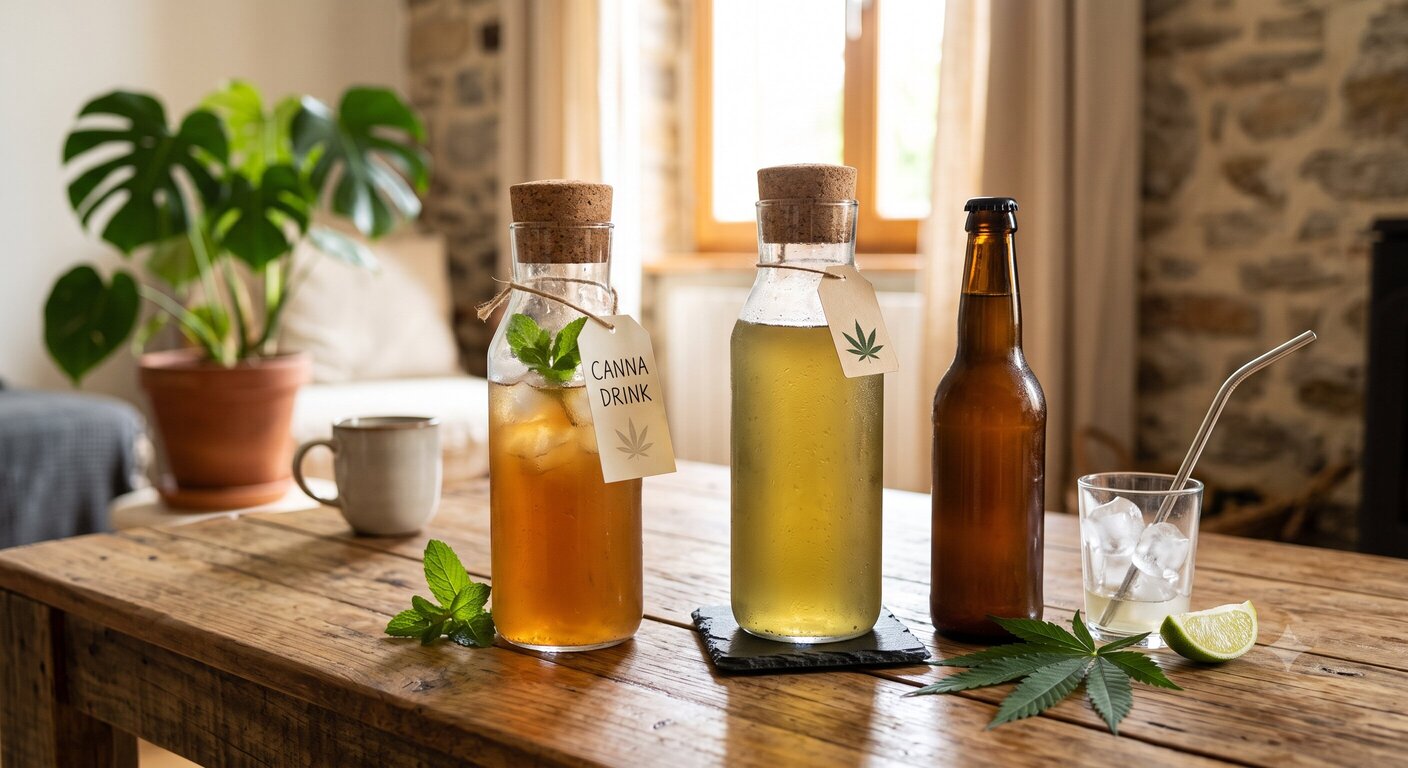
THC drinks and cannabis beverages are showing up everywhere—from dispensary shelves to mainstream food, beverage, and lifestyle coverage. For LA consumers, the appeal is clear: a ready-to-drink, smoke-free product that fits naturally into how the city already eats, socializes, and unwinds. Whether the context is a rooftop gathering, a post-workout cool-down, or a quiet evening at home, a low-dose cannabis beverage offers a controlled, sessionable option worth understanding before you buy.
This guide covers what cannabis beverages actually are, how they differ from traditional edibles, why nano-emulsion matters, and what to look for if you're exploring THC drinks for the first time. If you're already browsing the REBUD beverage menu, you'll also find practical guidance on choosing the right product for your tolerance and goals.
Cannabis Drinks vs. Edibles
Understanding the difference between cannabis drinks and other edibles helps you set the right expectations before your first sip. The format matters as much as the dose—and the two are more connected than most people realize.
What Cannabis Drinks Mean and Why It Matters
Cannabis drinks are liquid-form cannabis products infused with THC, CBD, or both. They're typically sold in single-serve cans, bottles, or shots, and consumed the same way you'd drink a sparkling water, juice, or soda. The 'beverage' framing matters because it signals a fundamentally different consumption experience than flower, vapes, or traditional edibles.
Compared to cannabis gummies or chocolates—which are also edibles—beverages differ in one important way: absorption. Standard edibles are metabolized through the digestive system and liver, converting THC into a more potent compound (11-hydroxy-THC) with a delayed onset anywhere from 30 minutes to two hours or more. Cannabis drinks, particularly those using nano-emulsion technology (more on that below), are formulated to absorb faster and more predictably—making them a more manageable starting point for consumers who've had unpredictable experiences with traditional edibles.
Cannabis beverages are also dose-controlled—usually in the 2.5mg to 10mg THC range—and they slot naturally into social settings where alcohol would otherwise appear. That cultural fit is a big part of why weed drinks have moved from novelty to mainstream dispensary staple.
What to Look for or Ask About in Store or on the Menu
When browsing the REBUD beverage menu or speaking with a budtender:
● THC content per serving: Most beginner-friendly drinks are 2.5mg to 5mg THC. Higher-dose options (10mg+) suit experienced consumers.
● CBD ratio: Some cannabis beverages include CBD alongside THC, often described as producing a more balanced experience. Look for '1:1' labeling if you prefer less psychoactive intensity.
● Nano-emulsion vs. standard infusion: Ask whether the product uses nano-emulsion—this directly affects onset time and consistency.
● Format: Seltzers, teas, lemonades, and shots are all common. Choose what you'll sip slowly and mindfully.
Nano-Emulsion Explained
Most premium cannabis beverages in California today use nano-emulsion technology—and knowing what that means makes it easier to read labels, compare products, and understand why onset times vary from one drink to the next.
What Nano-Emulsion Means and Why It Matters
Nano-emulsion is a processing technique that breaks THC oil into microscopic droplets—often smaller than 100 nanometers—and suspends them in water. Since oil and water don't naturally mix, standard cannabis infusions can be inconsistent; the THC may separate or absorb unevenly in the body.
Nano-emulsified THC drinks solve this by making the active compounds water-soluble. Because the droplets are so small, they can pass through cell membranes more efficiently. The practical result is a faster, more predictable onset—often 15 to 45 minutes—compared to the 60 to 120 minutes typical of traditional edibles. Research on cannabinoid bioavailability through nano-emulsion is still developing, but early findings and widespread consumer experience consistently point to more consistent effects than conventionally infused products.
This is why nano THC drinks have become the dominant format in the cannabis beverage category. For consumers who've experienced the 'I didn't feel anything, so I took more' mistake with edibles, nano-emulsion beverages represent a meaningfully more controllable experience.
What to Look for or Ask About in Store or on the Menu
● 'Nano' or 'nano-emulsified' on the label: The clearest indicator of the technology. Not all cannabis beverages use it—standard oil-based infusions still exist.
● Onset time claims: Products using nano-emulsion often list estimated onset windows (e.g., '15–30 minutes'). Treat these as ranges—individual body chemistry varies.
● Pacing: Because nano-emulsion beverages work faster, sipping slowly is especially important for first-timers with a new product.
● Storage: Most nano-emulsified beverages are shelf-stable, but some require refrigeration. Check the label.
THC Drinks vs. Alcohol
Cannabis beverages are increasingly discussed as an alcohol alternative, especially among sober-curious consumers and social drinkers looking for a lighter option. Here's a grounded look at how they actually compare—without overstating what the research supports.
What THC Drinks vs. Alcohol Means and Why It Matters
The comparison to alcohol is central to how cannabis beverages are discussed in media and culture—and for good reason. A significant portion of people exploring weed drinks are sober-curious, cutting back on alcohol, or looking for a sessionable option without next-morning consequences. Here's how the comparison actually looks in practice:
● Calories: Most THC seltzers contain fewer than 25 calories per can—some are under 10—compared to 150+ for a beer or 120+ for a glass of wine.
● Next-day effects: Cannabis does not cause the dehydration and acetaldehyde buildup associated with alcohol hangovers. That said, overconsumption of THC carries its own risks, including anxiety and disorientation, particularly at higher doses.
● Onset and duration: Alcohol takes effect within minutes and wears off in a few hours. Nano-emulsified THC drinks can approach a similar onset window (15–45 minutes), with effects commonly lasting 2–4 hours depending on dose and tolerance.
● Social format: A canned cannabis beverage or THC seltzer looks and functions like any other drink at a gathering—no smoke, no smell, no equipment. This format has gained real traction in LA's event and nightlife scenes.
● Legal setting: Cannabis products are legal for adults 21+ in California but cannot legally be consumed in most public spaces, including bars and restaurants. Home use and licensed consumption lounges are the primary legal settings.
One important note: mixing THC drinks with alcohol amplifies the effects of both and significantly increases the risk of overconsumption. Most harm-reduction guidance recommends choosing one or the other.
What to Look for or Ask About in Store or on the Menu
● Dose per can vs. dose per serving: Some cannabis beverages contain multiple servings per container. Confirm total THC content and whether the listed dose is per can or per serving before you drink.
● Effect profile: Some products are formulated for relaxation, others for uplift or focus. Terpene additions and CBD ratios can influence this. Ask your budtender if you have a specific goal in mind.
● 'Mocktail' positioning: Several brands market their beverages explicitly as alcohol alternatives, using similar flavor profiles—citrus, herbal, botanical. If that aesthetic matters to you, look for those brands at the dispensary.
Best Low-Dose Cannabis Drinks for Beginners
If you're new to cannabis beverages—or returning after a break—starting low and going slow is the standard advice. These guidelines will help you identify the right product range and avoid the most common overconsumption mistakes.
What Best Low-Dose Cannabis Drinks for Beginners Means and Why It Matters
Low-dose cannabis drinks—typically 2.5mg to 5mg THC per serving—are the recommended starting point for anyone new to cannabis beverages or returning after a break. This range is commonly associated with mild relaxation and social ease without significant psychoactive intensity, though individual response always varies.
The 2.5mg THC drink format has become something of an industry standard for microdosing. At this dose, many consumers report noticing a shift in mood or tension without feeling strongly impaired. A 5mg THC beverage steps it up slightly—still considered low-dose under California's regulatory framework—and may suit those who've already tested the 2.5mg tier.
What makes a cannabis drink well-suited for beginners is less about the brand name and more about:
● Predictable dosing: Products that clearly state THC content per serving and use nano-emulsion for consistent absorption.
● Low total THC per container: A single-serve 2.5mg or 5mg can leaves little room for accidental overconsumption.
● Familiar flavors: Seltzer, lemonade, and tea formats are easy to sip slowly, which naturally supports pacing.
● CBD presence: A 1:1 or 2:1 CBD-to-THC ratio can soften the psychoactive experience—something many beginners find more comfortable.
Browse the REBUD cannabis beverages menu to see what's currently in stock. Availability varies by location and delivery area. If you're newer to cannabis, consider pairing your browse with a look at the Cannabis terms glossary for quick definitions of terms like terpenes, cannabinoids, and onset windows.
What to Look for or Ask About in Store or on the Menu
● Start at 2.5mg or 5mg: Even with prior edible experience, nano-emulsified cannabis beverages can feel different. Start low and wait at least an hour before considering more.
● Check the full label: Look at total servings per container, not just per-serving dosage. A 10mg can with two listed servings is a 20mg product if you drink the whole thing.
● Ask what's currently popular: Budtenders know which products deliver on taste and consistency. Don't hesitate to ask for a recommendation based on your experience level.
● Consider CBD drinks as a bridge: If you're unsure about THC entirely, CBD drinks offer a non-intoxicating starting point that still fits the beverage format and social context.
Frequently Asked Questions
What Is a THC Drink?
A THC drink is a cannabis-infused beverage containing delta-9 tetrahydrocannabinol (THC), the primary psychoactive compound in cannabis. These products are sold in licensed dispensaries in California and come in formats including seltzers, teas, lemonades, shots, and tonics. They're typically dosed between 2.5mg and 100mg THC per container, with single-serve low-dose options being the most common format on dispensary shelves today.
How Does a THC Drink Compare to a Cannabis Beverage?
The terms are used interchangeably. 'Cannabis beverage' is the broader category—it includes drinks infused with THC, CBD, CBN, or combinations of cannabinoids. 'THC drink' specifically refers to products where THC is the active compound. If you're looking at a product labeled as a cannabis beverage and want to understand its intoxicating potential, check the THC content listed on the label.
What Does Nano THC Drink Mean?
A nano THC drink uses nano-emulsion technology to break THC into microscopic water-compatible droplets, allowing the compound to absorb more efficiently in the body compared to oil-based infusions. This typically results in faster onset (15–45 minutes) and more predictable effects. Most premium cannabis beverages in California now use some form of nano-emulsion, and it's widely regarded as more consistent than standard oil-in-water infusions. Research into the full scope of nano-emulsion effects is ongoing.
Where Can I Find THC Drinks Near Me in Los Angeles?
REBUD carries cannabis beverages at dispensary locations in North Hollywood, Highland Park, Sylmar, and Westwood, and offers delivery across LA County and parts of Orange County. Browse the full THC drinks and cannabis beverages menu on the REBUD website to see current stock, filter by category, and place an order for same-day delivery or in-store pickup. Availability varies by location—check the menu for live inventory.