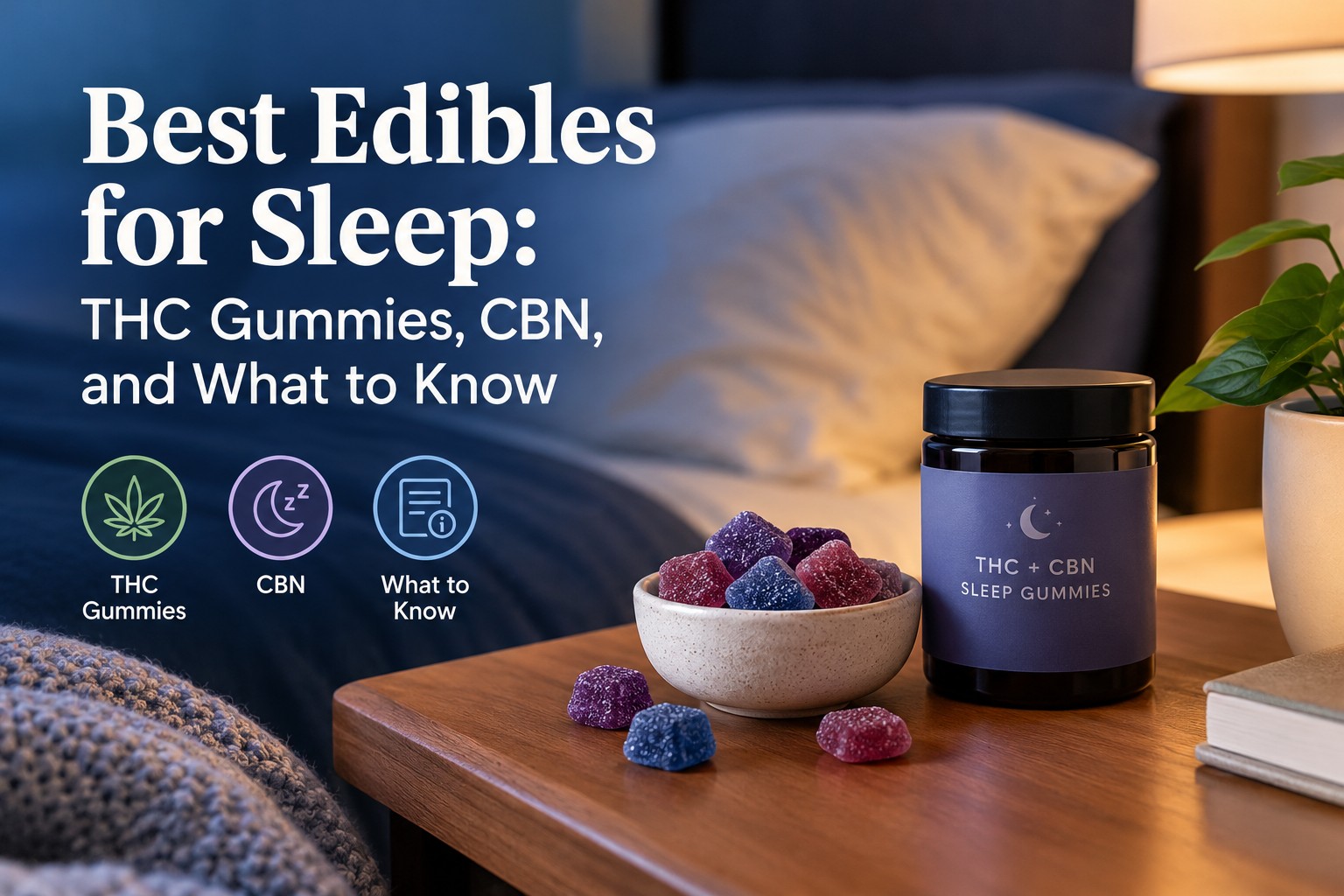
There is no single best edible for sleep. The right choice depends on the cannabinoids in the product, how much you take, and how your body responds, and the research on cannabis as a sleep aid is mixed. Some adults use edibles to unwind in the evening or to ease sleep difficulties, but edibles are not a proven treatment for insomnia, and evidence on long-term sleep benefits is limited.
Three cannabinoids show up most often in nighttime products. THC is intoxicating and may make some people feel sleepy. CBD is non-intoxicating and is often chosen for relaxation. CBN is a minor cannabinoid marketed for nighttime use, though clinical evidence for it is thin. This guide covers how each type may differ, what to check before you buy (cannabinoid content, dose, onset time, duration, and side effects), and a few examples from Rebud’s Southern California menu. Availability varies by store.
What Are the Best Edibles for Sleep?
No edible is best for everyone, and the evidence that cannabis helps sleep is mixed. This table compares the main types at a glance.
|
Type |
What it is |
Why people choose it |
Main caution |
Evidence |
|---|---|---|---|---|
|
THC |
The intoxicating cannabinoid |
May promote sleepiness and relaxation |
Grogginess, anxiety, tolerance |
Mixed, short-term |
|
CBD |
Non-intoxicating cannabinoid |
Relaxation without a high |
Not proven for insomnia |
Limited |
|
CBN |
Minor cannabinoid formed as THC breaks down |
Marketed for nighttime use |
Claims outpace the research |
Very limited |
|
THC + CBD (+ CBN) |
Blended ratios |
Marketed for relaxation |
Not automatically more effective |
Limited |
|
Indica-labeled |
Market category |
Familiar shorthand for “evening” |
Label doesn’t predict effects |
Not reliable |
THC Gummies for Sleep
THC may make some people feel sleepy and relaxed, which is why it’s the base of many nighttime edibles. If you’re searching for the best THC edibles for sleep, the honest answer is that results depend on dose, tolerance, and individual response. The downsides are real: next-day grogginess, anxiety in some people, impaired coordination, and tolerance that builds with frequent use.
One Rebud example is Wyld Elderberry 2:1, which pairs THC with CBN at 10 mg THC and 5 mg CBN per gummy, 10 gummies per pack. Its label says to eat half a gummy at a time and wait 2 hours.
CBD Edibles for Relaxation and Sleep
CBD and THC come from the same plant but behave differently. CBD does not produce the intoxicating effects of THC. It’s often discussed for relaxation and for easing anxiety that can interfere with falling asleep, though that is not the same as treating insomnia. Research is still developing, so CBD edibles shouldn’t be expected to guarantee better sleep.
CBN Gummies for Sleep
CBN forms as THC ages and breaks down, and it has become a common ingredient in nighttime products. Clinical evidence that CBN improves sleep is limited, and marketing claims shouldn’t be mistaken for established medical benefits. Many CBN products also contain THC, so it’s hard to say how much of the effect comes from CBN itself.
THC and CBD Combination Edibles
Some products blend THC, CBD, and sometimes CBN in set ratios and market them for relaxation. A combination isn’t automatically more effective. Individual responses vary, and adding ingredients doesn’t make a product better or safer by default.
Two Rebud examples use a 1:1:1 ratio:
-
Kanha Tranquility Sleep Gummies: 5 mg each of THC, CBD, and CBN per gummy, plus the terpenes caryophyllene and myrcene.
-
Wyld Boysenberry 1:1:1: 10 mg each of THC, CBD, and CBN per gummy, 10 gummies per pack.
Indica Gummies for Sleep
“Indica” is a market label, often used as shorthand for evening products. It cannot reliably predict how sedating a product will be. Several Rebud sleep gummies carry an indica label, but the cannabinoid content, your dose, and your own sensitivity tell you more than the label does.
Gummies vs. Tinctures vs. Fast-Acting Edibles for Sleep
Onset depends on the formulation. Traditional gummies are digested slowly. Tinctures and some fast-acting or nano formulations may act sooner, though that depends on the specific product and isn’t guaranteed. Faster onset can also mean less time to judge the effect before deciding whether to take more.
A Rebud example is Dr. Norm’s Raspberry Dream Nano Sleep Gummies, made with nano THC, nano CBN, and a long-acting THC extract (100 mg THC and 50 mg CBN per pack). For more on how formats differ, see our comparison of tinctures vs. edibles.
Do Edibles Help You Sleep?
Some people report that edibles help them feel sleepy, but that is different from proven improvements in sleep quality. Here is what the evidence does and doesn’t show.
Can THC Edibles Help You Fall Asleep?
THC may help some people fall asleep faster in the short term. Feeling sleepy, though, isn’t the same as getting restorative sleep. Research suggests THC can change sleep stages, including reducing REM sleep, and the long-term effects aren’t well established. Studies are small, products vary widely, and results don’t always carry over from one person to another.
Are Edibles Good for Insomnia?
Persistent insomnia often has underlying causes, such as stress, medical conditions, medications, or sleep habits, and those deserve assessment. Frequent cannabis use can bring tolerance, possible dependence, and sleep difficulties after stopping. If you have ongoing sleep problems, talk with a healthcare professional before relying on edibles.
Are Edibles Good for Sleep Anxiety?
Anxiety can make it hard to fall asleep, and relaxation may help in the moment. But relaxing isn’t the same as treating an anxiety disorder, and THC can worsen anxiety or trigger panic in some people. If anxiety is keeping you up regularly, a healthcare professional can help.
How to Choose Edibles for Sleep
Cannabis is not a guaranteed sleep solution, so the goal is to evaluate products carefully.
-
Check the THC, CBD, and CBN Content
Read the cannabinoid amounts per serving, not just per package. A 150 mg pack and a 300 mg pack can contain very different amounts per gummy. Among Rebud’s examples, Kanha Tranquility has 5 mg of each cannabinoid per gummy, while Wyld’s 1:1:1 has 10 mg each. Verify product labeling and any testing information.
-
Consider the Dose and Your Experience
THC sensitivity and previous experience change how a dose feels. If you don’t notice anything after a while, taking more can lead to overconsumption, because edible effects arrive late. No particular dose guarantees better sleep.
-
Look at Other Ingredients
Some sleep products add other cannabinoids, terpenes, melatonin, or botanical ingredients. Extra ingredients don’t automatically make a product more effective or safer, so read the full label.
-
Read the Label Directions
Serving directions differ by product. Wyld’s elderberry label says to eat half a gummy at a time and wait 2 hours, while Kanha’s Tranquility label says to eat 1–3 gummies and wait 90 minutes. Follow the directions for the specific product you buy.
How Long Do Sleep Edibles Take to Work, and When Should You Take Them?
Edibles can take 30 minutes to 2 hours or longer to take effect. They pass through digestion first, so timing depends on food intake, metabolism, the formulation, and individual sensitivity. Effects can last several hours and may continue into the next morning, which means next-day impairment is possible.
That’s why many people plan ahead instead of waiting until they’re in bed. Don’t take additional servings too soon because nothing has happened yet. For more on timing and overconsumption, see our edibles dosing guide.
What Are the Side Effects of Edibles for Sleep?
-
Next-day drowsiness and grogginess
-
Dizziness and impaired coordination
-
Anxiety, panic, or paranoia, particularly with THC
-
Changes in attention, memory, and judgment
-
Increased tolerance and potential dependence with frequent use
-
Possible worsening of sleep after reducing or stopping regular cannabis use
Risks vary by product, dose, frequency, and individual health factors. Don’t drive or operate machinery while impaired.
Sleep Edibles vs. Other Sleep Aids
Combining edibles with alcohol, melatonin, or sedating medications can add to drowsiness and make it hard to track what you’ve taken. Ask a healthcare provider or pharmacist before combining them. For more on mixing substances, read our guide to edibles and alcohol.
Can You Sleep Off an Edible?
Sleeping doesn’t speed up how your body processes THC, and edible effects may still be present when you wake up. Rest in a safe place and avoid more cannabis, alcohol, or other intoxicating substances. Seek urgent medical help for severe confusion, difficulty breathing, inability to wake someone, or other serious symptoms.
Do Edibles Make Everyone Sleepy?
No. Some people feel relaxed or drowsy, while others feel alert, anxious, or uncomfortable. THC content, dose, tolerance, formulation, and individual response all shape the experience. Some people want relaxation without strong sedation. No edible can reliably guarantee either sleepiness or wakefulness.
Sleep Habits That Matter and When to See a Doctor
A consistent sleep schedule, limiting caffeine later in the day, and managing light exposure in the evening all support sleep, with or without cannabis. If you have persistent insomnia, or feel you need edibles every night to sleep, it’s worth discussing with a healthcare professional.
Sleep-Related Edibles at Rebud
Rebud’s menu includes several gummies made with CBN for evening use. Amounts and directions vary a lot between products, so compare labels before choosing.
|
Product |
Brand |
Cannabinoids |
Pack |
|---|---|---|---|
|
Wyld |
10 mg THC, 5 mg CBN per gummy |
10 gummies |
|
|
Wyld |
10 mg each THC, CBD, CBN per gummy |
10 gummies |
|
|
Kanha |
5 mg each THC, CBD, CBN per gummy |
150 mg total |
|
|
Dr. Norm’s |
Nano THC, nano CBN, long-acting THC |
100 mg THC, 50 mg CBN per pack |
|
|
Delights |
CBN-labeled; 100 mg CBN listed |
200 mg total |
Delivery and in-store pickup are available in Southern California only, and availability varies by store. Browse the Sleep Deprived collection or all cannabis edibles, or explore the brands: Wyld, Kanha, Delights, and Dr. Norm’s.
Frequently Asked Questions
What Is the Best Edible for Sleep?
There’s no universally best edible for sleep. THC may help some people feel sleepy, CBD is non-intoxicating and often chosen for relaxation, and CBN is marketed for nighttime but has limited clinical evidence. Combination products vary. Responses differ by person, so compare labels and start low.
Are THC Gummies Good for Sleep?
THC gummies may help some people feel sleepy, but effects vary widely. Possible downsides include next-day grogginess, anxiety, impaired coordination, and tolerance with frequent use. Feeling sleepy isn’t the same as getting restorative sleep, so results aren’t guaranteed.
What Is the Best THC for Sleep?
No specific THC type or strain is established as best for sleep. Cannabinoid content, dose, formulation, and individual response matter more than a label. Compare the THC amount per serving, check for added CBN or CBD, and start with a small amount.
Do Edibles Help With Insomnia?
Some people report short-term sleep benefits, but evidence is limited, and cannabis is not an established first-line treatment for chronic insomnia. Frequent use can bring tolerance and sleep problems after stopping. Persistent insomnia is worth discussing with a healthcare professional.
How Long Do Sleep Edibles Last?
Edible effects can last several hours and sometimes continue into the next morning. Duration varies with the product, dose, metabolism, and individual sensitivity. Plan for possible next-day grogginess, avoid driving or operating machinery while impaired, and don’t take extra servings to speed things up.
Can You Sleep Off an Edible?
Sleeping doesn’t speed up how your body processes THC, and impairment may still be present when you wake up. Rest in a safe place and avoid more cannabis, alcohol, or other intoxicating substances. Seek urgent help for severe confusion, trouble breathing, or inability to wake someone.
Are Indica Gummies Better for Sleep?
Not reliably. Indica labels are market categories and don’t predict a product’s effects. What matters more is the actual cannabinoid content, the dose, and how you respond. Check the THC, CBD, and CBN amounts on the label rather than relying on the strain type alone.
Can Edibles Help With Both Anxiety and Insomnia?
Anxiety and insomnia often overlap, but THC can worsen anxiety or trigger panic in some people. Relaxation isn’t the same as treating an anxiety disorder. If symptoms are persistent, a healthcare professional can help identify the cause and discuss options.
Are There Edibles That Don’t Make You Sleepy?
Effects differ by person and product. CBD-dominant products may be less intoxicating than THC-dominant ones, but no edible reliably guarantees alertness or prevents impairment. Dose, tolerance, and formulation all play a role, so read the label and start low.
How Long Before Bed Should You Take a Sleep Edible?
Edibles can take 30 minutes to 2 hours or longer to work, so many people plan ahead instead of waiting until they’re in bed. Follow the label for your product, don’t take more if you feel nothing yet, and remember that results aren’t guaranteed.
Can You Use Edibles for Sleep Every Night?
Frequent use can lead to tolerance, meaning the same dose may feel weaker over time, and some people sleep worse after stopping. No safe nightly schedule has been established. If you rely on edibles to sleep, talk with a healthcare professional about the underlying cause.
Do THC Edibles Affect Sleep Quality or REM Sleep?
THC may help some people fall asleep faster, but research suggests it can change sleep stages, including reducing REM sleep. Feeling sleepy isn’t the same as restorative sleep, and long-term effects aren’t well established. Next-day grogginess is also possible.
Are Gummies, Tinctures, or Fast-Acting Edibles Better for Sleep?
No format is established as better for sleep. Gummies are digested slowly, while tinctures and some fast-acting products may act sooner, depending on the formulation. Faster onset can leave less time to judge the effect, so check the label and start low.
Can You Take Sleep Edibles With Melatonin or Sleep Medication?
Ask a healthcare provider or pharmacist first. Cannabis can add to drowsiness from sedating medications, and some products already contain other ingredients, which makes total intake hard to track. Don’t assume something is safe to stack because it’s sold over the counter. Avoid alcohol.
Is CBN Good for Sleep?
CBN is a cannabinoid that forms as THC breaks down and is often marketed for nighttime use. Clinical evidence that it improves sleep is limited. Many CBN products also contain THC, so it’s hard to separate CBN’s effects from THC’s.
Will Sleep Edibles Show Up on a Drug Test?
Many sleep products contain THC, which can cause a positive drug test. Even CBD- or CBN-labeled products can contain trace amounts of THC. If you’re subject to testing, check the policy before using any cannabis product, and don’t assume a label guarantees a negative result.